<p><em><strong>Eric Nelson Efa</strong> is president of Azania Way Culture, devoted to making recordings of traditional Cameroonian musicians across the country. He sat down with <strong>Georges Collinet</strong> to discuss recording equipment, challenges and the blessed hospitality of those he records. For more on Eric's work, check out this week's program <a href="https://afropop.test.ejaedesign.com/audio-programs/encounter-with-the-ancestors" target="_blank">"Encounter with the Ancestors."</a> </em></p>
<p>
<strong>Afropop
Worldwide’s </strong><strong>Georges
</strong><strong>Collinet:</strong>
<strong>Eric, what equipment
do you use to record all these musicians?</strong></p>
<p><strong>Eric</strong>:
We use small equipment, a digital recorder, microphones, a computer
and a little camera. We unfortunately do not have high-end recorders,
but what we have is working O.K. So that’s what we use as we travel
around
Cameroon. It’s
not always easy but we are happy to do it because we love our
music and what
we are doing: save our culture that we are
losing.
</p>
<figure><iframe loading="lazy" src="//www.youtube.com/embed/Hnyh14iUhyw" allowfullscreen="" width="500" height="281" frameborder="0"></iframe></figure>
<p>
<strong>How
do you get to these remote places?</strong></p>
<p>We
do not have any means of traveling so we use public transportation to
go around our country. Sometimes we have to go to far-away zones
that even cars cannot get to. So we hire motorcycles to get there.
Roads are often in very poor shape, particularly during the rainy
season. And sometimes we have to go into the equatorial forest where
there are lots of dangerous animals. I particularly worry about
snakes. There is also the climate that can be terrible. In some
places. In the far north for example, the heat is terrible. In the
south it’s different, we have to go through enormous
rainfall.
<br>
</p>
<p><strong>It’s
also dangerous!</strong></p>
<p>Given
the political instability in some regions, we cannot record there.
However, we did it in 2013. We went in the deep north of the country,
despite the multiple attacks by Boko Haram. We stayed there for
weeks to finish
our recordings. Thank God everything went on very well and no one was
kidnapped.</p>
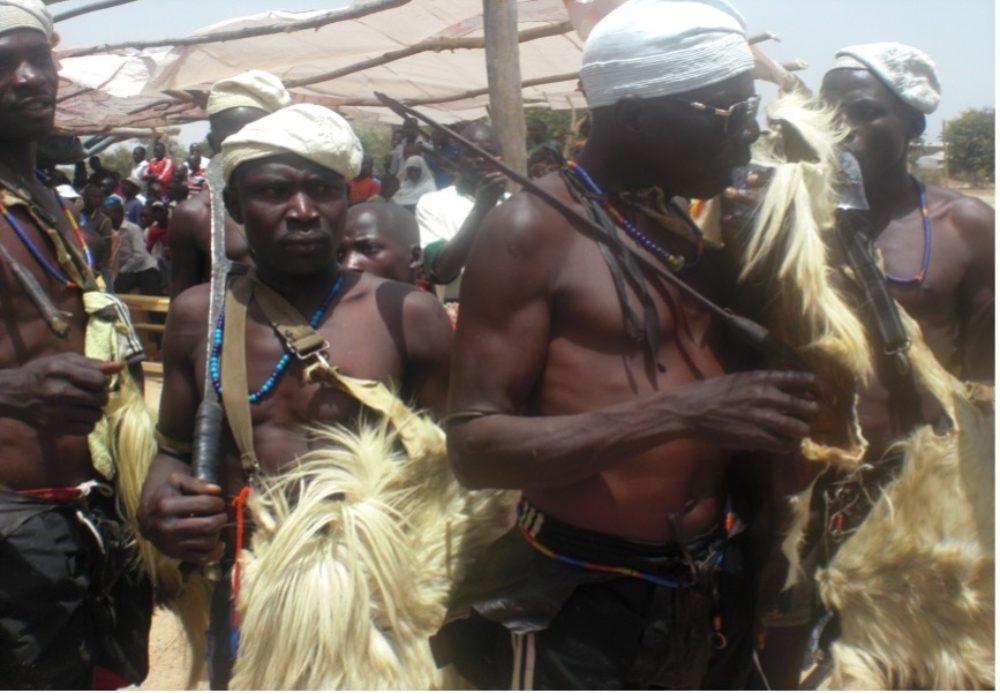
Traditional dress on display in Maroua. Photo by: Georges Collinet
<p>
<strong>How
are people reacting when they see you, coming or somewhere out there,
loaded with strange equipment? </strong>
</p>
<p>People
are always happy to see us in these villages. Hospitality, as you
know is one of the biggest traits of
Africans. Although
it is always said that Cameroon is Africa in miniature, you find
everything there, deep
forests in these
south, savannah in the center, mountains in the west, and desert in
the north, people everywhere are very happy to receive us. Our
recording sessions in these villages have become the occasion for
entertainment and joy, particularly for the elders. They are very, very
proud and very touched. They want to participate with our project and
to be able to record and sing their traditional songs. When we arrive
in these villages we are often lodged in a B and B, but they are very
rare. If we cannot find anything, we usually stay with the villagers.
These are usually recommended by friends who are supporting the
project.</p>
<figure><iframe loading="lazy" src="//www.youtube.com/embed/yoeqtX15WIM" allowfullscreen="" width="500" height="281" frameborder="0"></iframe></figure>
<p>
<strong>So
you arrive in a village ready to record. However, you must find these
traditional artists. How does that work?</strong></p>
<p>When
we arrive in a village, we set up the equipment. And then we look for
traditional musicians. That’s not very difficult, in these small
villages, everybody knows everybody. Once we have found one, it’s
usually very easy to find others. Once that’s done, we take our
time to tell them what we are doing, our mission and how we’re
going to use these recording.
<br>
</p>
<p><strong>They
must be shy!</strong></p>
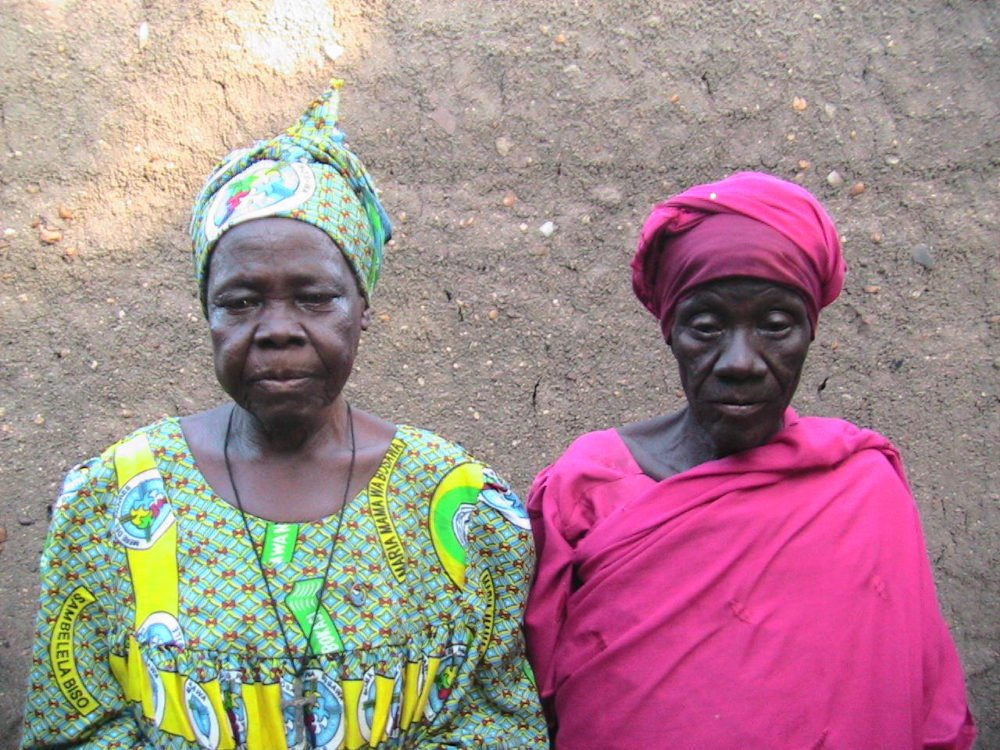
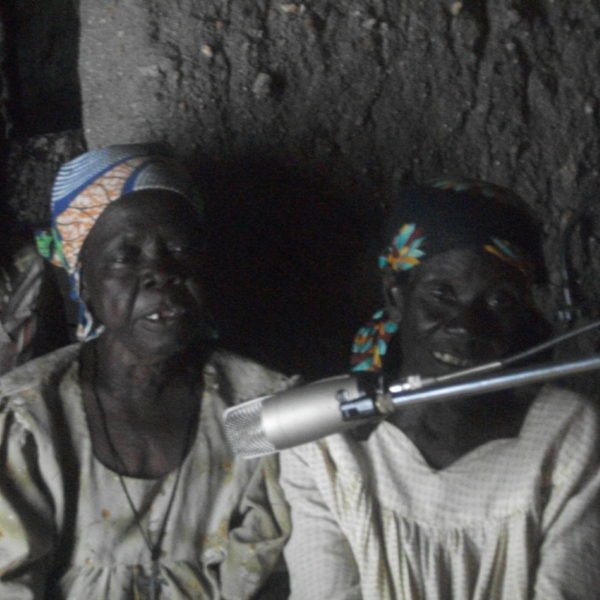
The 80-year-old Djabou sisters.
<p>
They
are not shy. Shyness is not a problem with traditional musicians.
Most of them are very open. They are very surprised and moved by what
we are trying to do. We are very upfront with them about
remuneration, simply because we do not have any money and they
realize that. They are usually musicians that have never never been
recorded before or never have seen any recording equipment, and it is
a tremendous experience. I remember the two ladies in the far north.
They must have been over 80 years old. They were so happy when
they heard their voice. They were just ecstatic. These are moments
that we can never forget, they told us. However, during our recording
sessions, we try to help the musicians as much as we can. We know
that they love to drink traditional wine, so we always have some. We
also pay those who have traveled long distances to come and record.</p>
<figure><iframe loading="lazy" src="//www.youtube.com/embed/1Qfp7wNyLSE" allowfullscreen="" width="500" height="281" frameborder="0"></iframe></figure>
<p>
<strong>Tell
me about all these traditional instruments.</strong></p>
<p>
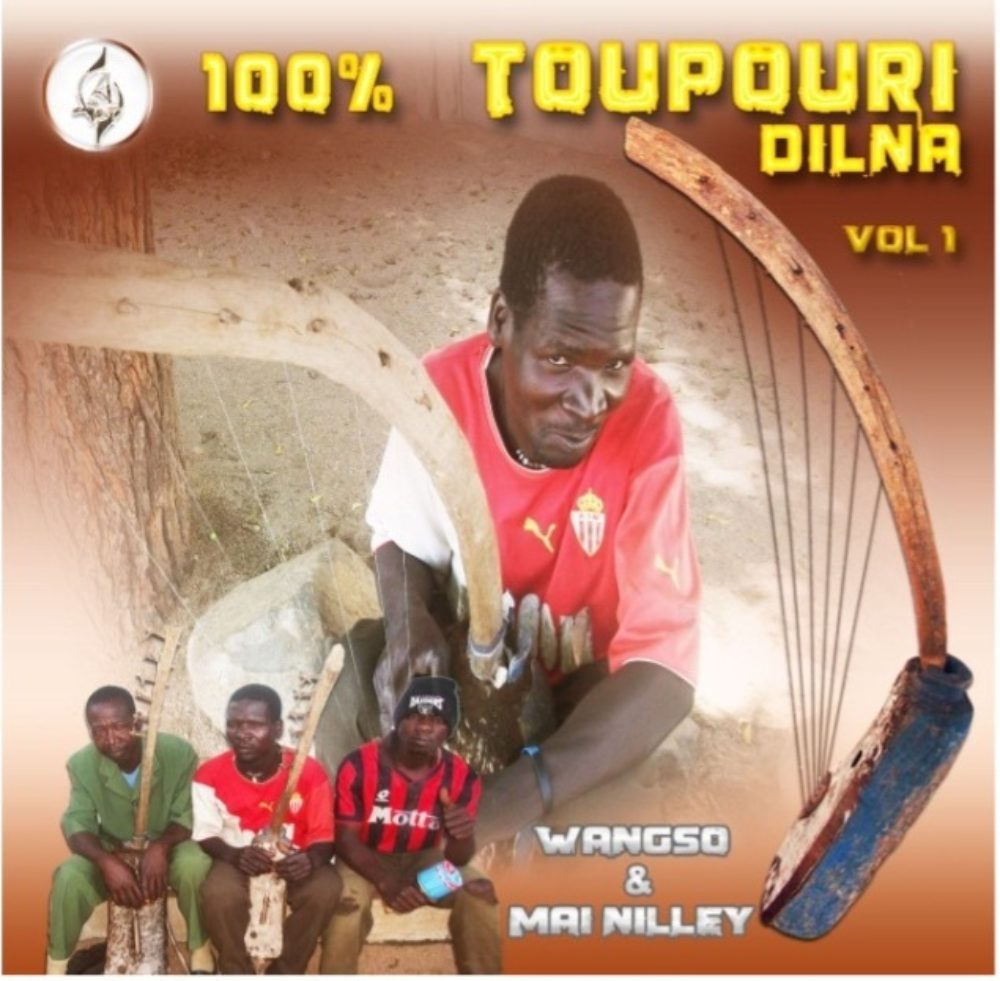
The
instruments that these musicians use vary from one region to another.
In the deep north, they use traditional guitars called <em>g</em><em>aia</em>. These
have two strings over a calabash covered with animal skin. They are
used by the Peul people who live in northern
Cameroon. There
are also traditional guitars that look like koras.
They call them <em>zila</em>. There are all sorts of drums, traditional
violins and long trumpets found at the court of Lamidos, the imposing
chiefs in the
region. In the south, there are various drums, tam-tams, <em>balafons—</em>a traditional xylophone made with wooden slats. You find also
traditional guitars such as the <em>m</em><em>’vet</em>. </p>
<p>All these instruments are
made locally by the artist themselves, using local materials such as
wood, animal skins, gourds and strings. As for sacred instruments,
certain tribes do have sacred instruments—they are even mystical. I
remember one day we were in the deep north, in the mountains and we
wanted to record a drum used in funeral ceremonies. We were told that
it was impossible because nobody had died. And only a funeral
ceremony could bring out the sacred drum. So we pleaded and pleaded
and finally the big chiefs gave their accord to bring the drum out so
we could record it. But this got a lot of people very, very
concerned. I tell you, I did not know if we would get back home
alive!</p>
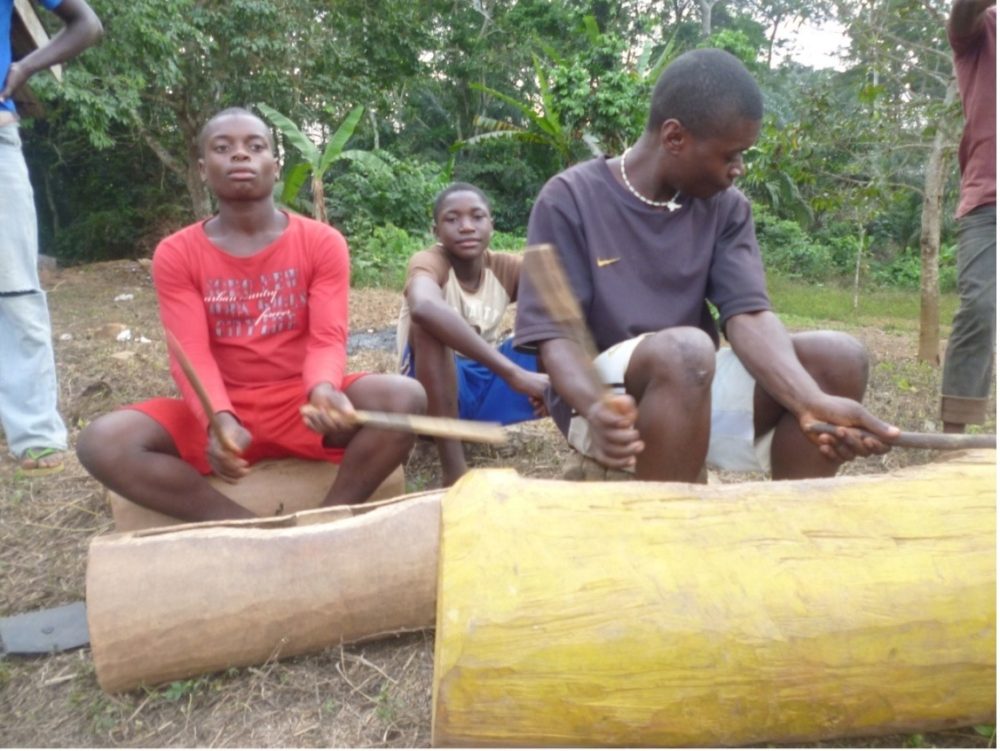
Young drummers in Meyomessala.
<p>
<strong>This
is really exciting
work, but also very difficult work!</strong></p>
<p>Everybody
realizes that we have to preserve our various culture and our musical
traditions. Our traditional musicians are getting very, very old. If
they all die, we’re going to lose everything. Fortunately, the
youth is coming to the rescue. Young people are now learning how to
use traditional instruments and music and adapt them to their own
compositions. In the south, many are learning how to play balafon
and drums. In the north, they are composing songs based on the
elders' music.</p>
<p>
<strong>This
is very reassuring indeed. What is next for Azania Way Culture?</strong></p>
<p>Our
objectives today are to record traditional singers in the 10 regions
of Cameroon and also in the neighboring countries, because the people of
Cameroon, Gabon, Congo, Equatorial Guinea, Nigeria, Chad and Central
Africa are related. We are looking for people with goodwill around
the world to help us in our mission: saving central Africa’s
traditional musics from extinction.
<br>
</p>
<p><strong>And
you can do that by checking </strong><u><a href="http://www.azaniawayculture.com/"><strong>www.azaniawayculture.com</strong></a></u><strong>.
Thank you, Eric!</strong></p>
<p>Also
check out:
</p>
<ul>
<li>Chilli
Wawayee <a href="https://www.facebook.com/Chilli.wawaye/">on
Facebook</a>. She is a beautiful and amazing singer.
</li><li>Guitarist
extraordinaire <a href="https://jaylou-ava.com/en/">Jay Lou Ava</a>.
</li><li><a href="https://youtu.be/csGG0P1HqHk">OB
Jazz, from my village Bityé</a>. I think that he must be a cousin
because my uncle Nna Kongwe was an accordion or rather bandoneon
player emeritus, the only one in the region.
</li><li>We
are working on helping produce Fufulu, the opera by Christian Akoa.
<a href="https://www.facebook.com/watch/?v=390555552171176">You will
find </a><a href="https://www.facebook.com/watch/?v=390555552171176">a
live concert here</a>.<p><br></p></li></ul>
<p><strong>Thanks, Eric, for this journey of discovery.</strong></p>