Feature April 13, 2026
Across the Indian Ocean: How East African Music Survives in Iran
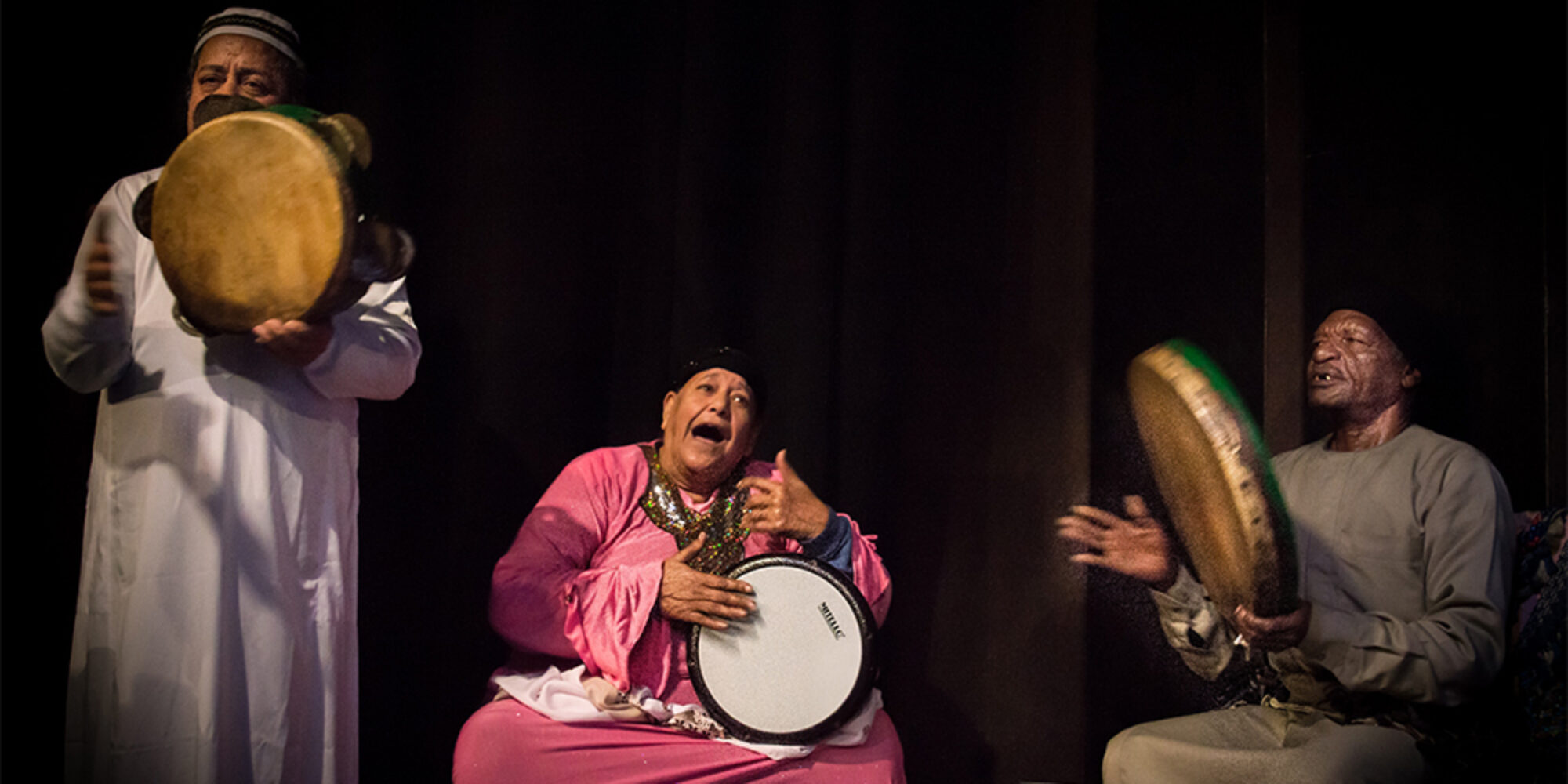
<p><em>Banner image by Ahmed Emad. </em></p>
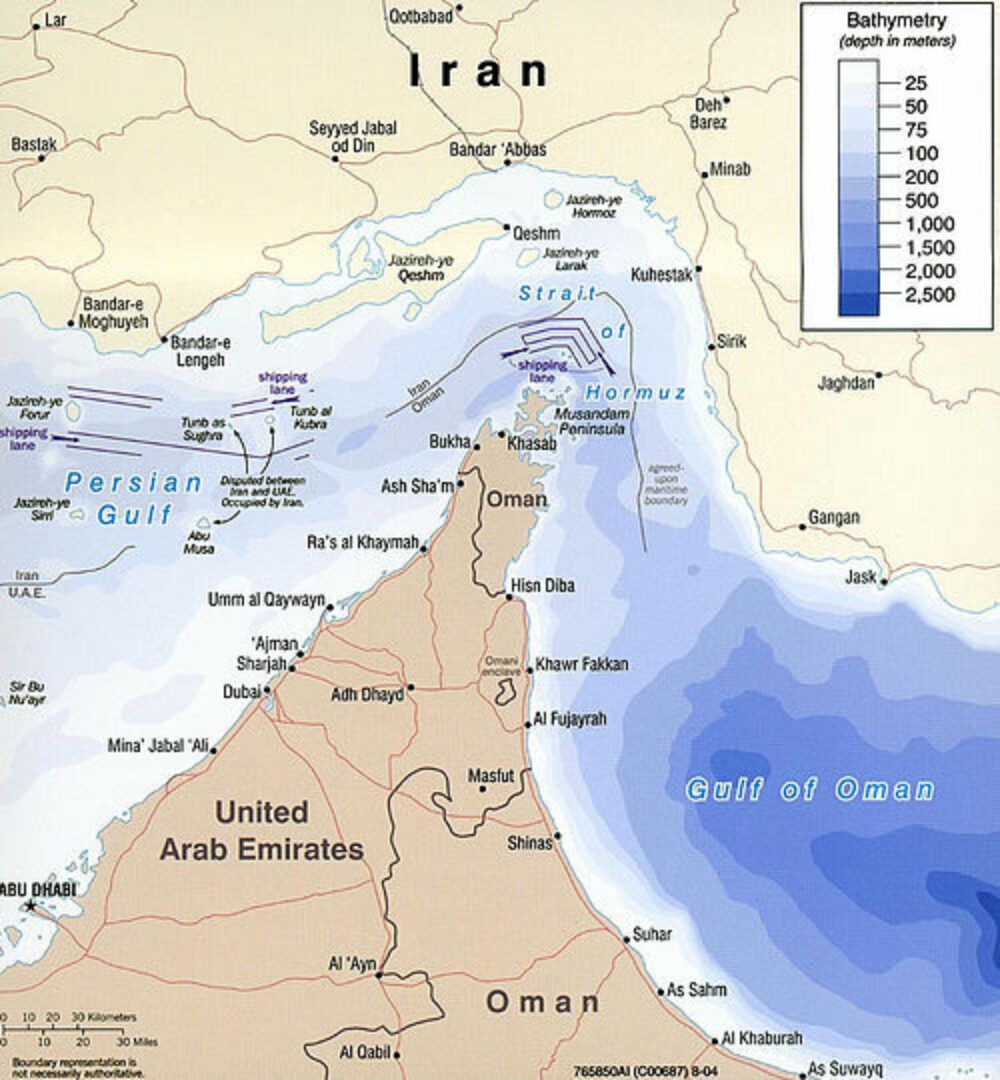
<p>The Strait of Hormuz, as the world is discovering again in light of recent events, has been a vital waterway for global trade over the centuries. While this trade often travels horizontally between Europe and Asia, it also travels vertically between the Gulf and East Africa. Over centuries, merchants, travelers, and enslaved peoples from East Africa (especially present-day Mozambique, Tanzania and Malawi) not only passed through the Strait but permanently relocated to its coast. These Afro-Iranian communities are found across Iran’s coastal regions including Bushehr, Hormozgan and Qeshm Island. Notably, the musical expressions of these Southern Iranian cultures range from folk spirit possession rituals to modern Afro-Iranian jazz. These cultures — often born out of forced migration — practice resilience, syncretic spirituality and adaptation to modern life through their music.</p>
<p>The largest island in the Strait of Hormuz is known as Qeshm. Populated since the Paleolithic Period, Qeshm has been a critical node for trade in the Persian Gulf. Geographically, the island is advantageous for traders and travelers looking to make a pit stop on their sea route through the Strait. Trade was accelerated after the Portuguese took control of the island in the 17th century. While the trade of enslaved Africans in Iran was practiced since the 7th century, the trade reached its peak after the Portuguese arrival. Qeshm facilitated the large transfer of enslaved Africans, especially Bantu-speaking Zanj people, into Iran during the 18th and 19th centuries. As such, the island has been a site for regular practice of the <em>zar</em> ritual.<br></p>
 <p>Popular among East African diaspora communities across the Persian Gulf (and into surrounding regions such as Egypt, Ethiopia, Sudan, and Somalia), <em>zar</em> is a healing practice, led by women, and conducted through rhythmic trance and spirit possession. In these East African countries, practitioners of <em>zar</em> identify certain illnesses (both physical and mental) as being caused by spirits (<em>bad</em> or <em>Ahl-i Hava</em>, people of the wind). There are many kinds of evil spirits that may inhabit an individual. A spiritual leader (a <em>baba</em> or <em>mama</em>, male or female, respectively) conducts a ceremony that casts these spirits out. Central to this is a group musical performance consisting of flutes, <em>gap-dohol</em> drum, <em>dammam </em>drum and <em>kesar</em>drum. Young women dressed in colorful garb may also dance to assist the ceremony, making the performance a community effort. Participants may lose consciousness for periods of the performance. Through rhythmic chanting and singing, the shaman makes contact with the spirit, separates them from the afflicted and eventually compels the spirit to leave. </p>
<p>A related tradition is the Afro-Islamic <em>nūbān</em> performance found across the Strait in the United Arab Emirates. These traditions reflect a blending of East African, Arab and Islamic cultural practices. </p>
<p> </p>
<figure><iframe loading="lazy" width="500" height="281" src="//www.youtube.com/embed/KLvKEjvDyvM" frameborder="0" allowfullscreen=""></iframe></figure>
<p><br>Further north along the Strait of Hormuz sits the city of Bushehr. This is one of the major centers of the Afro-Iranian community, also referred to as Bambasi (a term being reclaimed by the local African community) or Siya (“black” in Persian). Here, the musical traditions of Bandari music (literally, music of the ports) remains popular. The <em>nay-anban</em>bagpipe made of goatskin and <em>tombak </em>drum, alongside other percussion instruments, are standard for Bandari music. Bandari styles have become popular in Iran, often used in wedding celebrations and occasionally reaching international audiences.<br></p>
<p><br></p>
<figure><iframe loading="lazy" width="500" height="281" src="//www.youtube.com/embed/BKnkS6nnsrM" frameborder="0" allowfullscreen=""></iframe></figure>
<p><br></p>
<p>One of these international acts is the Shanbehzadeh Ensemble led by Saeid Shanbehzadeh. Shanbehzadeh has been a major ambassador for Southern Iranian music throughout his career. Formed in 1990, the ensemble showcases many of the traditional instruments popular in Bushehr, including the dammaam drum (played sinc his childhood by Saeid's son Naghib Shanbehzadeh), ney-jofti flute, and <em>boogh </em>horn. Shanbehzadeh traces his heritage to Tanzania, a reflection of Bushehr’s African influences. He has won numerous awards for his folk performances across the globe.</p>
<p>Shanbehzadeh had an interesting note for Afropop in 2009 regarding the freezing of pre-modern Swahili in the <em>zar</em>performance: “Sometimes we use the African word but the sense is different now. Even in Zanzibar, they don’t know what we say. But we know the root is Swahili. For example, in the <em>zar </em>ceremony… in South Iran it’s a mix between African [spirit possession] and ideology of the Sufi. Singing the poesy of Mawlānā, the great Persian poet, mixing with the Swahili. But, I tried many time, I met some people they know Swahili language, they didn’t know [the meaning.” The immigrants to Southern Iran from East Africa in 1600 brought with them an older version of Swahili no longer necessarily intelligible to contemporary Swahili speakers. This has been mixed with the Persian poetry of Mawlānā Jalāl al-Dīn Muḥammad Rūmī (known to Westerners as Rumi).</p>
<p><br></p>
<figure><iframe loading="lazy" width="500" height="281" src="//www.youtube.com/embed/jctVQNgMsvA" frameborder="0" allowfullscreen=""></iframe></figure>
<p><br>Shanbehzadeh has also branched out into blending these Afro-Iranian traditions with black American popular styles such as jazz music. These have been in collaboration with artists such as Rostam Mirlashari. Mirlashari is a major singer from the Balochi ethnic group within Iran. Both artists have been exiled from Iran, where cultural police strictly prohibit certain folk or popular musical performances. By continuing to perform these styles for a global audience, these artists bring awareness to these repressed traditions.</p>
<p>Shanbehzadeh notes that the unique identity of Afro-Iranian communities is not only in the music. It is seen visually in cultural objects and in physical appearance: “My face is the best example. I am not Persian, not African, not Indian, but all. The real example.”</p>
<p>Connect with Saeid Shanbehzadeh <a href="https://www.instagram.com/saeid_shanbehzadeh/" rel="noopener" target="_blank">here</a>.</p>
<p>And his son Naghib Shanbehzadeh <a href="https://www.instagram.com/naghibofficial/" rel="noopener" target="_blank">here</a>.<br></p>
<figure><iframe loading="lazy" width="500" height="281" src="//www.youtube.com/embed/FyAKi7hHb38" frameborder="0" allowfullscreen=""></iframe></figure>
<p></p>
<p><br>A new generation of Afro-Iranian musicians is also beginning to make their mark. Acts such as Labyrinth attempt to bring a modern touch to <em>zar</em> and other performance styles. While speech is still restricted in Iran, one can see the addition of electric instruments as a sign of increasing modernization. </p>
<p></p>
<figure><iframe loading="lazy" width="500" height="281" src="//www.youtube.com/embed/emzC9tFAc6o" frameborder="0" allowfullscreen=""></iframe></figure>
<p><br></p>
<p>Facing both repression from the traditionalist government and the effects of war in the Strait of Hormuz, Afro-Iranian communities continue to persist in their musical practice. Iranians of African descent are a significant and diverse subculture whose music ranges from folk shaman practices to Islamic rituals and celebratory dance music.</p>
<p>Connect with Labyrinth <a href="https://www.instagram.com/labyrinth.1/">here</a>.</p>
<p>Popular among East African diaspora communities across the Persian Gulf (and into surrounding regions such as Egypt, Ethiopia, Sudan, and Somalia), <em>zar</em> is a healing practice, led by women, and conducted through rhythmic trance and spirit possession. In these East African countries, practitioners of <em>zar</em> identify certain illnesses (both physical and mental) as being caused by spirits (<em>bad</em> or <em>Ahl-i Hava</em>, people of the wind). There are many kinds of evil spirits that may inhabit an individual. A spiritual leader (a <em>baba</em> or <em>mama</em>, male or female, respectively) conducts a ceremony that casts these spirits out. Central to this is a group musical performance consisting of flutes, <em>gap-dohol</em> drum, <em>dammam </em>drum and <em>kesar</em>drum. Young women dressed in colorful garb may also dance to assist the ceremony, making the performance a community effort. Participants may lose consciousness for periods of the performance. Through rhythmic chanting and singing, the shaman makes contact with the spirit, separates them from the afflicted and eventually compels the spirit to leave. </p>
<p>A related tradition is the Afro-Islamic <em>nūbān</em> performance found across the Strait in the United Arab Emirates. These traditions reflect a blending of East African, Arab and Islamic cultural practices. </p>
<p> </p>
<figure><iframe loading="lazy" width="500" height="281" src="//www.youtube.com/embed/KLvKEjvDyvM" frameborder="0" allowfullscreen=""></iframe></figure>
<p><br>Further north along the Strait of Hormuz sits the city of Bushehr. This is one of the major centers of the Afro-Iranian community, also referred to as Bambasi (a term being reclaimed by the local African community) or Siya (“black” in Persian). Here, the musical traditions of Bandari music (literally, music of the ports) remains popular. The <em>nay-anban</em>bagpipe made of goatskin and <em>tombak </em>drum, alongside other percussion instruments, are standard for Bandari music. Bandari styles have become popular in Iran, often used in wedding celebrations and occasionally reaching international audiences.<br></p>
<p><br></p>
<figure><iframe loading="lazy" width="500" height="281" src="//www.youtube.com/embed/BKnkS6nnsrM" frameborder="0" allowfullscreen=""></iframe></figure>
<p><br></p>
<p>One of these international acts is the Shanbehzadeh Ensemble led by Saeid Shanbehzadeh. Shanbehzadeh has been a major ambassador for Southern Iranian music throughout his career. Formed in 1990, the ensemble showcases many of the traditional instruments popular in Bushehr, including the dammaam drum (played sinc his childhood by Saeid's son Naghib Shanbehzadeh), ney-jofti flute, and <em>boogh </em>horn. Shanbehzadeh traces his heritage to Tanzania, a reflection of Bushehr’s African influences. He has won numerous awards for his folk performances across the globe.</p>
<p>Shanbehzadeh had an interesting note for Afropop in 2009 regarding the freezing of pre-modern Swahili in the <em>zar</em>performance: “Sometimes we use the African word but the sense is different now. Even in Zanzibar, they don’t know what we say. But we know the root is Swahili. For example, in the <em>zar </em>ceremony… in South Iran it’s a mix between African [spirit possession] and ideology of the Sufi. Singing the poesy of Mawlānā, the great Persian poet, mixing with the Swahili. But, I tried many time, I met some people they know Swahili language, they didn’t know [the meaning.” The immigrants to Southern Iran from East Africa in 1600 brought with them an older version of Swahili no longer necessarily intelligible to contemporary Swahili speakers. This has been mixed with the Persian poetry of Mawlānā Jalāl al-Dīn Muḥammad Rūmī (known to Westerners as Rumi).</p>
<p><br></p>
<figure><iframe loading="lazy" width="500" height="281" src="//www.youtube.com/embed/jctVQNgMsvA" frameborder="0" allowfullscreen=""></iframe></figure>
<p><br>Shanbehzadeh has also branched out into blending these Afro-Iranian traditions with black American popular styles such as jazz music. These have been in collaboration with artists such as Rostam Mirlashari. Mirlashari is a major singer from the Balochi ethnic group within Iran. Both artists have been exiled from Iran, where cultural police strictly prohibit certain folk or popular musical performances. By continuing to perform these styles for a global audience, these artists bring awareness to these repressed traditions.</p>
<p>Shanbehzadeh notes that the unique identity of Afro-Iranian communities is not only in the music. It is seen visually in cultural objects and in physical appearance: “My face is the best example. I am not Persian, not African, not Indian, but all. The real example.”</p>
<p>Connect with Saeid Shanbehzadeh <a href="https://www.instagram.com/saeid_shanbehzadeh/" rel="noopener" target="_blank">here</a>.</p>
<p>And his son Naghib Shanbehzadeh <a href="https://www.instagram.com/naghibofficial/" rel="noopener" target="_blank">here</a>.<br></p>
<figure><iframe loading="lazy" width="500" height="281" src="//www.youtube.com/embed/FyAKi7hHb38" frameborder="0" allowfullscreen=""></iframe></figure>
<p></p>
<p><br>A new generation of Afro-Iranian musicians is also beginning to make their mark. Acts such as Labyrinth attempt to bring a modern touch to <em>zar</em> and other performance styles. While speech is still restricted in Iran, one can see the addition of electric instruments as a sign of increasing modernization. </p>
<p></p>
<figure><iframe loading="lazy" width="500" height="281" src="//www.youtube.com/embed/emzC9tFAc6o" frameborder="0" allowfullscreen=""></iframe></figure>
<p><br></p>
<p>Facing both repression from the traditionalist government and the effects of war in the Strait of Hormuz, Afro-Iranian communities continue to persist in their musical practice. Iranians of African descent are a significant and diverse subculture whose music ranges from folk shaman practices to Islamic rituals and celebratory dance music.</p>
<p>Connect with Labyrinth <a href="https://www.instagram.com/labyrinth.1/">here</a>.</p>

Related Audio Programs
Hip Deep January 9, 2025
A Tale of Two Rebellions: How Africans Helped Shape the Future of Islam
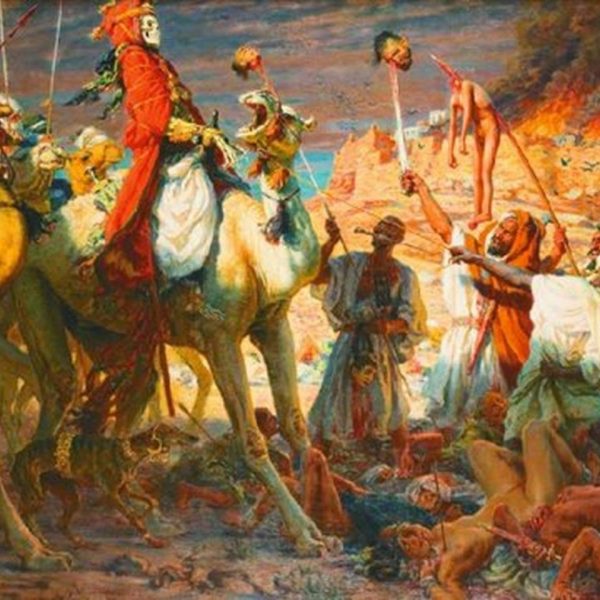
In this Hip Deep edition, Joseph Braude recounts the Zanj Rebellion and the origins of the Suni Shiite divide in Islam.
Hip Deep May 7, 2026
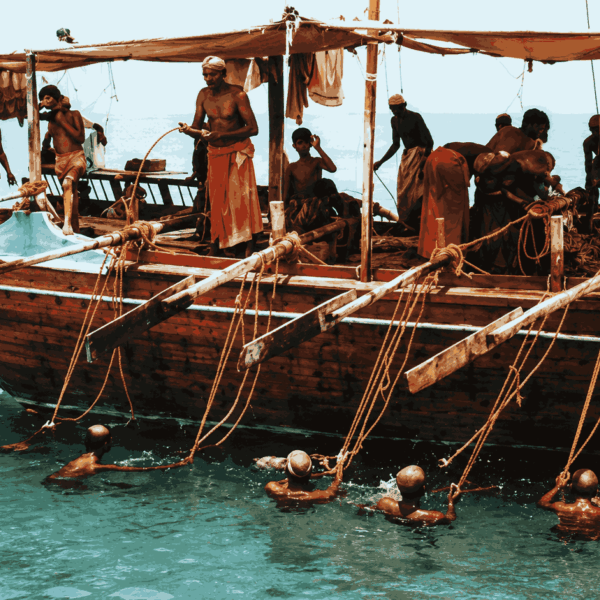
Africans in the Arabian (Persian) Gulf
Hip Deep February 3, 2022
Egypt 4: Living Traditions
Related Articles

Review October 8, 2008
Joseph Braude: Music and Islam
Feature May 14, 2013