Review April 27, 2026
Atlantic Music Expo 2026: Field Report
<p>One thing we can say with confidence is that in the city of Praia, on the island of Santiago, in the country of Cabo Verde (it's apparently okay to also call it Cape Verde), every day, at some point, you will hear someone singing the song “Sodade.” While the recorded version that popularized it internationally was by the late, great, diva Cesária Evora [@evoracesaria], in 1992, the song dates back to the 1950's on the islands, and it’s truly the soundtrack of the island. </p>
<p>We're also pretty confident that followers of <em>Afropop Worldwide</em> are familiar with this term (also known as “saudade” in Portugal), but as far as our research tells us, it is a singular rarity on the planet in that there is no other culture nor country that is so identified with a single human emotion as the Lusophone people are with this <em>sodade</em>. They own the copyright on this emotion. A simplistic description of sodade would be: “an indescribable and indefinable nostalgia or longing for something or someplace which also can be indescribable and indefinable.” And on the last day of the 12<sup>th</sup> edition of the Atlantic Music Expo (AME) [@atlanticmusicexpo], which took place in Praia, from April 6-9, we wished it would go on forever. For we were already longing for more Cabo Verdean music, more Cabo Verdean food, and to spend more time with both the visiting conference attendees and the people of the island. Were we now feeling sodade, or just feeling greedy for more of it all? We'll leave that for others to judge.</p><figure><iframe loading="lazy" width="500" height="281" src="//www.youtube.com/embed/vYmYw_3TTtI" frameborder="0" allowfullscreen=""></iframe></figure><br><p>We should also note that while AME featured an abundance of excellent musical artists, both local and international, we would say that a group of us wandered off each night to eat dinner at restaurants that also offered musical entertainment. The musicians in these restaurants weren't showcasing, merely playing for local diners. And without dismissing the actual showcases, we might well have been satiated by their performances if that was all we'd had seen. Yet another reason to long to return to Cabo Verde.</p>
<p>But the conference wasn't just about showcases; the theme of this year was about the coming influence of AI, digital marketing, and “how artists, platforms, and technology are shaping the next era of global music.” As Benito Lopes, the General Director of the AME noted, the seminars and workshops this year “invites us to reflect on the impact of new technologies.... AME seeks to explore how innovation can broaden horizons without breaking the cultural identities that give music its soul.” It left us with nostalgia for a world before the internet.</p>
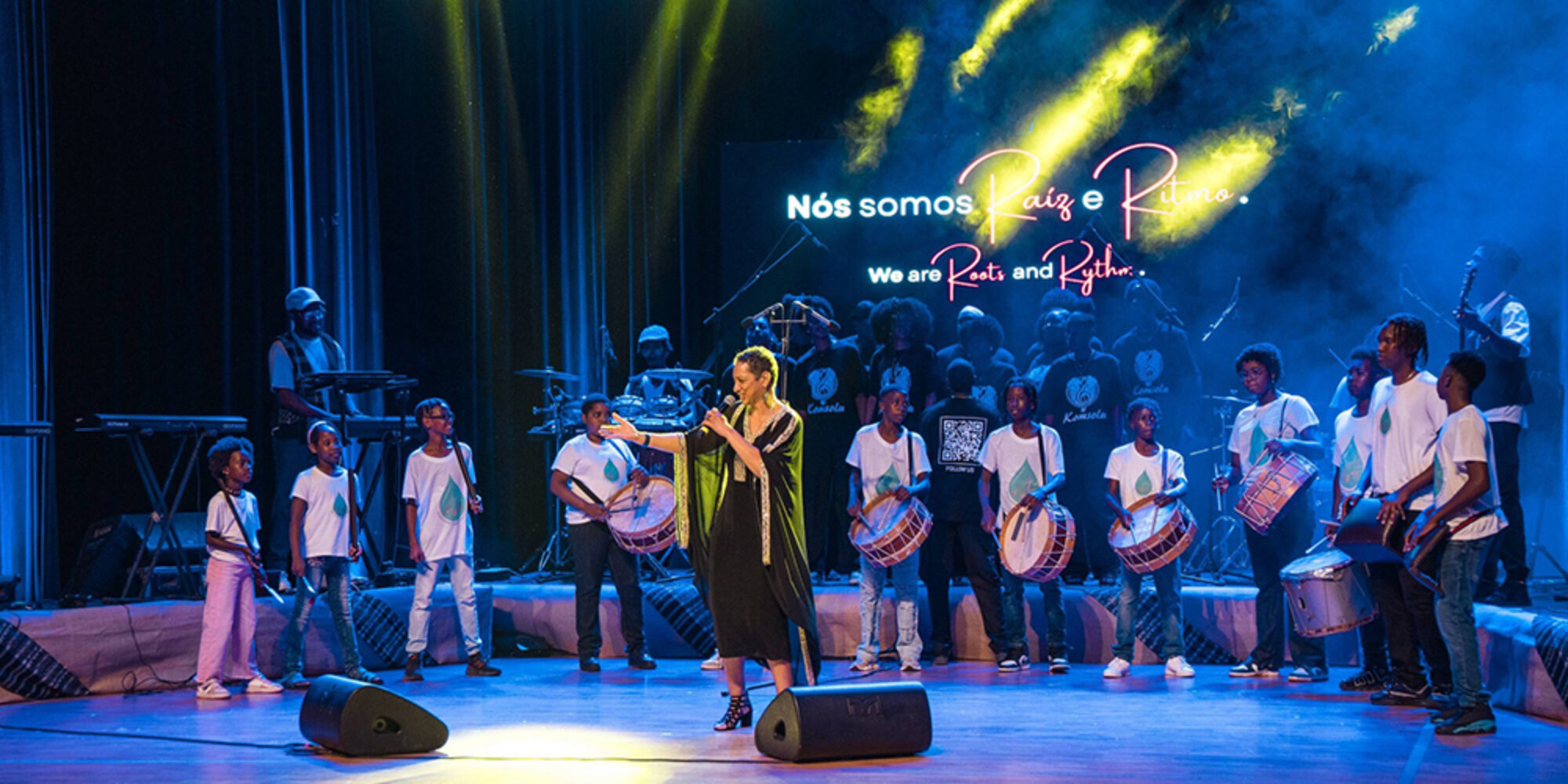
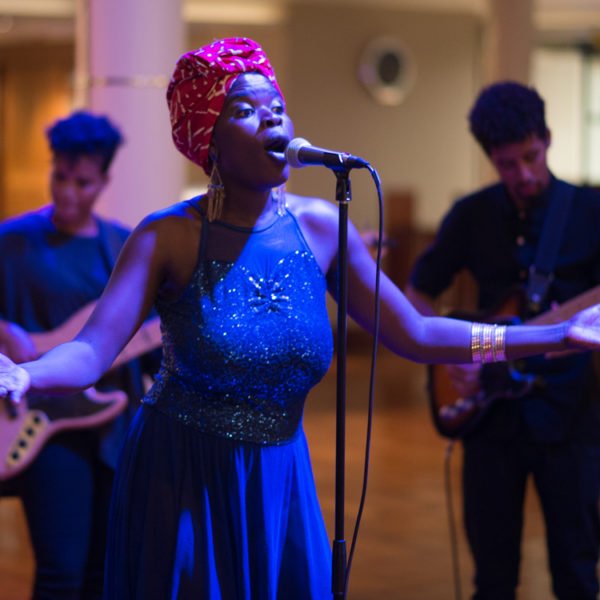
 <p>The opening night was a stunning production featuring an ensemble of young Cabo Verdeans from small children to young adults playing and singing together as backup artists for the excellent <strong>Alberto Koenig</strong> [@alberto.koenig], with whom we will be posting an interview soon, and <strong>Candida Rose</strong> [@goldenrosemusic], a Cabo Verdean-American who was featured in our <a href="https://afropop.test.ejaedesign.com/audio-programs/diaspora-encounters-kriolu-in-new-england-the-cape-verdean-american-story">Hip Deep broadcast about Cabo Verdean diaspora artists</a>. It really sent the message that Cabo Verde is a country where music may not just be one of its major exports to the world, but truly something that is embedded in the soul of its people wherever they live.</p>
<p>The showcases over the next three days and nights were a perfect blend of both Cabo Verdean acts and international performers, with three coming from or having roots in Montreal. </p>
<p>For those who follow our yearly visit to that multi-cultural island, you are already familiar with one of our favorite performers, <strong><a href="https://afropop.test.ejaedesign.com/articles/kizabas-future-village-from-the-ancestors-to-the-unknown">Kizaba</a></strong> [@kizabalk]. Born and raised in Kinshasa, Kizaba then settled in Montreal where he has become, in the words of our own Banning Eyre: “a dynamo. A frontman with a towering ensemble of percussion instruments before him, he sings, dances and delivers a tidal wave of rhythms unlike anything we’ve heard before.” You can read the full <a href="https://afropop.test.ejaedesign.com/articles/kizabas-future-village-from-the-ancestors-to-the-unknown">interview we did with Kizaba</a> last summer to learn his story.</p>
<p>We were so happy to get to see <strong>Aiza</strong> [@aizabby], who was born and raised in Montreal of Burundian heritage. When living in Montreal, we used to see her regularly performing with the Kalmunity collective we've mentioned over the years, which was a bi-weekly incubator for many of Montreal's talent for over a decade. Aiza has since moved to Toronto where not only has she continued her musical career, but become a well-known actress through featured roles in the Netflix superhero series <em>Jupiter's Legacy</em> and the sit-com <em>Workin' Moms</em>. She also has her own award-winning talk show on CBC, <em>Real Blackity Talk</em>. Her showcase was absolutely fabulous, celebrating her recent solo album. We'll be featuring an in-depth interview with her we did here at AME in the near future.</p>
<p>And finally, one of the best performances at AME this year was delivered by <strong>Zale Seck</strong> [@zaleseck61], who for many years has split his time between homes in both Dakar and Montreal. In fact, Banning and Sean just caught him live on his ancestral turf during their recent <a href="https://afropop.test.ejaedesign.com/articles/afropop-returns-to-senegal-dakar-dispatch-1).">adventure in Senegal</a>. Seck is one of those performers for whom you cannot sit or stand still watching. He was like a rocket from start to finish.</p>
<p>The opening night was a stunning production featuring an ensemble of young Cabo Verdeans from small children to young adults playing and singing together as backup artists for the excellent <strong>Alberto Koenig</strong> [@alberto.koenig], with whom we will be posting an interview soon, and <strong>Candida Rose</strong> [@goldenrosemusic], a Cabo Verdean-American who was featured in our <a href="https://afropop.test.ejaedesign.com/audio-programs/diaspora-encounters-kriolu-in-new-england-the-cape-verdean-american-story">Hip Deep broadcast about Cabo Verdean diaspora artists</a>. It really sent the message that Cabo Verde is a country where music may not just be one of its major exports to the world, but truly something that is embedded in the soul of its people wherever they live.</p>
<p>The showcases over the next three days and nights were a perfect blend of both Cabo Verdean acts and international performers, with three coming from or having roots in Montreal. </p>
<p>For those who follow our yearly visit to that multi-cultural island, you are already familiar with one of our favorite performers, <strong><a href="https://afropop.test.ejaedesign.com/articles/kizabas-future-village-from-the-ancestors-to-the-unknown">Kizaba</a></strong> [@kizabalk]. Born and raised in Kinshasa, Kizaba then settled in Montreal where he has become, in the words of our own Banning Eyre: “a dynamo. A frontman with a towering ensemble of percussion instruments before him, he sings, dances and delivers a tidal wave of rhythms unlike anything we’ve heard before.” You can read the full <a href="https://afropop.test.ejaedesign.com/articles/kizabas-future-village-from-the-ancestors-to-the-unknown">interview we did with Kizaba</a> last summer to learn his story.</p>
<p>We were so happy to get to see <strong>Aiza</strong> [@aizabby], who was born and raised in Montreal of Burundian heritage. When living in Montreal, we used to see her regularly performing with the Kalmunity collective we've mentioned over the years, which was a bi-weekly incubator for many of Montreal's talent for over a decade. Aiza has since moved to Toronto where not only has she continued her musical career, but become a well-known actress through featured roles in the Netflix superhero series <em>Jupiter's Legacy</em> and the sit-com <em>Workin' Moms</em>. She also has her own award-winning talk show on CBC, <em>Real Blackity Talk</em>. Her showcase was absolutely fabulous, celebrating her recent solo album. We'll be featuring an in-depth interview with her we did here at AME in the near future.</p>
<p>And finally, one of the best performances at AME this year was delivered by <strong>Zale Seck</strong> [@zaleseck61], who for many years has split his time between homes in both Dakar and Montreal. In fact, Banning and Sean just caught him live on his ancestral turf during their recent <a href="https://afropop.test.ejaedesign.com/articles/afropop-returns-to-senegal-dakar-dispatch-1).">adventure in Senegal</a>. Seck is one of those performers for whom you cannot sit or stand still watching. He was like a rocket from start to finish.</p>
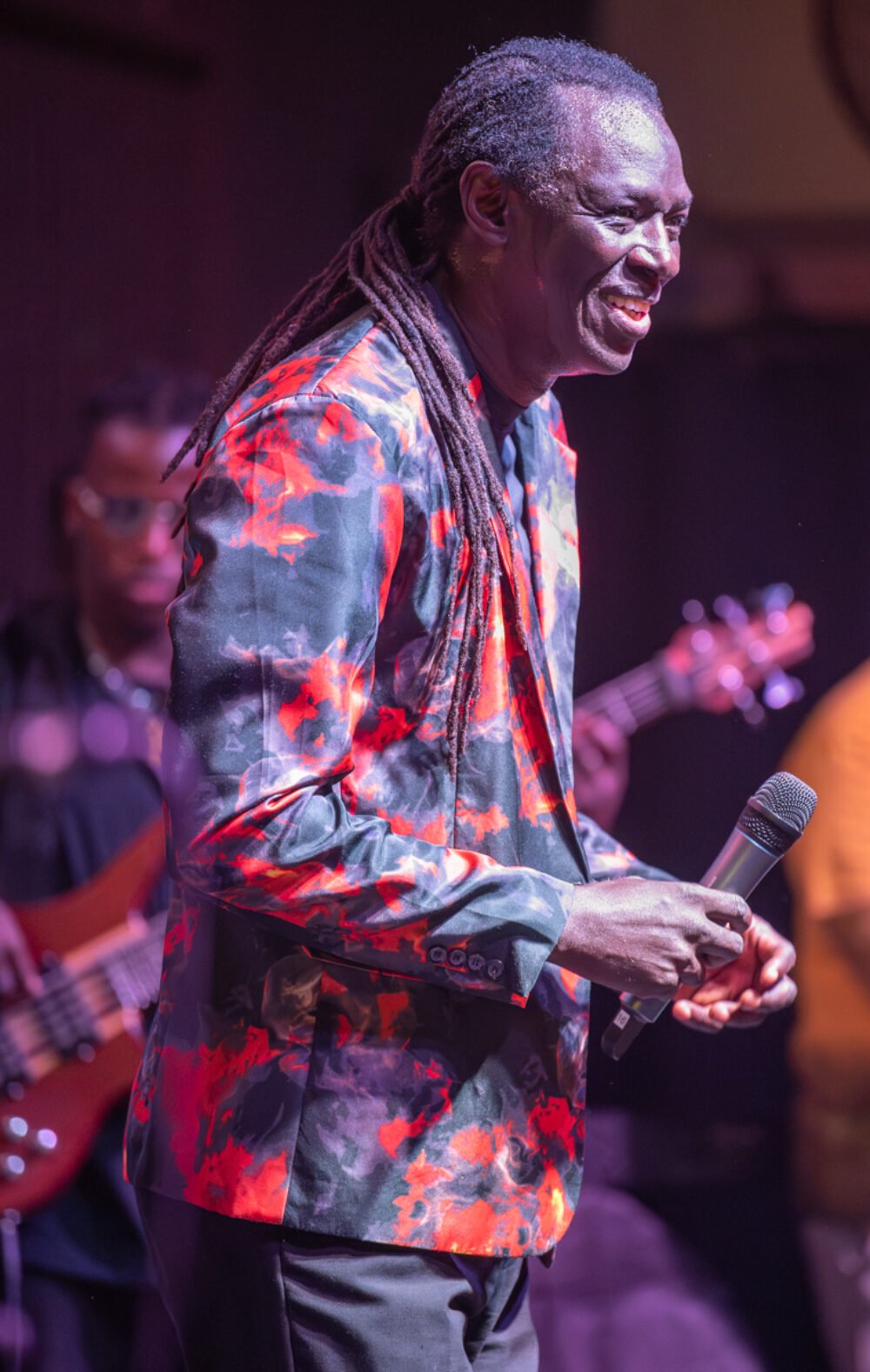 <p><em>Zale Seck. Click <a href="https://www.youtube.com/shorts/sZega5YlwYk" rel="noopener" target="_blank">here</a> for video.</em></p>
<p>A few other international artists also stole our hearts. We were totally knocked out to behold the wonders of French/Japanese artist <strong>Maia Barouh</strong> [@maiabarouh]. There is no other musician quite like her in the current universe, with her blending of Western and Japanese music. She has self-described herself as a “punk shaman.” Raised between two cultures, she sings songs reflecting both the struggles and pleasures of carrying two very different identities. Cinephiles might be interested to learn that her late father, Pierre Barouh, was also a singer, and known as composer of soundtracks for French film director Claude Lelouch. While she's out of our <em>Afropop Worldwide</em> wheelhouse, if you ever have an opportunity to see her perform, do not hesitate.</p>
<figure><iframe loading="lazy" width="500" height="281" src="//www.youtube.com/embed/C3X7Ln0S9Gs" frameborder="0" allowfullscreen=""></iframe></figure><br>
<p>We were also quite taken by <strong>Juliata Cohen</strong> [@juliatacohen], born and raised in Paris of Tunisian and Moroccan Jewish parents. Cohen sings in five different languages and in her 20's traveled solo around West Africa and then fell in love with Cabo Verde where she lived full time for a few years and still spends part of her time. Her first solo album came out a year ago and was produced in collaboration with both legendary performer and former culture minister of Cabo Verde, Mario Lucio [@marioluciosousa_oficial], and Jose da Silva, head of Lusafrica record label [@lusafrica.music], and who will forever be known as the man who promoted Cesária Evora internationally. We'll be posting an interview we did with Cohen at AME shortly.</p>
<p>Another international act that caught our attention was <strong>Sambaiana</strong> [@sambaiana], a collective of seven Brazilian, samba-loving women. Singer Ju Moraes has said that: “It's more than a band, it's a political place, of recovery, of positioning. We wanted a female band, a band produced by women, where we could compose our songs.” Their set definitely inspired the crowd to dance. <br></p>
<p><em>Zale Seck. Click <a href="https://www.youtube.com/shorts/sZega5YlwYk" rel="noopener" target="_blank">here</a> for video.</em></p>
<p>A few other international artists also stole our hearts. We were totally knocked out to behold the wonders of French/Japanese artist <strong>Maia Barouh</strong> [@maiabarouh]. There is no other musician quite like her in the current universe, with her blending of Western and Japanese music. She has self-described herself as a “punk shaman.” Raised between two cultures, she sings songs reflecting both the struggles and pleasures of carrying two very different identities. Cinephiles might be interested to learn that her late father, Pierre Barouh, was also a singer, and known as composer of soundtracks for French film director Claude Lelouch. While she's out of our <em>Afropop Worldwide</em> wheelhouse, if you ever have an opportunity to see her perform, do not hesitate.</p>
<figure><iframe loading="lazy" width="500" height="281" src="//www.youtube.com/embed/C3X7Ln0S9Gs" frameborder="0" allowfullscreen=""></iframe></figure><br>
<p>We were also quite taken by <strong>Juliata Cohen</strong> [@juliatacohen], born and raised in Paris of Tunisian and Moroccan Jewish parents. Cohen sings in five different languages and in her 20's traveled solo around West Africa and then fell in love with Cabo Verde where she lived full time for a few years and still spends part of her time. Her first solo album came out a year ago and was produced in collaboration with both legendary performer and former culture minister of Cabo Verde, Mario Lucio [@marioluciosousa_oficial], and Jose da Silva, head of Lusafrica record label [@lusafrica.music], and who will forever be known as the man who promoted Cesária Evora internationally. We'll be posting an interview we did with Cohen at AME shortly.</p>
<p>Another international act that caught our attention was <strong>Sambaiana</strong> [@sambaiana], a collective of seven Brazilian, samba-loving women. Singer Ju Moraes has said that: “It's more than a band, it's a political place, of recovery, of positioning. We wanted a female band, a band produced by women, where we could compose our songs.” Their set definitely inspired the crowd to dance. <br></p>
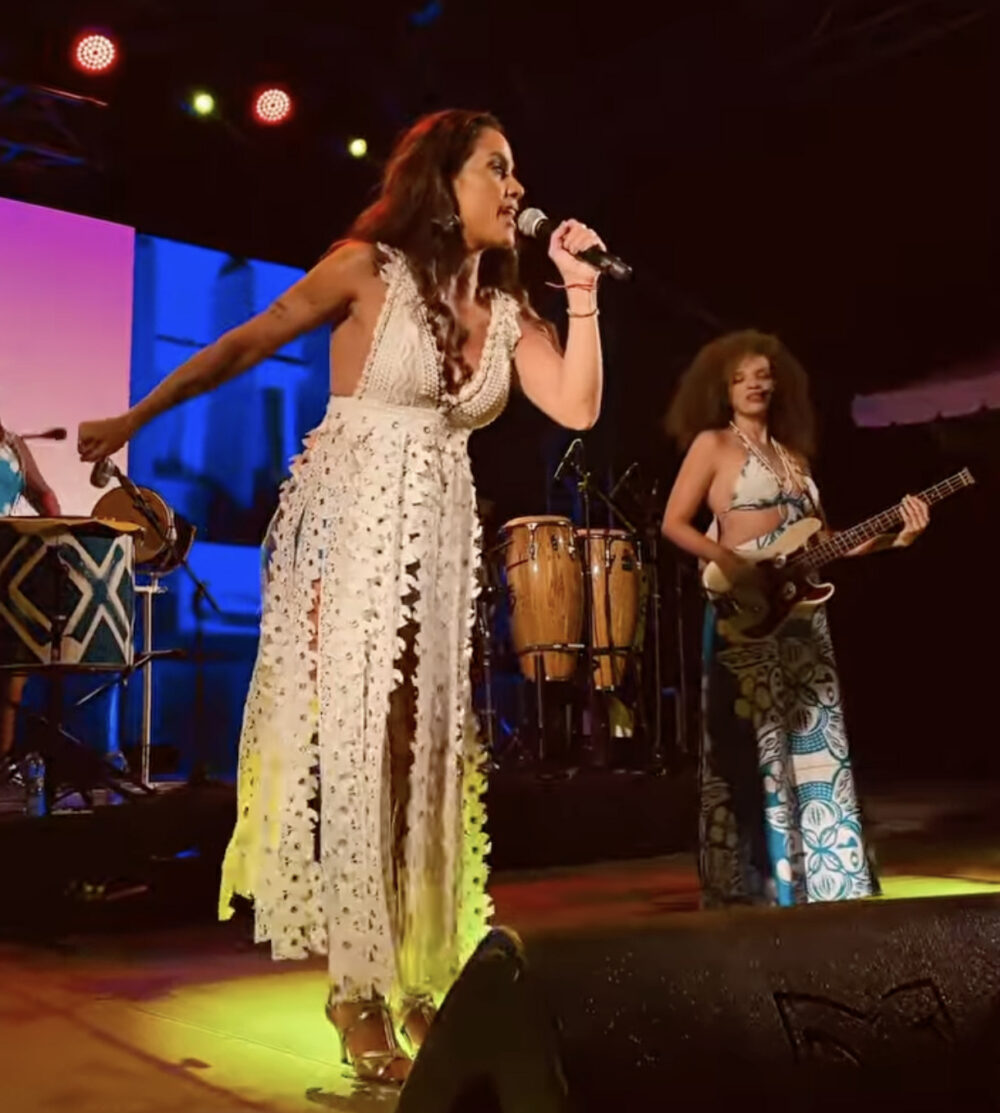 <p><em>Sambaina. Click <a href="https://www.youtube.com/shorts/MxqdpxiG2Jw" rel="noopener" target="_blank">here</a> for video.</em></p>
<p>As for the local acts performing showcases, on the first official day we were first greeted with a fantastic set by the excellent jazz keyboardist <strong>Carlos Matos</strong> and his trio [@matostrio]. Matos has his roots in Cabo Verde but was born and raised in the Netherlands. Yet his music is totally infused with the rhythms and history of his heritage. We spoke with him briefly after his showcase about what inspires him.</p>
<p>“The thing is that I try to see what the sounds reflects to me,” Matos says. “I try to keep the kernel of the music Cabo Verdean. Because there I feel at home, musically and also spiritually. I feel my roots. And then I say, okay, what kind of ingredients I can use from outside Cape Verde to make it. It can be rhythm, can be harmony, can be a type of improvisation. The more I get experience in music, the more I feel its influence.”</p>
<figure><iframe loading="lazy" width="500" height="281" src="//www.youtube.com/embed/BHQWVb_B6PM" frameborder="0" allowfullscreen=""></iframe></figure>
<p><strong><br>Voginha</strong>, aka José Carlo Silva Brito, is a second generation legend of Cabo Verdean music. His father, known as Tazinho, was a sailor by profession, but began recording albums in the mid-1960's and continued performing until his death in 2017 in New Bedford, Massachusetts where he had emigrated decades earlier. Voginha began recording in the 1980's and is known for his inventive fusion of jazz guitar and <em>morna</em>, the style of that ubiquitous track “Sodade.” He was a member of the Mindel Band that backed Cesária Evora on her 1991 album, <em>Blue Sea</em>. An interesting fact we discovered is that the first time he met and played with his father was when they performed together in 1995 at the Smithsonian Festival in Washington, D.C. Voginha turned 65 this year and his showcase at AME was truly an experience of watching a seasoned master at work.</p>
<figure><iframe loading="lazy" width="500" height="281" src="//www.youtube.com/embed/UCTvqNTee38" frameborder="0" allowfullscreen=""></iframe></figure>
<p><br>While we enjoyed showcases from a number of Cabo Verdean artists, without a doubt the number one was the closing showcase of AME starring the artist known as <strong>Princezito</strong> [@princezito].<br></p>
<p>(We need to pause here for a moment to note that Princezito is also part of a musical dynasty in Cabo Verde that blanketed itself over this year’s AME We earlier mentioned Mario Lucio in this field report who was a former culture minister and recorded Juliata Cohen's debut album. But Lucio is also the brother of Princezito, and is father to Alberto Koenig, who we also mentioned above who performed at the opening concert. In fact, we recently reviewed <a href="https://afropop.test.ejaedesign.com/articles/womex-2025-field-report">Lucio's own impressive showcase</a> of his new musical project at last year's WOMEX in Tampere, Finland.)</p>
<p>Princezito, aka Carlos Alberto Sousa Mendes, and which means “Little Prince,” like his brother and nephew, is a fervent advocate, preservationist, and political activist for his country and people. He is also a well-regarded poet, and his poetry doubles as social criticism. His activism is also at the forefront of his music which is directly influenced by the <em>batuque</em>and <em>finason</em> genres of Cabo Verdean music, which date back to the slave era. His showcase was a spectacular ending of this year's conference.</p>
<p>All in all, we felt very grateful for the opportunity to visit Cabo Verde, and we thank the promoters for giving us this wonderful opportunity to visit this very special place on earth. Again, we’re not sure if we’re actually experiencing <em>sodade</em>, but we are definitely longing to return someday.</p>
<p><em>Sambaina. Click <a href="https://www.youtube.com/shorts/MxqdpxiG2Jw" rel="noopener" target="_blank">here</a> for video.</em></p>
<p>As for the local acts performing showcases, on the first official day we were first greeted with a fantastic set by the excellent jazz keyboardist <strong>Carlos Matos</strong> and his trio [@matostrio]. Matos has his roots in Cabo Verde but was born and raised in the Netherlands. Yet his music is totally infused with the rhythms and history of his heritage. We spoke with him briefly after his showcase about what inspires him.</p>
<p>“The thing is that I try to see what the sounds reflects to me,” Matos says. “I try to keep the kernel of the music Cabo Verdean. Because there I feel at home, musically and also spiritually. I feel my roots. And then I say, okay, what kind of ingredients I can use from outside Cape Verde to make it. It can be rhythm, can be harmony, can be a type of improvisation. The more I get experience in music, the more I feel its influence.”</p>
<figure><iframe loading="lazy" width="500" height="281" src="//www.youtube.com/embed/BHQWVb_B6PM" frameborder="0" allowfullscreen=""></iframe></figure>
<p><strong><br>Voginha</strong>, aka José Carlo Silva Brito, is a second generation legend of Cabo Verdean music. His father, known as Tazinho, was a sailor by profession, but began recording albums in the mid-1960's and continued performing until his death in 2017 in New Bedford, Massachusetts where he had emigrated decades earlier. Voginha began recording in the 1980's and is known for his inventive fusion of jazz guitar and <em>morna</em>, the style of that ubiquitous track “Sodade.” He was a member of the Mindel Band that backed Cesária Evora on her 1991 album, <em>Blue Sea</em>. An interesting fact we discovered is that the first time he met and played with his father was when they performed together in 1995 at the Smithsonian Festival in Washington, D.C. Voginha turned 65 this year and his showcase at AME was truly an experience of watching a seasoned master at work.</p>
<figure><iframe loading="lazy" width="500" height="281" src="//www.youtube.com/embed/UCTvqNTee38" frameborder="0" allowfullscreen=""></iframe></figure>
<p><br>While we enjoyed showcases from a number of Cabo Verdean artists, without a doubt the number one was the closing showcase of AME starring the artist known as <strong>Princezito</strong> [@princezito].<br></p>
<p>(We need to pause here for a moment to note that Princezito is also part of a musical dynasty in Cabo Verde that blanketed itself over this year’s AME We earlier mentioned Mario Lucio in this field report who was a former culture minister and recorded Juliata Cohen's debut album. But Lucio is also the brother of Princezito, and is father to Alberto Koenig, who we also mentioned above who performed at the opening concert. In fact, we recently reviewed <a href="https://afropop.test.ejaedesign.com/articles/womex-2025-field-report">Lucio's own impressive showcase</a> of his new musical project at last year's WOMEX in Tampere, Finland.)</p>
<p>Princezito, aka Carlos Alberto Sousa Mendes, and which means “Little Prince,” like his brother and nephew, is a fervent advocate, preservationist, and political activist for his country and people. He is also a well-regarded poet, and his poetry doubles as social criticism. His activism is also at the forefront of his music which is directly influenced by the <em>batuque</em>and <em>finason</em> genres of Cabo Verdean music, which date back to the slave era. His showcase was a spectacular ending of this year's conference.</p>
<p>All in all, we felt very grateful for the opportunity to visit Cabo Verde, and we thank the promoters for giving us this wonderful opportunity to visit this very special place on earth. Again, we’re not sure if we’re actually experiencing <em>sodade</em>, but we are definitely longing to return someday.</p>

Related Audio Programs
January 23, 2020
Cape Verde Sounds: Heard and Unheard
This Afropop program samples new sounds from Cape Verde, circa 2018.
Related Articles
Review July 23, 2018
Elida Almeida Discusses Her Third Album, Kebrada

Interview March 12, 2025