Interview April 14, 2026
Baaba Maal at Home
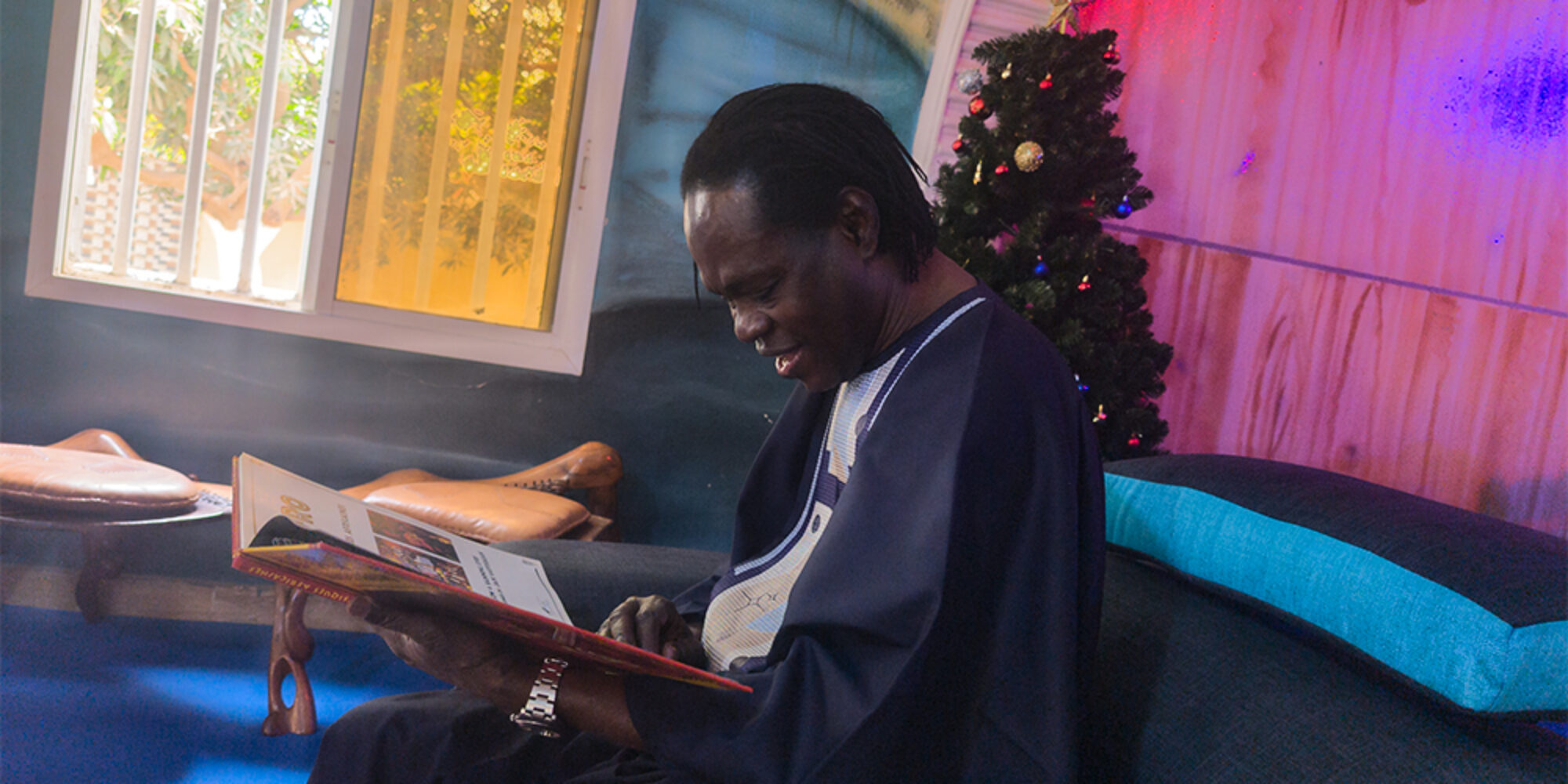
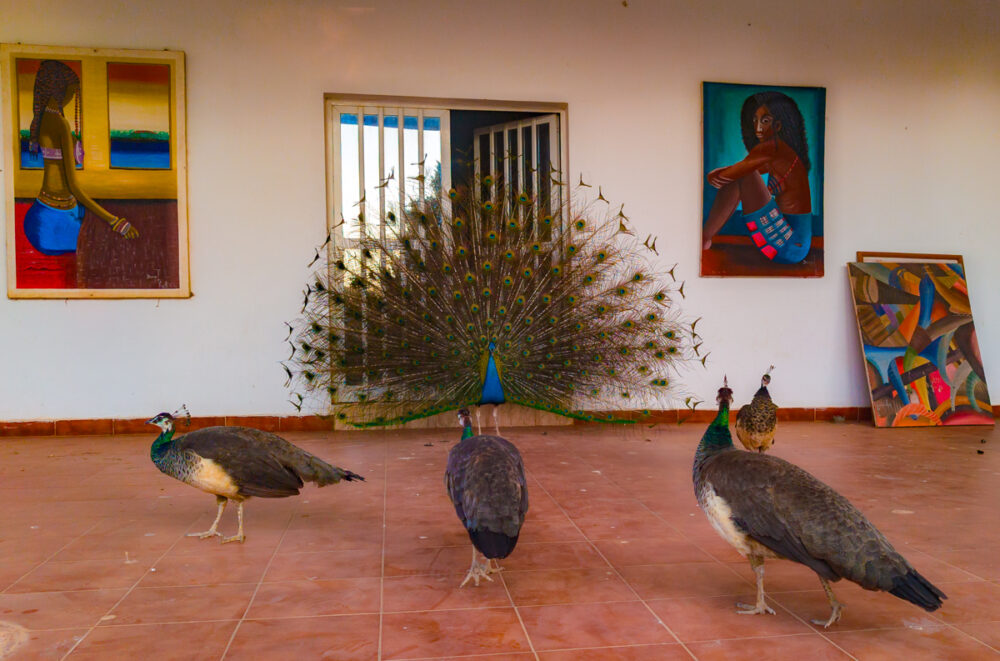
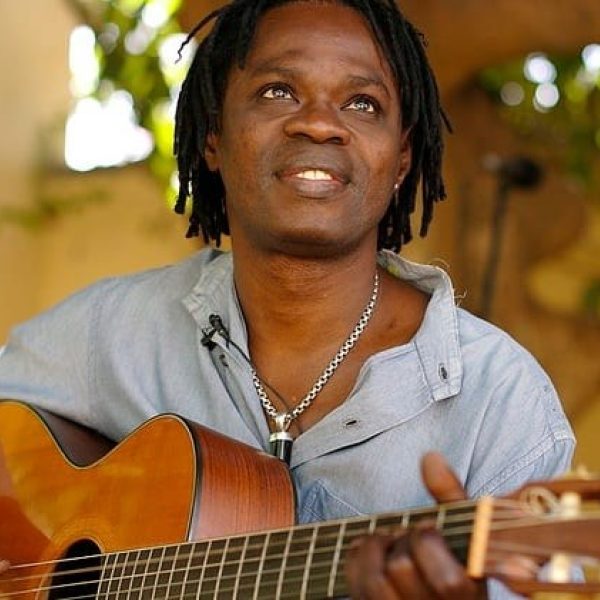
<p><em>The trip to Baaba Maal’s home takes one far out of Dakar, south on the road that leads to the seaside town of Toubab Dialaw. When you arrive at his compound in Mbounk Bambara, the first thing you notice is some 15 peacocks wandering freely. Folks are sitting out front, making tea, talking. Out back, there’s a huge open space, big enough for a serious party. Inside the spacious receiving room, there are images of Bob Marley, Nelson Mandela, Baaba at different points in his career. A door way leads to his studio, Nannk Studio, named for his agricultural foundation. </em></p>
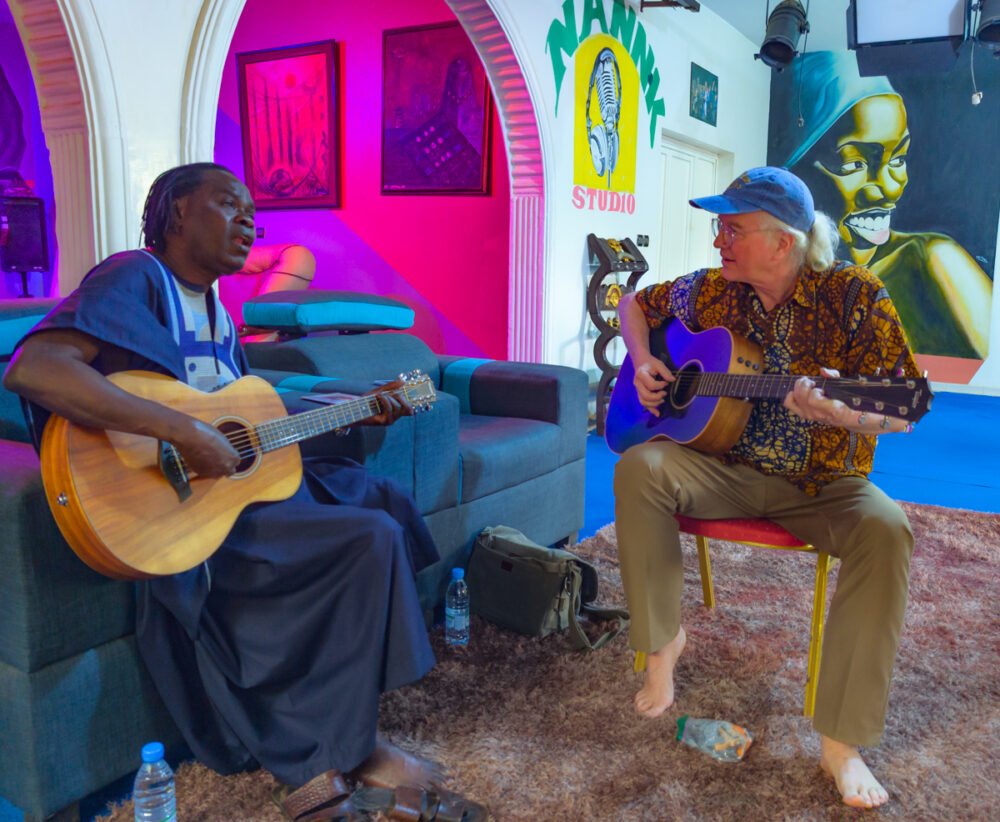
<p><em>Though it was February, there was a Christmas tree still standing. Sean Barlow and I were warmly received. We caught up on many things. I had my guitar along, and even got to play a few songs with Baaba. Then we pulled out the microphone to catch up on news from one of West Africa’s greatest singers. Here’s our conversation.</em></p>
<p><strong>Banning Eyre: Baaba, it’s great to be back in Senegal. Things seem good in Dakar. </strong></p>
<p><strong>Baaba Maal:</strong> The only problem is the young people taking the boats, trying to go to Europe. It's still happening. </p>
<p><strong>It’s dangerous.</strong></p>
<p>It's dangerous, also it’s not a benefit for the country and for Africa. We need them. We're here to build the future for this continent and this country, and we need more the young people than the older generation because they have the future. Recently, some of the teachers here in Senegal leave here and go to teach in Guinea.</p>
<p><strong>Why?</strong></p>
<p>Maybe it's a big offer. They get paid more. But it's all these young people that have been going away, this is the type thing we need to fix here. We need to give them hope, to show them hope, to show them that they are here to stay. We're doing our best in the concerts to say this.</p>
<p><strong>Well, they will never find music like they have here. Nowhere else. </strong></p>
<p>Yeah, nowhere else. </p>
<p><strong>So this village is Mbounk Bambara. Tell us about it.</strong></p>
<p>Bambara means the people from Mali, the Bambara. I think they’re the people who came from Mali to this place. They loved it and they started to be living here and all these ethnic groups came to join them. So they call it Mbounk Bambara. </p>
<p><strong>You've had this place a long time, eh? </strong></p>
<p>Very long time, since 1992. I was going to Toubab Dialaw, another beautiful place down here, and I discovered this place where we are. It was full of mango trees and some others fruit trees. My manager Mbassou bought it for me. I was touring in the States, and when I came back, he said, “I found a very nice place for you.” So I started to love this place and find it very peaceful, very quiet for a musician to get inspiration. And then I built this house, and I have my studio here. We have the big place behind, so we can do some concerts. It's beautiful to be here. </p>
<p><strong>I can see it. </strong></p>
<p>With my peacocks!</p>
 <p><strong>I remember the last time we talked, </strong><a href="https://afropop.test.ejaedesign.com/articles/baaba-maal-just-being"><strong>we talked about <em>Being</em></strong></a><strong>, the album that you made with Johan Hugo. You had said before that that you were done with making albums, but that one kind of just happened. </strong></p>
<p>Yeah, naturally, yeah. </p>
<p><strong>But I think people in America, and maybe in Europe, who don't see you touring or promoting new albums, they think, “What's happened to Baba Maal?” But in fact, you’re busy with all kinds of things here, right?</strong></p>
<p>I'm doing a lot of things. I'm doing things all the time, touring, writing songs and everything. And doing my festival, <a href="https://www.bluesdufleuve.sn/" rel="noopener" target="_blank"><em>Les Blues du Fleuve</em></a>, the Blues of the River. </p>
<p><strong>Yes. Talk a little about that. </strong></p>
<p>It's been 17 years now, we're doing this festival. There’s a lot of preparation during the year before the festival comes. And, alongside of that, I have a foundation that is helping me to light up all the engagement I have with the United Nations, fighting desertification, bringing agriculture projects and fishing projects to the communities. And that goes alongside with the music. So that means we have a really, really full book here. Because you need to go to play, and also to talk to people, to meet them, to show them, “Yes, it's a big name, but I come to do agriculture with you. I come to do fishing with you.” So that means women or young people won’t say that doing agriculture is a bad thing. It's a good thing. You can make a life with it, but in a modern way. <br></p>
<p><strong>I remember the last time we talked, </strong><a href="https://afropop.test.ejaedesign.com/articles/baaba-maal-just-being"><strong>we talked about <em>Being</em></strong></a><strong>, the album that you made with Johan Hugo. You had said before that that you were done with making albums, but that one kind of just happened. </strong></p>
<p>Yeah, naturally, yeah. </p>
<p><strong>But I think people in America, and maybe in Europe, who don't see you touring or promoting new albums, they think, “What's happened to Baba Maal?” But in fact, you’re busy with all kinds of things here, right?</strong></p>
<p>I'm doing a lot of things. I'm doing things all the time, touring, writing songs and everything. And doing my festival, <a href="https://www.bluesdufleuve.sn/" rel="noopener" target="_blank"><em>Les Blues du Fleuve</em></a>, the Blues of the River. </p>
<p><strong>Yes. Talk a little about that. </strong></p>
<p>It's been 17 years now, we're doing this festival. There’s a lot of preparation during the year before the festival comes. And, alongside of that, I have a foundation that is helping me to light up all the engagement I have with the United Nations, fighting desertification, bringing agriculture projects and fishing projects to the communities. And that goes alongside with the music. So that means we have a really, really full book here. Because you need to go to play, and also to talk to people, to meet them, to show them, “Yes, it's a big name, but I come to do agriculture with you. I come to do fishing with you.” So that means women or young people won’t say that doing agriculture is a bad thing. It's a good thing. You can make a life with it, but in a modern way. <br></p>
 <p><strong>That kind of goes back to your beginnings. I remember you talking about how, when you were very young, you traveled the river, stopping at villages and learning music. So you've stayed close to those traditional communities.</strong></p>
<p>It's all coming back to me. It's all this way of doing music. It's really, really coming back to me. It's like people are saying, “Yes, he's back. Years before he was traveling all around the world and we don't see him often here, but now we can see him often, we can talk to him, we can plan things with him.” And it's really nice. It's tiring to be traveling all over that. It's really, really tiring. Not the playing. Playing is not hard, but it's good to be at home. </p>
<p><strong>I'm sure it's a lot more fun than getting on airplanes and buses and hotels. I get that. So you just showed us an amazing video of a song you made with Flavour from Nigeria. How did that come about?</strong></p>
<p>Flavour reached out to me one time. His manager, or someone in his management, called me and said, “You know Flavour?” I said, “Of course I know Flavour. He's one of the musicians from Nigeria that I really appreciate. I like what he's doing because I see his energy.” He loves the culture. And also, I can see that he loves entertainment because he puts a lot of dancing and the traditional clothes and movement and visual things in his videos. I love what he is doing. </p>
<p>So they said, “Flavour is asking if you are interested to do a song with him.” I say, “Of course, whenever you want.” And then he came here. To this house. I have this studio there. This is where I did the vocal of <em>Black Panther</em> and some of the percussion that you can hear in <em>Black Panther</em>. So he came here for one night. We had food, and I did some vocals on the music he brought with him. He said, “This is exactly what I want. I'm gonna make a video in that. And are you interested to come to Nigeria to shoot the video?” I said, “Of course.”</p>
<p>And then we went for two days, and we did the video. It's great. It's out now. It's called “Afroculture.” It's a song to celebrate the culture of Africa, not just for Nigeria or Senegal, but every country in Africa. In the video, you can see a little bit of the dancing or the clothes or the jewelry or the visuals from the landscape of Kenya, for example, the Maasai. You can see Egypt. You can see the buildings. Zulu dress. Everyone can see himself in this video. </p>
<figure><iframe loading="lazy" width="500" height="281" src="//www.youtube.com/embed/hLJcQH_2Onk" frameborder="0" allowfullscreen=""></iframe></figure><br>
<p><strong>Yeah, this is Pan-Africanism in action, right? You know, we met Flavour in Lagos in 2017. We really appreciate him too, because back then, he was bringing highlife music into Afrobeats. There was a big </strong><a href="https://afropop.test.ejaedesign.com/articles/photo-essay-one-africa-music-fest-in-brooklyn"><strong>Afrobeats showcase in Brooklyn</strong></a><strong> that year, and he was one of the only artists who used live musicians. </strong></p>
<p>He is planning to show this song to the world. Maybe we will come to the States. </p>
<p><strong>I hope so. So you say you're still writing songs all the time. Are you recording them, putting them out? How do you release your new music now? </strong></p>
<p>We release music here. We were just celebrating 40 years of Dande Lenol, my band. And for the 40 years, we had an anniversary concert that we did in October at the Grand Théâtre, <a href="https://www.youtube.com/watch?v=VgbOqxNOdQ0" rel="noopener" target="_blank">with Youssou N’Dour</a>, Sekouba Bambino, some Malian musicians, Fulani musicians. They all came to join me. And for that occasion, I had an album of 14 songs. You can find that concert on the Internet. </p>
<p><strong>Wow. Congratulations on that.</strong><br></p>
<figure><iframe loading="lazy" width="500" height="281" src="//www.youtube.com/embed/KnHaw2wkUu8" frameborder="0" allowfullscreen=""></iframe></figure>
<p><br>And last year, we released also another album that we call <em>Souvenir</em>. I pick all the old songs that I did and recorded them here in the studio to give away for the fans just to appreciate it.</p><figure><iframe loading="lazy" width="500" height="281" src="//www.youtube.com/embed/sqlMj-V9EeE" frameborder="0" allowfullscreen=""></iframe></figure>(<em>Note: There are five of these </em>Souvenir<em> albums on YouTube</em>.)<p><br>So now, we are picking some of the songs and getting ready to put them on an international album.</p>
<p><strong>Fantastic. Well, you seem really at ease and comfortable and happy in your present life. </strong></p>
<p>Yeah. The last album I did with Yohan hand is called <em>Being</em>. I just want to be being, living. Everything I do, I do with pleasure, I do with love. I do it with joy. I don't harass myself to say, I'm going to make this. I'm going to make that. That's not me anymore. </p>
<p><strong>Done with that. </strong></p>
<p>I’m done with that. I'm cool and relaxed. </p>
<p><strong>I love it. Well, have you got any special words for our Afropop listeners? They miss you. </strong></p>
<p>I miss them so much because it's a way to talk to people that you know. They are far away from you, but they are really close to you, to your heart. You are really close to their heart, because it's people who are true lovers of music and culture. True lovers, I mean. I miss them so much, and get ready, I'm coming back. <br></p>
<p><strong>That kind of goes back to your beginnings. I remember you talking about how, when you were very young, you traveled the river, stopping at villages and learning music. So you've stayed close to those traditional communities.</strong></p>
<p>It's all coming back to me. It's all this way of doing music. It's really, really coming back to me. It's like people are saying, “Yes, he's back. Years before he was traveling all around the world and we don't see him often here, but now we can see him often, we can talk to him, we can plan things with him.” And it's really nice. It's tiring to be traveling all over that. It's really, really tiring. Not the playing. Playing is not hard, but it's good to be at home. </p>
<p><strong>I'm sure it's a lot more fun than getting on airplanes and buses and hotels. I get that. So you just showed us an amazing video of a song you made with Flavour from Nigeria. How did that come about?</strong></p>
<p>Flavour reached out to me one time. His manager, or someone in his management, called me and said, “You know Flavour?” I said, “Of course I know Flavour. He's one of the musicians from Nigeria that I really appreciate. I like what he's doing because I see his energy.” He loves the culture. And also, I can see that he loves entertainment because he puts a lot of dancing and the traditional clothes and movement and visual things in his videos. I love what he is doing. </p>
<p>So they said, “Flavour is asking if you are interested to do a song with him.” I say, “Of course, whenever you want.” And then he came here. To this house. I have this studio there. This is where I did the vocal of <em>Black Panther</em> and some of the percussion that you can hear in <em>Black Panther</em>. So he came here for one night. We had food, and I did some vocals on the music he brought with him. He said, “This is exactly what I want. I'm gonna make a video in that. And are you interested to come to Nigeria to shoot the video?” I said, “Of course.”</p>
<p>And then we went for two days, and we did the video. It's great. It's out now. It's called “Afroculture.” It's a song to celebrate the culture of Africa, not just for Nigeria or Senegal, but every country in Africa. In the video, you can see a little bit of the dancing or the clothes or the jewelry or the visuals from the landscape of Kenya, for example, the Maasai. You can see Egypt. You can see the buildings. Zulu dress. Everyone can see himself in this video. </p>
<figure><iframe loading="lazy" width="500" height="281" src="//www.youtube.com/embed/hLJcQH_2Onk" frameborder="0" allowfullscreen=""></iframe></figure><br>
<p><strong>Yeah, this is Pan-Africanism in action, right? You know, we met Flavour in Lagos in 2017. We really appreciate him too, because back then, he was bringing highlife music into Afrobeats. There was a big </strong><a href="https://afropop.test.ejaedesign.com/articles/photo-essay-one-africa-music-fest-in-brooklyn"><strong>Afrobeats showcase in Brooklyn</strong></a><strong> that year, and he was one of the only artists who used live musicians. </strong></p>
<p>He is planning to show this song to the world. Maybe we will come to the States. </p>
<p><strong>I hope so. So you say you're still writing songs all the time. Are you recording them, putting them out? How do you release your new music now? </strong></p>
<p>We release music here. We were just celebrating 40 years of Dande Lenol, my band. And for the 40 years, we had an anniversary concert that we did in October at the Grand Théâtre, <a href="https://www.youtube.com/watch?v=VgbOqxNOdQ0" rel="noopener" target="_blank">with Youssou N’Dour</a>, Sekouba Bambino, some Malian musicians, Fulani musicians. They all came to join me. And for that occasion, I had an album of 14 songs. You can find that concert on the Internet. </p>
<p><strong>Wow. Congratulations on that.</strong><br></p>
<figure><iframe loading="lazy" width="500" height="281" src="//www.youtube.com/embed/KnHaw2wkUu8" frameborder="0" allowfullscreen=""></iframe></figure>
<p><br>And last year, we released also another album that we call <em>Souvenir</em>. I pick all the old songs that I did and recorded them here in the studio to give away for the fans just to appreciate it.</p><figure><iframe loading="lazy" width="500" height="281" src="//www.youtube.com/embed/sqlMj-V9EeE" frameborder="0" allowfullscreen=""></iframe></figure>(<em>Note: There are five of these </em>Souvenir<em> albums on YouTube</em>.)<p><br>So now, we are picking some of the songs and getting ready to put them on an international album.</p>
<p><strong>Fantastic. Well, you seem really at ease and comfortable and happy in your present life. </strong></p>
<p>Yeah. The last album I did with Yohan hand is called <em>Being</em>. I just want to be being, living. Everything I do, I do with pleasure, I do with love. I do it with joy. I don't harass myself to say, I'm going to make this. I'm going to make that. That's not me anymore. </p>
<p><strong>Done with that. </strong></p>
<p>I’m done with that. I'm cool and relaxed. </p>
<p><strong>I love it. Well, have you got any special words for our Afropop listeners? They miss you. </strong></p>
<p>I miss them so much because it's a way to talk to people that you know. They are far away from you, but they are really close to you, to your heart. You are really close to their heart, because it's people who are true lovers of music and culture. True lovers, I mean. I miss them so much, and get ready, I'm coming back. <br></p>
 <p><strong>That’s good to hear. And we're coming, too. Next January, we’re bringing some of our most loyal Afropop fans here next year. </strong></p>
<p>They're very welcome. They can come here at the house. I'm going to organize things for them just to bring some of these traditional artists, maybe old, and also the young people just to discover. If people come to Senegal, they have to see the culture. To see the landscape, the animals, is fine. But they must discover the culture, because it's here. I think the culture really helps this continent—especially a country like Senegal—to be stable, to be strong, to be facing problems like everyone, but be really grounded, having our feet on the ground and looking at the future. Because the culture is still here and teaching us a lot of lessons of life. I think this is also a thing that we want to share with the young generation, to say to them, “You have something really important. Don't ever lose it.”</p>
<p><strong>Do you think that's working? Do you feel like young people in Senegal, in Dakar, are getting that message?</strong></p>
<p>Yes. If you see the respect that young people have for someone like me or Youssou or Ismail Lô or Omar Pene. You know, we are from a different generation, but they have a lot of respect for us. And even you now with the social media, they are proud to say, “Yes, I discovered this from Baaba Maal. That was 50 years ago. I discovered this from Youssou that he sang a long time ago.” They are very happy to go deep, and to see what we have done. That means they are connected to their culture. And that's great. That's really great. </p>
<p><strong>That’s impressive. I mean, in a lot of countries we've gone to, you turn on the radio and you're hearing foreign hip-hop, R&B, reggaeton…. Not so much local music. It’s just so clear that people in Senegal love their music, first and foremost. </strong></p>
<p>They love music. They love any kind. And you, in Senegal, you can see any kind of music. You are a musician, you can find any kind of audience—people who love reggae music, people who go to the jazz club, people who love traditional music, what we call folklore, and people who love the upcoming artists, very famous African artists like Wally Seck or Sidy Diop. They go. They follow them. They love music in general. </p>
<p><strong>And they listen to the Nigerian and South African stuff too, Afrobeats and amapiano and all that.</strong></p>
<p>Yes. Yes. Senegal is a very open-minded country, culturally and musically. Some time, we show them something new, and they say, “Yes, we know about this. We know about everything.” And I like that about Senegal. </p>
<p><strong>Me too, man. Well, thanks very much for having us here. It’s so great to see you in person, with your peacocks!</strong></p>
<p>Thank you for coming.</p>
<p><strong>That’s good to hear. And we're coming, too. Next January, we’re bringing some of our most loyal Afropop fans here next year. </strong></p>
<p>They're very welcome. They can come here at the house. I'm going to organize things for them just to bring some of these traditional artists, maybe old, and also the young people just to discover. If people come to Senegal, they have to see the culture. To see the landscape, the animals, is fine. But they must discover the culture, because it's here. I think the culture really helps this continent—especially a country like Senegal—to be stable, to be strong, to be facing problems like everyone, but be really grounded, having our feet on the ground and looking at the future. Because the culture is still here and teaching us a lot of lessons of life. I think this is also a thing that we want to share with the young generation, to say to them, “You have something really important. Don't ever lose it.”</p>
<p><strong>Do you think that's working? Do you feel like young people in Senegal, in Dakar, are getting that message?</strong></p>
<p>Yes. If you see the respect that young people have for someone like me or Youssou or Ismail Lô or Omar Pene. You know, we are from a different generation, but they have a lot of respect for us. And even you now with the social media, they are proud to say, “Yes, I discovered this from Baaba Maal. That was 50 years ago. I discovered this from Youssou that he sang a long time ago.” They are very happy to go deep, and to see what we have done. That means they are connected to their culture. And that's great. That's really great. </p>
<p><strong>That’s impressive. I mean, in a lot of countries we've gone to, you turn on the radio and you're hearing foreign hip-hop, R&B, reggaeton…. Not so much local music. It’s just so clear that people in Senegal love their music, first and foremost. </strong></p>
<p>They love music. They love any kind. And you, in Senegal, you can see any kind of music. You are a musician, you can find any kind of audience—people who love reggae music, people who go to the jazz club, people who love traditional music, what we call folklore, and people who love the upcoming artists, very famous African artists like Wally Seck or Sidy Diop. They go. They follow them. They love music in general. </p>
<p><strong>And they listen to the Nigerian and South African stuff too, Afrobeats and amapiano and all that.</strong></p>
<p>Yes. Yes. Senegal is a very open-minded country, culturally and musically. Some time, we show them something new, and they say, “Yes, we know about this. We know about everything.” And I like that about Senegal. </p>
<p><strong>Me too, man. Well, thanks very much for having us here. It’s so great to see you in person, with your peacocks!</strong></p>
<p>Thank you for coming.</p>
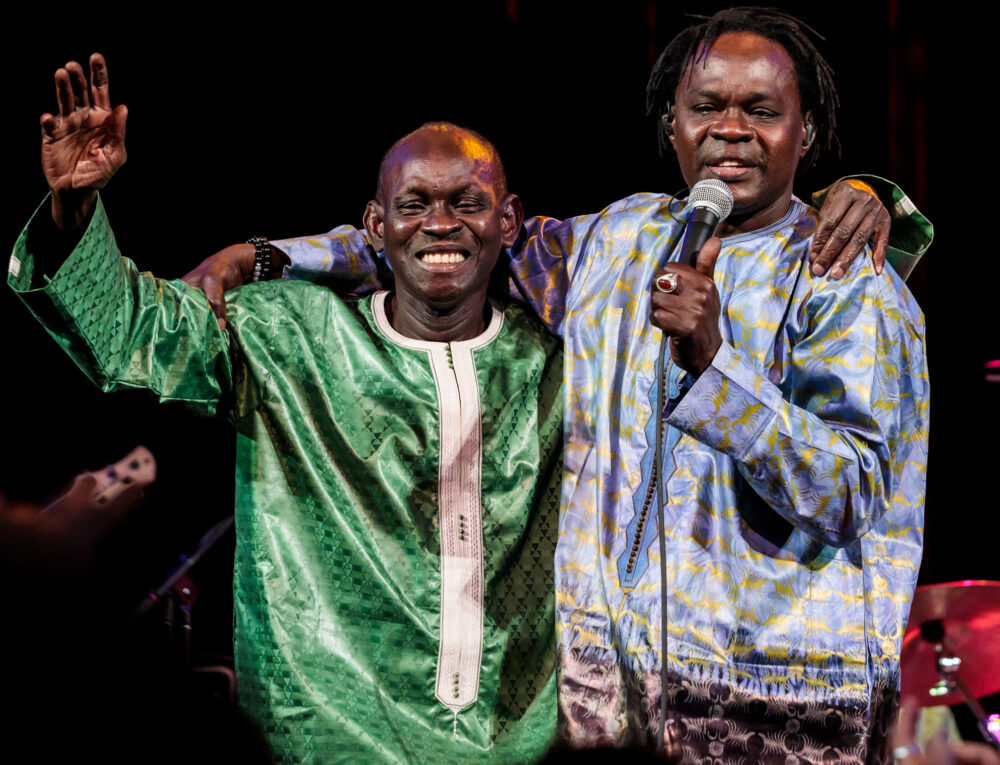
Baaba and the late Mansour Seck (photo by Sachyn Mital)
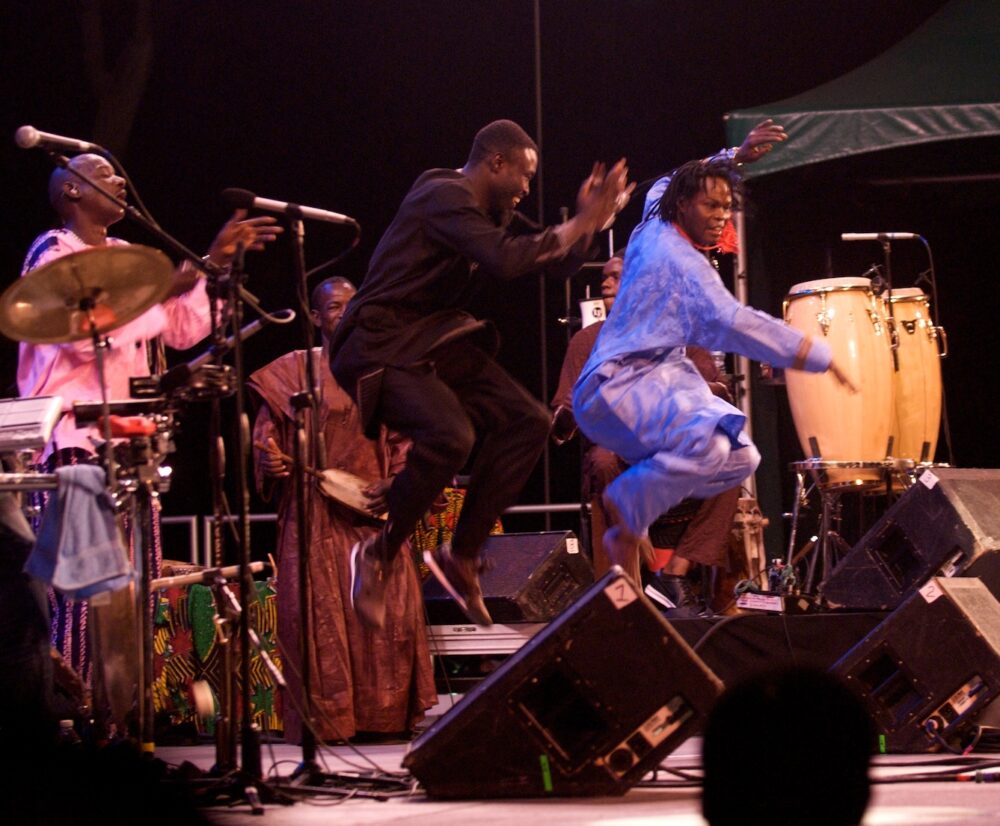
Baaba Maal with Dande Lenol, in action!
Dream jam. (Photo by Sean Barlow)

Related Audio Programs
September 10, 2020
Baaba Maal Live, Acoustic in NYC
Join us as we return to one of the great live Afropop recordings—Baaba Maal performing an intimate acoustic show here in New York.
Related Articles
Interview March 23, 2023
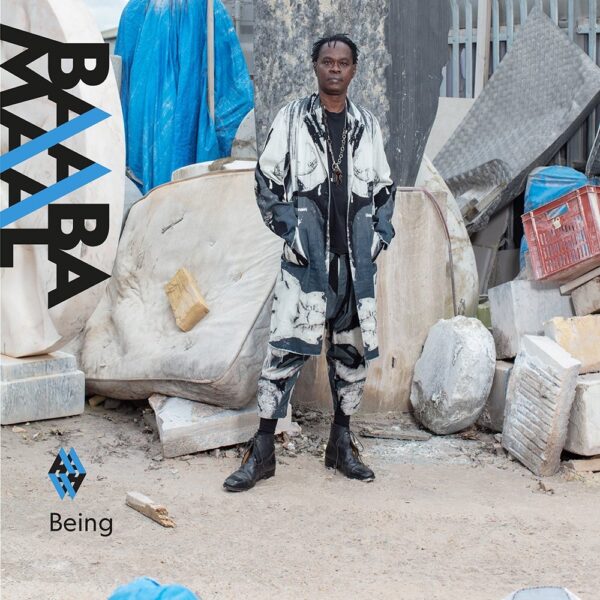
Baaba Maal Talks Just "Being"
Blog November 22, 2022