Interview April 27, 2026
Doctor Nativo: Journey of a Musical Shaman
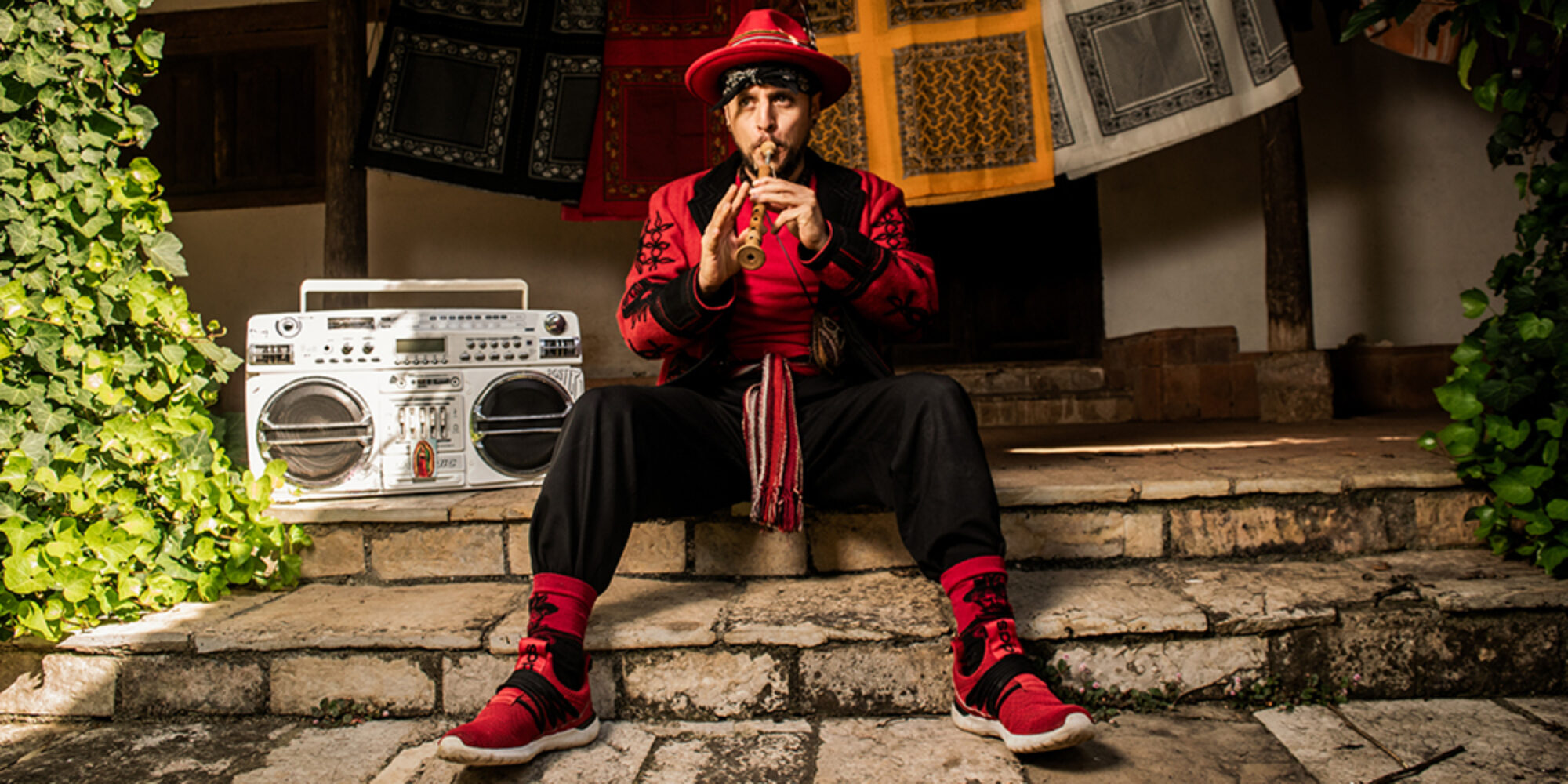
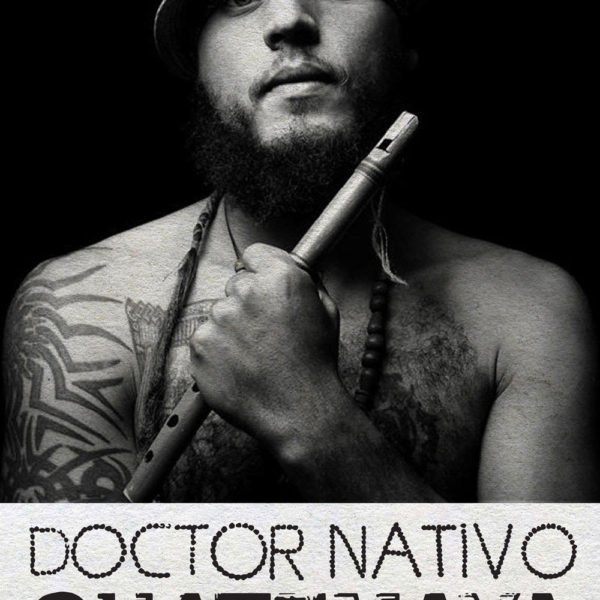
<p><em>Juan Martinez, a.k.a. Doctor Nativo, is a standout among today’s Central American roots musicians. Born in Guatemala to Cuban and Mayan parents, schooled in music in Cuba and Italy, successful in Barcelona with his blend of reggae and cumbia, and now, living in Chiapas, Mexico, Nativo is an artist on the acclaimed Stonetree Record label. His second Stonetree release, </em>Barrio Kandela<em>, is a sonic feast with deep cumbia grooves, brassy blasts of mariachi music, powerful lyrics and a joyous vibe, despite heavy subject matter. Stonetree, a label out of Belize run by long time friend of Afropop Ivan Duran, has a well-earned reputation for showcasing unique Central American artists, notably late Garifuna legends Andy Palacio and Aurelio Martinez, Umalali, and the Garifuna Collective. Doctor Nativo proudly joins those ranks. After hearing </em>Barrio Kandela<em>, Afropop’s Banning Eyre reached the artist over Zoom. Shortly before this conversation, Nativo’s beloved sister and collaborator, Adriana Primavera, passed away, far too young. The interview almost didn’t happen as a result. But as you will see, Nativo rose to the occasion.</em></p>
<p><strong>Banning Eyre: Doctor Nativo. Very good to meet you. One of our writers, Ben Richmond, wrote about </strong><a href="https://afropop.test.ejaedesign.com/articles/premiere-doctor-nativos-tries-a-change-up-with-minorias"><strong>your first album</strong></a><strong> for our website years ago. I've been listening to the new one and loving it. You have a very interesting background. To start, tell us a little about it.</strong></p>
<p><strong>Doctor Nativo:</strong> Well, I'm a son of immigrants. My father was a Cuban exile. He was exiled from Cuba to Guatemaya. And my mother is a native from Quetzaltenango, from Xela. It's a town in Guatemaya. That's what we call it, Guatemaya, because “mala” means bad, you know, so we try to change it. We are flipping that. Instead of “mala,” we say “maya.”</p>
<p><strong>Guatemaya. I'll remember that. So when did your father go into exile? Late ‘50s, early ‘60s?</strong></p>
<p>No. ‘70s. I was born in the ‘80s, so yeah, it was in the ‘70s. Or maybe late ‘60s, like you said. They left when my father was like 13 years old. He was with his parents. He was young. </p>
<p><strong>Okay. So did you grow up in Guatemaya with Mayan tradition? I imagine it was a mix of things. What was your cultural world like when you were a kid? </strong></p>
<p>When I was a kid, it was not like that. The Mayan tradition was there, but it was something that had to be hidden. It was hidden through syncretism. You know what syncretism is? </p>
<p><strong>Hiding African religion behind symbols of Christianity.</strong></p>
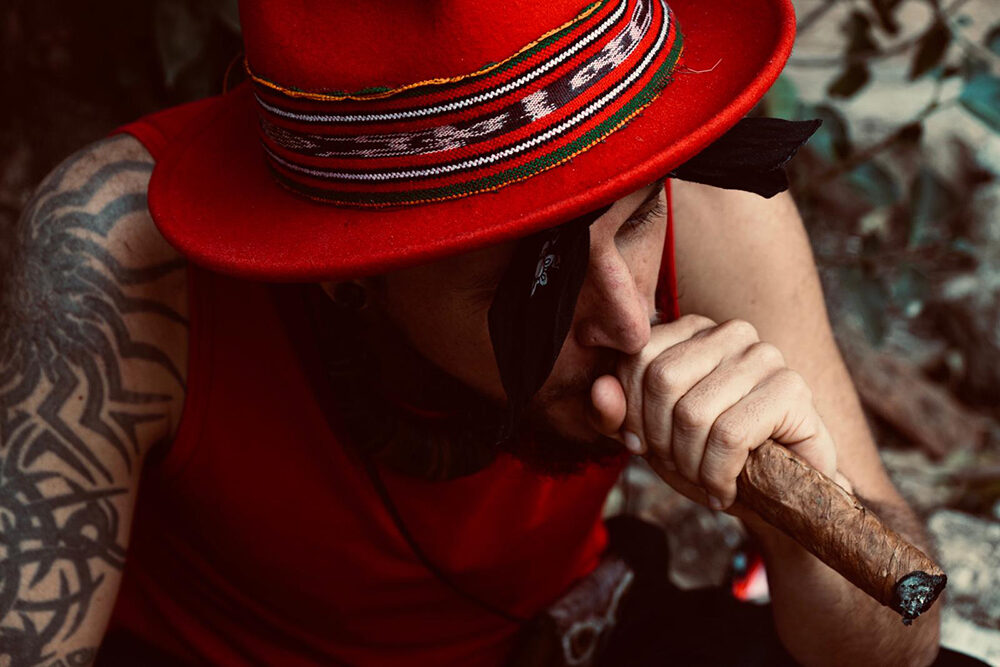
<p>Yes. So it was hidden through syncretism in order to keep this knowledge alive. And the kids, for example, we were actually scared of it. Every time I would pass my aunt’s and my grandpa’s, from my mom's side, there was Mayan blood in there. In my grandpa's sister's house, I will go there and see this room full of candles and things like that, and for me, it was spooky. Super spooky. We kids were always a little bit left out. They were Catholic in public. And for my dad's side, there is also a lot of spiritual background. They had these gifts and things, more from the Afro-Cuban tradition.</p>
<p><strong>Santeria?</strong></p>
<p>Well, more from the Orishas. Because Santeria is syncretism already. It’s hiding the Orishas behind the Catholic saints. So, yeah, everything was in the background; everything was pure, but in the eye of the public, it was not what it seemed. It was hidden in order to protect it. <br></p>
 <p><strong>So your father had that Afro-Cuban background, and then married into this native Central American world. That's a very interesting mix. Did he did he see a connection between those things?</strong><br></p>
<p>Maybe. I could say that what they might have in common is a lot of struggle. A lot of struggle. He left from pretty much a dictatorship. His family were exiled from that into to a civil war in Guatemaya.</p>
<p><strong>Yes, the ‘70s and ‘80s were very tough in Guatemaya. </strong></p>
<p>It was very tough times. They left from one thing to another. So I think that they related. That’s why they stayed in Guatemaya, because the struggle was something that it was something that the people had in common, you know, trying to survive the conditions around them. </p>
<p><strong>With a very oppressive government. </strong></p>
<p>Yes, very oppressive governments. It's been a hard, hard thing. </p>
<p><strong>Out of the frying pan and into the fire, as they say, right? </strong></p>
<p>Exactly. </p>
<p><strong>So all that was very prominent in your early life. What ultimately happened for you to end up in Barcelona?</strong></p>
<p>Well, in the year 1990, my father was murdered. It was part of the Civil War. There’s a big story behind that; it's a little complicated. But it was a thing that really shocked me and my family, you know? I was nine years old, and my sister was five. And my mom, it was her first love. It was so difficult for her to process this thing that happened. It was tragic, and it did something deep in us. It really marked something in us. And then, when I was about to be 15, I decided to I was going to study drums in Denmark. I asked my mother to give me some money and she helped me to get my ticket and I went to Denmark. I studied for one week, but then I didn’t go home.</p>
<p>I was a boy, just a little boy, traveling alone, and I had to leave my mom and my sister also in Quetzaltenango. They were not by themselves, because there was some family around, but when my dad passed away, I became the man of the house, for many years from, like from nine to 15. So when I was 15, I was like, I need to live a little bit of life. I wanted to learn things, to see places. And my mom and my sister were like, “Yeah, we understand you have do that.” They thought I was leaving for two months. But I left for two years. In all that period, I was living in Europe, living in India, from 15 to almost 18. I even passed through the desert in Mexico. </p>
<p>And then I went back right before the year 2000. Because they said the world was gonna end, you know. You remember that. </p>
<p><strong>I do.</strong></p>
<p>So I was like, I gotta be with my family. That really moved something in me. So Barcelona came after that. First, in 2000, I thought I need to find my dad's roots, because we never went to Cuba. So I went to Cuba and studied there, in the National School of Art. I studied music, but only for a couple of months until I got kicked out. </p>
<p><strong>Why? </strong></p>
<p>I was not in trouble in the sense of doing bad things, but always trying to push things to the limit. So from there I catapult to Barcelona and all of that happened. <br></p>
<p><strong>So your father had that Afro-Cuban background, and then married into this native Central American world. That's a very interesting mix. Did he did he see a connection between those things?</strong><br></p>
<p>Maybe. I could say that what they might have in common is a lot of struggle. A lot of struggle. He left from pretty much a dictatorship. His family were exiled from that into to a civil war in Guatemaya.</p>
<p><strong>Yes, the ‘70s and ‘80s were very tough in Guatemaya. </strong></p>
<p>It was very tough times. They left from one thing to another. So I think that they related. That’s why they stayed in Guatemaya, because the struggle was something that it was something that the people had in common, you know, trying to survive the conditions around them. </p>
<p><strong>With a very oppressive government. </strong></p>
<p>Yes, very oppressive governments. It's been a hard, hard thing. </p>
<p><strong>Out of the frying pan and into the fire, as they say, right? </strong></p>
<p>Exactly. </p>
<p><strong>So all that was very prominent in your early life. What ultimately happened for you to end up in Barcelona?</strong></p>
<p>Well, in the year 1990, my father was murdered. It was part of the Civil War. There’s a big story behind that; it's a little complicated. But it was a thing that really shocked me and my family, you know? I was nine years old, and my sister was five. And my mom, it was her first love. It was so difficult for her to process this thing that happened. It was tragic, and it did something deep in us. It really marked something in us. And then, when I was about to be 15, I decided to I was going to study drums in Denmark. I asked my mother to give me some money and she helped me to get my ticket and I went to Denmark. I studied for one week, but then I didn’t go home.</p>
<p>I was a boy, just a little boy, traveling alone, and I had to leave my mom and my sister also in Quetzaltenango. They were not by themselves, because there was some family around, but when my dad passed away, I became the man of the house, for many years from, like from nine to 15. So when I was 15, I was like, I need to live a little bit of life. I wanted to learn things, to see places. And my mom and my sister were like, “Yeah, we understand you have do that.” They thought I was leaving for two months. But I left for two years. In all that period, I was living in Europe, living in India, from 15 to almost 18. I even passed through the desert in Mexico. </p>
<p>And then I went back right before the year 2000. Because they said the world was gonna end, you know. You remember that. </p>
<p><strong>I do.</strong></p>
<p>So I was like, I gotta be with my family. That really moved something in me. So Barcelona came after that. First, in 2000, I thought I need to find my dad's roots, because we never went to Cuba. So I went to Cuba and studied there, in the National School of Art. I studied music, but only for a couple of months until I got kicked out. </p>
<p><strong>Why? </strong></p>
<p>I was not in trouble in the sense of doing bad things, but always trying to push things to the limit. So from there I catapult to Barcelona and all of that happened. <br></p>
 <p><strong>Let’s talk about a little bit about your musical evolution. Were you were you playing music right from childhood? How did you become a musician?</strong><br></p>
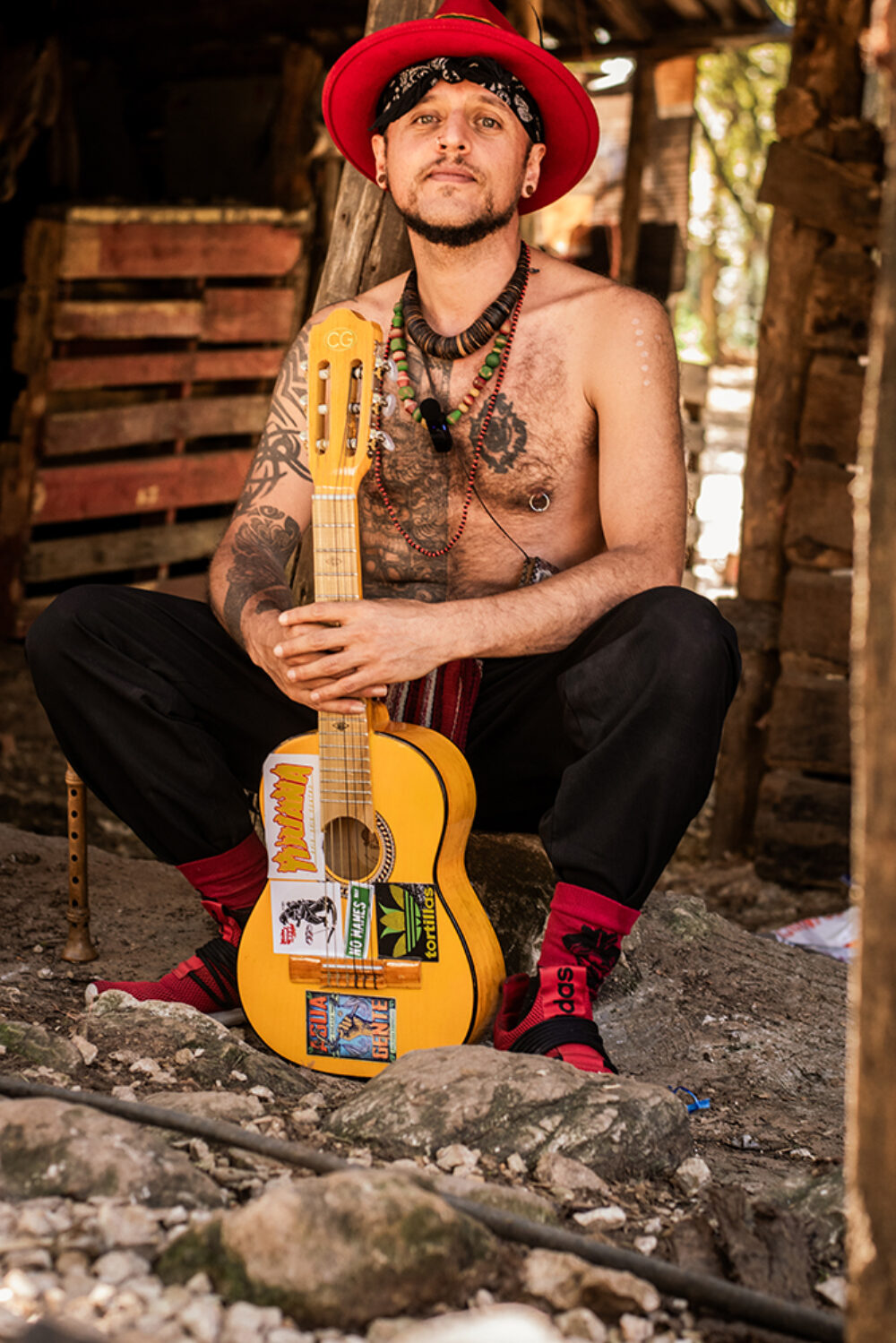
<p>I have a musical background big from both sides. My dad was a repressed musician pretty much because his father, you know, they caught him when he was five-year-old. He was playing drums with all my grandma's pots and pans, and they knew that there was something in there, that he had something with music. But my grandpa was like, music doesn't give you money to live. So you know that story. He had to keep it as a hobby. He had to keep it as a thing that keep him alive, but not his profession. And then on my mom's side, they were marimba players, traditional marimba players and all my cousins and everybody was into the music also. My aunt from my dad's side also is a jazz piano player. It's a lot of music background from us. It's in the blood, you know. Me and my sister, we inherited that. </p>
<p><strong>So what did you play when you were young? Marimba?</strong></p>
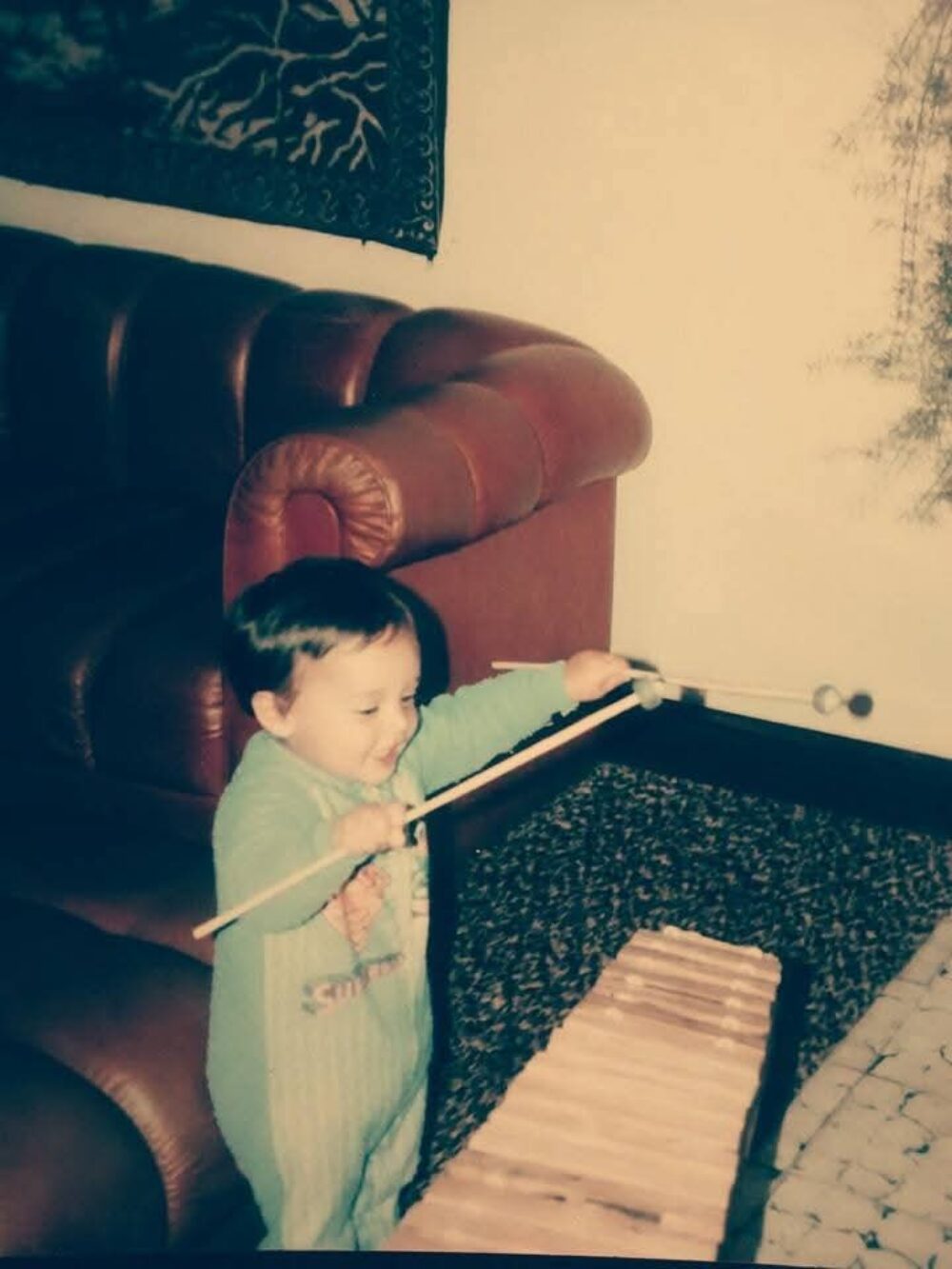
<p>Actually, there is a picture of me as a two-year-old playing marimba, but no, it was more like percussion, congas, bongos, all of that, and my dad would play organ and guitar. There was a jam sessions every weekend in my house. All of the Guatemaya friends would come to the Cuban house every weekend, because my dad, he worked a real job. He had money, so he could put two kegs of beer for everybody to come every weekend in his house and do a jam session. I was raised in that jam session, you know, it was like I couldn't escape that.<br></p>
<p><strong>Let’s talk about a little bit about your musical evolution. Were you were you playing music right from childhood? How did you become a musician?</strong><br></p>
<p>I have a musical background big from both sides. My dad was a repressed musician pretty much because his father, you know, they caught him when he was five-year-old. He was playing drums with all my grandma's pots and pans, and they knew that there was something in there, that he had something with music. But my grandpa was like, music doesn't give you money to live. So you know that story. He had to keep it as a hobby. He had to keep it as a thing that keep him alive, but not his profession. And then on my mom's side, they were marimba players, traditional marimba players and all my cousins and everybody was into the music also. My aunt from my dad's side also is a jazz piano player. It's a lot of music background from us. It's in the blood, you know. Me and my sister, we inherited that. </p>
<p><strong>So what did you play when you were young? Marimba?</strong></p>
<p>Actually, there is a picture of me as a two-year-old playing marimba, but no, it was more like percussion, congas, bongos, all of that, and my dad would play organ and guitar. There was a jam sessions every weekend in my house. All of the Guatemaya friends would come to the Cuban house every weekend, because my dad, he worked a real job. He had money, so he could put two kegs of beer for everybody to come every weekend in his house and do a jam session. I was raised in that jam session, you know, it was like I couldn't escape that.<br></p>
 <p><strong>So by the time you got to the music conservatory in Cuba, what were you playing and studying then?</strong><br></p>
<p>Percussion. Two months. Percussion still. I actually went so deep into it that what people were learning in a year, I learned in those two months. I would start early in the morning and go till late in the night. So I would have my professors from school. And right after that, I would go with private teachers. And after that, I would go to jam sessions with all of the students, you know? </p>
<p><strong>You made good use of those two months. </strong></p>
<p>I made really good, and then I stayed because my visa was for like a year. So I stayed after they kicked me out of school. I got pretty much adopted by a Cuban family. They were like, “Come live with us.” And all my teachers from school would come to that house to teach me. So I continued learning. I never stopped learning there. The whole time was Cuba was like my internship in music. Before that, I was self-taught, you know? Nobody, not my dad or anybody, taught me how to play anything. Until I went to Cuba. </p>
<p><strong>Wow. But you had it in your ears; you had it in your blood. So then Barcelona. How long did that last? </strong></p>
<p>Barcelona lasted for almost six years. </p>
<p><strong>Did you have a performing career there?</strong></p>
<p>Yes. When I arrived there, I didn't even know what the hell was Barcelona, you know? I actually was not interested in Spain at all. Spain for us means a lot of shit, you know? It carries a lot of history, a lot of darkness. So for me, Spain was like, “No thanks.”</p>
<p><strong>So how did you end up there? </strong></p>
<p>Love. The mother of my kids. I was trying to be with her and her family. They send her to Europe, to Barcelona. And I'm like, “What the hell am I gonna do there?” So I get there and I see this music scene in the street, people making a lot of money in the street playing, performing. And I'm like, “I can do this.” The first time I do, the cops come and take away my guitar and all my shit. You needed a license to do this. So for one year, I had to wait one year to get that license. I had to be like… they call them “squats.” I had to stay in houses and look through food…. Well, not in the dumpster, but it was a hard time to get over that one year. </p>
<p>After that, I got the email that my license was ready. I went pick up my license and that day I burned like 20 CDs an I went to the street with two musicians that I never practiced with in my life. And in one hour, we sold the 20 CDs at 10 euros. In one hour. After that, my career started picking up because I performed six days a week in the street, and I started building a band. We started touring Europe. We started being in music programs and interviews. We won prizes. It was so much impact that it was hard for the band members to like take all of that fame so young. It was so fast because we were in the eye of everybody. Suddenly we were performing in the street and Manu Chao was in the audience looking at our show, you know? Alicia Keys, all these famous artists, because Barcelona is a place where everybody wants to go for vacation. So suddenly I'm performing and the governor of Italy is there watching the show. We sold hundreds, thousands of CDs from like 2006 to 2010.</p>
<p><strong>So by the time you got to the music conservatory in Cuba, what were you playing and studying then?</strong><br></p>
<p>Percussion. Two months. Percussion still. I actually went so deep into it that what people were learning in a year, I learned in those two months. I would start early in the morning and go till late in the night. So I would have my professors from school. And right after that, I would go with private teachers. And after that, I would go to jam sessions with all of the students, you know? </p>
<p><strong>You made good use of those two months. </strong></p>
<p>I made really good, and then I stayed because my visa was for like a year. So I stayed after they kicked me out of school. I got pretty much adopted by a Cuban family. They were like, “Come live with us.” And all my teachers from school would come to that house to teach me. So I continued learning. I never stopped learning there. The whole time was Cuba was like my internship in music. Before that, I was self-taught, you know? Nobody, not my dad or anybody, taught me how to play anything. Until I went to Cuba. </p>
<p><strong>Wow. But you had it in your ears; you had it in your blood. So then Barcelona. How long did that last? </strong></p>
<p>Barcelona lasted for almost six years. </p>
<p><strong>Did you have a performing career there?</strong></p>
<p>Yes. When I arrived there, I didn't even know what the hell was Barcelona, you know? I actually was not interested in Spain at all. Spain for us means a lot of shit, you know? It carries a lot of history, a lot of darkness. So for me, Spain was like, “No thanks.”</p>
<p><strong>So how did you end up there? </strong></p>
<p>Love. The mother of my kids. I was trying to be with her and her family. They send her to Europe, to Barcelona. And I'm like, “What the hell am I gonna do there?” So I get there and I see this music scene in the street, people making a lot of money in the street playing, performing. And I'm like, “I can do this.” The first time I do, the cops come and take away my guitar and all my shit. You needed a license to do this. So for one year, I had to wait one year to get that license. I had to be like… they call them “squats.” I had to stay in houses and look through food…. Well, not in the dumpster, but it was a hard time to get over that one year. </p>
<p>After that, I got the email that my license was ready. I went pick up my license and that day I burned like 20 CDs an I went to the street with two musicians that I never practiced with in my life. And in one hour, we sold the 20 CDs at 10 euros. In one hour. After that, my career started picking up because I performed six days a week in the street, and I started building a band. We started touring Europe. We started being in music programs and interviews. We won prizes. It was so much impact that it was hard for the band members to like take all of that fame so young. It was so fast because we were in the eye of everybody. Suddenly we were performing in the street and Manu Chao was in the audience looking at our show, you know? Alicia Keys, all these famous artists, because Barcelona is a place where everybody wants to go for vacation. So suddenly I'm performing and the governor of Italy is there watching the show. We sold hundreds, thousands of CDs from like 2006 to 2010.</p>
 <p><strong>Were you already performing under the name Doctor Nativo?</strong></p>
<p>No. It was Barrio Candela, like the name of my album but with a “C.” They were all my songs but I didn't want to be a solo artist. I wanted it to be a band, a movement. I have these songs and I want to make this movement called Barrio Candela and I’ve got artists from a from many places in South America, Chile, Ecuador, Bolivia, Mexico. There were guys from everywhere and Barrio Candela exploded in those years, until 2010. </p>
<p><strong>What was the music like? </strong></p>
<p>Like my music, you know? It's the same songs I've been playing. Some of these songs are 20 years old and I play them now. Some of them I’ve never record, or I just recorded them now. Of course I have a bunch of new songs, but I always include some from my classic repertoire and then some of the new stuff, so people get to hear the new things. </p>
<p><strong>We’re going to come to the new album, but let’s catch up with the story. After 2010, you went back to Guatemaya? </strong></p>
<p>They said it was going to be an economic crisis. I remember in January of 2010, we went to perform that day in the street. By that time, we had two people selling the CDs, breakdancers, a whole crew of people helping us. We were seven musicians, and 300 to 400 people would watch every show in the street every day. By that time, we could sell 300 CDs in two hours. This is some crazy shit. That's good business, 3,000 euros, plus the coins. It was a lot of money, and it messed some people up in the head, you know?</p>
<p>Then the economic crisis came, and everybody started getting nervous, so in the end the band broke up, and I'm like, “I gotta go back home.” And when I went back home, between 2010 and 2011, I met Tata Pedro Cruz, who is a shaman. He's an elder. He's already transcended now, but I when I met him, it was like going back to my roots. I arrived in that circle of fire. I arrived as somebody that was coming to see, and they were like, “You have to come in here and be with us.” I was initiated in India when I was a kid, and I didn't even know what the hell initiation was. I didn't know none of that. </p>
<p><strong>You were initiated in India?</strong></p>
<p>That happened when I went in, when I was 15 when I went to Denmark. I ended up in India with this guru in the middle of nowhere. He didn't speak Spanish or English, and he kept me for like a week with him. But I was a kid, you know. I thought it was just playing music with him and living the experience. But later on, when I arrived in the circle of the fire of the Maya, they're like, “You have to come here in the center with us.”</p>
<p><strong>Was that like entering that room with the candles you saw when you were a kid?</strong></p>
<p>It was like that. And I'm like, “What am I doing here?” And they're like, “You have to direct this energy. This is your energy. This is the energy of death, the energy of the ancestors.” And then I'm like, “Okay, so what do I do?” “You know this already,” they say to me. And then everything started coming to me, like a download of information. It was just seeping in there, you know?<br></p>
<p><strong>Were you already performing under the name Doctor Nativo?</strong></p>
<p>No. It was Barrio Candela, like the name of my album but with a “C.” They were all my songs but I didn't want to be a solo artist. I wanted it to be a band, a movement. I have these songs and I want to make this movement called Barrio Candela and I’ve got artists from a from many places in South America, Chile, Ecuador, Bolivia, Mexico. There were guys from everywhere and Barrio Candela exploded in those years, until 2010. </p>
<p><strong>What was the music like? </strong></p>
<p>Like my music, you know? It's the same songs I've been playing. Some of these songs are 20 years old and I play them now. Some of them I’ve never record, or I just recorded them now. Of course I have a bunch of new songs, but I always include some from my classic repertoire and then some of the new stuff, so people get to hear the new things. </p>
<p><strong>We’re going to come to the new album, but let’s catch up with the story. After 2010, you went back to Guatemaya? </strong></p>
<p>They said it was going to be an economic crisis. I remember in January of 2010, we went to perform that day in the street. By that time, we had two people selling the CDs, breakdancers, a whole crew of people helping us. We were seven musicians, and 300 to 400 people would watch every show in the street every day. By that time, we could sell 300 CDs in two hours. This is some crazy shit. That's good business, 3,000 euros, plus the coins. It was a lot of money, and it messed some people up in the head, you know?</p>
<p>Then the economic crisis came, and everybody started getting nervous, so in the end the band broke up, and I'm like, “I gotta go back home.” And when I went back home, between 2010 and 2011, I met Tata Pedro Cruz, who is a shaman. He's an elder. He's already transcended now, but I when I met him, it was like going back to my roots. I arrived in that circle of fire. I arrived as somebody that was coming to see, and they were like, “You have to come in here and be with us.” I was initiated in India when I was a kid, and I didn't even know what the hell initiation was. I didn't know none of that. </p>
<p><strong>You were initiated in India?</strong></p>
<p>That happened when I went in, when I was 15 when I went to Denmark. I ended up in India with this guru in the middle of nowhere. He didn't speak Spanish or English, and he kept me for like a week with him. But I was a kid, you know. I thought it was just playing music with him and living the experience. But later on, when I arrived in the circle of the fire of the Maya, they're like, “You have to come here in the center with us.”</p>
<p><strong>Was that like entering that room with the candles you saw when you were a kid?</strong></p>
<p>It was like that. And I'm like, “What am I doing here?” And they're like, “You have to direct this energy. This is your energy. This is the energy of death, the energy of the ancestors.” And then I'm like, “Okay, so what do I do?” “You know this already,” they say to me. And then everything started coming to me, like a download of information. It was just seeping in there, you know?<br></p>
 <p><strong>So is this what led to you assume this new identity as Dr. Nativo?</strong><br></p>
<p>Exactly. That's what happened. It took from 2011 till 2013, sort of like a mutation. But when I arrived at Ivan Duran's place in Belize, I actually froze because Ivan is a big guy. He's putting Andy Palacio and Calypso Rose, names that are like legends, and most of his artists were Garifuna, you know? I'm a white boy for many people, but he heard something in my music. Actually, he said, “I want to produce a Guatemalan artist. I want to hear some of this stuff.” So we have this friend in common, a producer in Guatemaya. He send Ivan like 20 CDs, and in those CDs there was a Barrio Candela CD, and when he heard this, out of all of them, he said, “This one I want to meet.” <em>Barrio Candela</em> was the album he heard. We did two albums, and one of those albums was randomly in the package that this guy sent.</p>
<p><strong>That was recorded in Barcelona?</strong></p>
<p>Yeah, that was in Barcelona, but he saw that all of the songs were written by me and he was like, “This is the guy. I need to meet this guy.”</p>
<p><strong>Great.</strong></p>
<p>But when I arrived in 2013, I froze, man. There's a band here in this huge studio with these two black guys beside him. He's like, “Play me your best songs.” And he gives me the guitar and I'm like, “Let me think which one...” I didn't know what the hell to do. And he's like, “You know what? Go rest. Come back tomorrow in the morning and play me your best songs.” So I couldn't sleep that night. I was like, “What the hell are my best songs?” So I picked 17 songs. I was awake the whole night. And then in the morning I went there like at 9 a.m., and I'm like, “Okay, I'm gonna play you my best songs.” I start with the first one and he's like, “That's a kick in the balls.” And I play the second one and he was like, “Damn, that's a hit also.” I performed the 17 songs, he flipped. He was like, “Put the microphones out. I wanna hear this recorded.” He grabbed the bass and the other dude grabbed the drums and we just jammed the 17 songs. </p>
<p><strong>And that became your first Stonetree album?</strong></p>
<p>No. That just was kind of to set up the mood for what we were going to build. Ivan needed to hear my voice in those big microphones. You know how Ivan is. </p>
<p><strong>I do.</strong></p>
<p>He said, “I don't know why I'm doing this, but I'm going to go full in on this. I'm going to build your career in 10 years. I want to sign you to Stonetree records.” And I'm like, “Hell, yeah!” I was pretty much frustrated by 2013 because I was already 20 years performing. It was like I'm not going to go further than this. I thought Barrio Candela was my top. And then it took five years, man, from 2013 till 2018 to release the album on Stonetree. It took a long freaking time. I wasn't used to that. It was hard, you know, to wait like this, but it was worth it because it was presented at Lincoln Center in New York city. And then after that, it was just like big festival after big festival until the pandemic, you know? <br></p>
<p><strong>So is this what led to you assume this new identity as Dr. Nativo?</strong><br></p>
<p>Exactly. That's what happened. It took from 2011 till 2013, sort of like a mutation. But when I arrived at Ivan Duran's place in Belize, I actually froze because Ivan is a big guy. He's putting Andy Palacio and Calypso Rose, names that are like legends, and most of his artists were Garifuna, you know? I'm a white boy for many people, but he heard something in my music. Actually, he said, “I want to produce a Guatemalan artist. I want to hear some of this stuff.” So we have this friend in common, a producer in Guatemaya. He send Ivan like 20 CDs, and in those CDs there was a Barrio Candela CD, and when he heard this, out of all of them, he said, “This one I want to meet.” <em>Barrio Candela</em> was the album he heard. We did two albums, and one of those albums was randomly in the package that this guy sent.</p>
<p><strong>That was recorded in Barcelona?</strong></p>
<p>Yeah, that was in Barcelona, but he saw that all of the songs were written by me and he was like, “This is the guy. I need to meet this guy.”</p>
<p><strong>Great.</strong></p>
<p>But when I arrived in 2013, I froze, man. There's a band here in this huge studio with these two black guys beside him. He's like, “Play me your best songs.” And he gives me the guitar and I'm like, “Let me think which one...” I didn't know what the hell to do. And he's like, “You know what? Go rest. Come back tomorrow in the morning and play me your best songs.” So I couldn't sleep that night. I was like, “What the hell are my best songs?” So I picked 17 songs. I was awake the whole night. And then in the morning I went there like at 9 a.m., and I'm like, “Okay, I'm gonna play you my best songs.” I start with the first one and he's like, “That's a kick in the balls.” And I play the second one and he was like, “Damn, that's a hit also.” I performed the 17 songs, he flipped. He was like, “Put the microphones out. I wanna hear this recorded.” He grabbed the bass and the other dude grabbed the drums and we just jammed the 17 songs. </p>
<p><strong>And that became your first Stonetree album?</strong></p>
<p>No. That just was kind of to set up the mood for what we were going to build. Ivan needed to hear my voice in those big microphones. You know how Ivan is. </p>
<p><strong>I do.</strong></p>
<p>He said, “I don't know why I'm doing this, but I'm going to go full in on this. I'm going to build your career in 10 years. I want to sign you to Stonetree records.” And I'm like, “Hell, yeah!” I was pretty much frustrated by 2013 because I was already 20 years performing. It was like I'm not going to go further than this. I thought Barrio Candela was my top. And then it took five years, man, from 2013 till 2018 to release the album on Stonetree. It took a long freaking time. I wasn't used to that. It was hard, you know, to wait like this, but it was worth it because it was presented at Lincoln Center in New York city. And then after that, it was just like big festival after big festival until the pandemic, you know? <br></p>
 <p><strong>Where did the name Dr. Nativo come from?</strong><br></p>
<p>All my family from my mom's side, they are doctors, or medics at the hospital and stuff like that. I come from a family of doctors. But behind that also are all the <em>curanderos</em>, all of the shamanism stuff. So they cure through plants and things like that. I had these friends at the lake when I started playing, performing, and they were like, “You're a doctor, man, but you're Doctor Sativo.” They called me because I was smoking weed all the time. You know, cannabis sativa. “So you're a doctor, but a doctor from weed, or a music doctor.” So they baptized me like that, because they knew my family were all doctors. </p>
<p>But then when I went to Stonetree, something inside of me was already more mature. And I was like: If I'm gonna sign in this label, I need to do something different. I cannot keep the Barrio Candela or the Doctor Sativo stuff. I think this is part of my past. So I'm gonna take the S, and I'm gonna put an N. And I'm gonna become the native doctor, not the weed doctor, you know? That was going to open the whole panorama, because sativa is just one thing, one plant out of the many plants that we have to work with. So Nativo really expanded the whole thing. And also, I was diving into the Mayan thing from 2011, 12, 13, all of that. </p>
<p><strong>Great. Well, now I understand better. </strong></p>
<p>You’ve got good questions, because other people don't even ask that. </p>
<p><strong>Well, you’ve told me your story very well. So let's talk about this new album. You had quite a long break between albums. Of course the pandemic disrupted everything, but what's the story of this album. </strong></p>
<p>Man, this album. It’s a very, very deep story. I started with my sister, and you know, and sister just passed away, at a very young age. She was a 39-year-old girl with a lot of talent, a bunch of albums too. </p>
<p><strong>I heard that. So sorry for you.</strong></p>
<p>She's a great artist, you know, if you look her up, <a href="https://jornadabc.com.mx/general/mexico/cultura/fallece-adriana-primavera-cantante-guatemalteca-radicada-en-tijuana/" rel="noopener" target="_blank">Adriana Primavera</a>, you will see all her career. </p>
<figure style="--tw-border-spacing-x: 0; --tw-border-spacing-y: 0; --tw-translate-x: 0; --tw-translate-y: 0; --tw-rotate: 0; --tw-skew-x: 0; --tw-skew-y: 0; --tw-scale-x: 1; --tw-scale-y: 1; --tw-pan-x: ; --tw-pan-y: ; --tw-pinch-zoom: ; --tw-scroll-snap-strictness: proximity; --tw-gradient-from-position: ; --tw-gradient-via-position: ; --tw-gradient-to-position: ; --tw-ordinal: ; --tw-slashed-zero: ; --tw-numeric-figure: ; --tw-numeric-spacing: ; --tw-numeric-fraction: ; --tw-ring-inset: ; --tw-ring-offset-width: 0px; --tw-ring-offset-color: #fff; --tw-ring-color: rgba(59,130,246,.5); --tw-ring-offset-shadow: 0 0 #0000; --tw-ring-shadow: 0 0 #0000; --tw-shadow: 0 0 #0000; --tw-shadow-colored: 0 0 #0000; --tw-blur: ; --tw-brightness: ; --tw-contrast: ; --tw-grayscale: ; --tw-hue-rotate: ; --tw-invert: ; --tw-saturate: ; --tw-sepia: ; --tw-drop-shadow: ; --tw-backdrop-blur: ; --tw-backdrop-brightness: ; --tw-backdrop-contrast: ; --tw-backdrop-grayscale: ; --tw-backdrop-hue-rotate: ; --tw-backdrop-invert: ; --tw-backdrop-opacity: ; --tw-backdrop-saturate: ; --tw-backdrop-sepia: ; --tw-contain-size: ; --tw-contain-layout: ; --tw-contain-paint: ; --tw-contain-style: ; border: 0px solid rgb(229, 231, 235); box-sizing: inherit; margin: 0px 0px 1em; outline: currentcolor !important; position: relative; padding: 0px; clear: both; caret-color: rgb(63, 77, 90); color: rgb(63, 77, 90); font-family: system-ui, BlinkMacSystemFont, -apple-system, " segoe="" ui",="" roboto,="" oxygen,="" ubuntu,="" cantarell,="" "fira="" sans",="" "droid="" "helvetica="" neue",="" sans-serif;="" font-size:="" 16px;="" font-style:="" normal;="" font-variant-caps:="" font-weight:="" 400;="" letter-spacing:="" orphans:="" 2;="" text-align:="" start;="" text-indent:="" 0px;="" text-transform:="" none;="" white-space:="" widows:="" word-spacing:="" -webkit-text-stroke-width:="" text-decoration-line:="" text-decoration-thickness:="" auto;="" text-decoration-style:="" solid;"=""><iframe loading="lazy" width="500" height="281" src="//www.youtube.com/embed/MM34v3JodpA" frameborder="0" allowfullscreen=""></iframe></figure>
<p><br>We started this album because we're the children of immigrants, and in the pandemic, I had to leave the day they closed the airport from Guatemaya. I was in the middle of all of this recording. I went to with my sister in January of 2020. Stonetree, and we met with Chi Chi Man, who's been in all records from, from Andy Palacio and the Garifuna Collective, everything. Chi Chi Man arrived and a marimba player from Guatemaya called Chava Hayes. He's a Mayan rapper also too, a marimba player. He's on the album also. </p>
<p><strong>Ah. He’s the one playing the marimba.</strong></p>
<p>He was playing the marimba and also Mayan rapping and melodica and other instruments. So we met in 2020 to record the core of the album. Me and my sister had to immigrate to Mexico. She was able to build her whole career in Tijuana, and in the end, because of many things that happened in my country…. Because my lyrics are very political. I have to be kind of careful when I'm there. I cannot just be a normal person, hanging around. And also fame. People with fame look at you as money. It’s a super delicate situation, so we had to move my mom and my Downs Syndrome brother and everybody out of Guatemaya to Mexico. Now we are in San Cristobal de las Casas in Chiapas, Mexico.</p>
<p><strong>That's where you live now?</strong></p>
<p>Yes. But my sister was living for 22 years in Tijuana. This country has received us, adopted us, welcomed us in a way that we feel it like our second home. And where we live in San Cristobal, it's like five hours from Guatemaya. It's near the border, you know? This part Chiapas used to be part of Guate. A president sold this part of the country to Mexico. So it's like being at home. Musically, we try to build a bridge between Guatemaya and Mexico. It's an ancestral bridge of music, of culture that we made with many artists from Guatemaya and Mexico who participate with us in this album. And then, of course, the pandemic comes, and everything shuts down. </p>
<p>But in 2021, in the middle of the pandemic, me and Ivan, we're people that we cannot just stay still and wait until this passes. We couldn't do that. So we decided to continue working in the album. So Ivan is like, “I'm gonna talk to this Mariachi guy I know in Mexico. And I'm gonna talk with a friend who is a sound engineer.” He was the sound engineer to Celia Cruz and Hector Lavoe and all of the huge Fania stars from New York. But now he lives in Mexico. So he contacted these two freaking legends.</p>
<p><strong>What was the name of the sound engineer?</strong></p>
<p>Alejandro Colinas. You might know him. He was the engineer for the Garifuna Collective on all of their tours. But he was also at the board when Celia Cruz was singing. So we arrived, me and my sister. My sister flies from Tijuana. I fly from Miami. And we meet in Mexico City and meet with this orchestra of violins and trumpets and, a whole mariachi orchestra. </p>
<p><strong>Ah, that’s where the brass I’m hearing comes in. </strong></p>
<p>And we meet Alejandro Colinas in the studio, and we did all of my vocals and my sister’s vocals, and we recorded all of the mariachis. Then we wait, because sometimes Ivan takes years. He likes to record the album, clean his mind, produce other stuff, and then he wants to hear this again fresh. Because Ivan makes timeless music. </p>
<p><strong>He does. </strong></p>
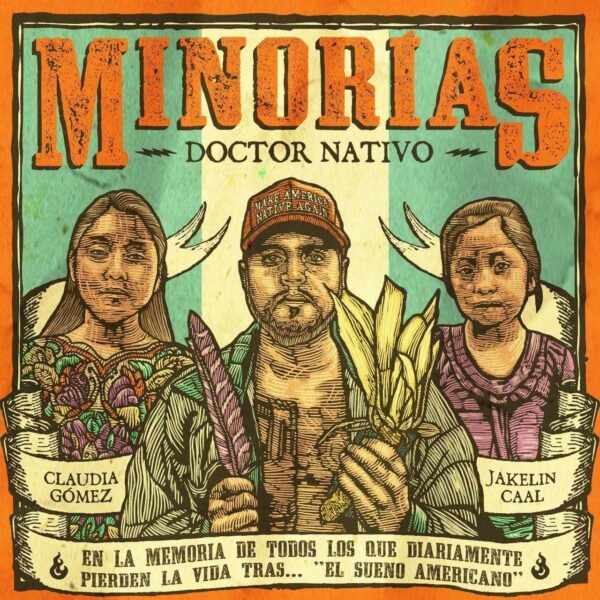
<p>So when you make timeless music, it's not about the moment. All of these songs that you hear on the album <em>Barrio Kandela</em>, I have also recorded trap and Reggaeton versions of this stuff. I like to flow on top of those rhythms. What would have happened if we had put out all of those? Maybe I would be a Bad Bunny, or something less. But that's not my goal. So Ivan put away this album to listen to it a couple of years later and be like, “Oh, this still sounds good, sounds fresh.” And then we met in Montreal in 2022, and we did another round of vocals and we recorded with the drummer from Kobo Town. We added a bunch of keyboards to the thing, all of those synths that you hear, and I did the drums for the song “Minorias.” This is the song with my sister, Adriana Primavera. She's featuring in there.</p>
<p><strong>Where did the name Dr. Nativo come from?</strong><br></p>
<p>All my family from my mom's side, they are doctors, or medics at the hospital and stuff like that. I come from a family of doctors. But behind that also are all the <em>curanderos</em>, all of the shamanism stuff. So they cure through plants and things like that. I had these friends at the lake when I started playing, performing, and they were like, “You're a doctor, man, but you're Doctor Sativo.” They called me because I was smoking weed all the time. You know, cannabis sativa. “So you're a doctor, but a doctor from weed, or a music doctor.” So they baptized me like that, because they knew my family were all doctors. </p>
<p>But then when I went to Stonetree, something inside of me was already more mature. And I was like: If I'm gonna sign in this label, I need to do something different. I cannot keep the Barrio Candela or the Doctor Sativo stuff. I think this is part of my past. So I'm gonna take the S, and I'm gonna put an N. And I'm gonna become the native doctor, not the weed doctor, you know? That was going to open the whole panorama, because sativa is just one thing, one plant out of the many plants that we have to work with. So Nativo really expanded the whole thing. And also, I was diving into the Mayan thing from 2011, 12, 13, all of that. </p>
<p><strong>Great. Well, now I understand better. </strong></p>
<p>You’ve got good questions, because other people don't even ask that. </p>
<p><strong>Well, you’ve told me your story very well. So let's talk about this new album. You had quite a long break between albums. Of course the pandemic disrupted everything, but what's the story of this album. </strong></p>
<p>Man, this album. It’s a very, very deep story. I started with my sister, and you know, and sister just passed away, at a very young age. She was a 39-year-old girl with a lot of talent, a bunch of albums too. </p>
<p><strong>I heard that. So sorry for you.</strong></p>
<p>She's a great artist, you know, if you look her up, <a href="https://jornadabc.com.mx/general/mexico/cultura/fallece-adriana-primavera-cantante-guatemalteca-radicada-en-tijuana/" rel="noopener" target="_blank">Adriana Primavera</a>, you will see all her career. </p>
<figure style="--tw-border-spacing-x: 0; --tw-border-spacing-y: 0; --tw-translate-x: 0; --tw-translate-y: 0; --tw-rotate: 0; --tw-skew-x: 0; --tw-skew-y: 0; --tw-scale-x: 1; --tw-scale-y: 1; --tw-pan-x: ; --tw-pan-y: ; --tw-pinch-zoom: ; --tw-scroll-snap-strictness: proximity; --tw-gradient-from-position: ; --tw-gradient-via-position: ; --tw-gradient-to-position: ; --tw-ordinal: ; --tw-slashed-zero: ; --tw-numeric-figure: ; --tw-numeric-spacing: ; --tw-numeric-fraction: ; --tw-ring-inset: ; --tw-ring-offset-width: 0px; --tw-ring-offset-color: #fff; --tw-ring-color: rgba(59,130,246,.5); --tw-ring-offset-shadow: 0 0 #0000; --tw-ring-shadow: 0 0 #0000; --tw-shadow: 0 0 #0000; --tw-shadow-colored: 0 0 #0000; --tw-blur: ; --tw-brightness: ; --tw-contrast: ; --tw-grayscale: ; --tw-hue-rotate: ; --tw-invert: ; --tw-saturate: ; --tw-sepia: ; --tw-drop-shadow: ; --tw-backdrop-blur: ; --tw-backdrop-brightness: ; --tw-backdrop-contrast: ; --tw-backdrop-grayscale: ; --tw-backdrop-hue-rotate: ; --tw-backdrop-invert: ; --tw-backdrop-opacity: ; --tw-backdrop-saturate: ; --tw-backdrop-sepia: ; --tw-contain-size: ; --tw-contain-layout: ; --tw-contain-paint: ; --tw-contain-style: ; border: 0px solid rgb(229, 231, 235); box-sizing: inherit; margin: 0px 0px 1em; outline: currentcolor !important; position: relative; padding: 0px; clear: both; caret-color: rgb(63, 77, 90); color: rgb(63, 77, 90); font-family: system-ui, BlinkMacSystemFont, -apple-system, " segoe="" ui",="" roboto,="" oxygen,="" ubuntu,="" cantarell,="" "fira="" sans",="" "droid="" "helvetica="" neue",="" sans-serif;="" font-size:="" 16px;="" font-style:="" normal;="" font-variant-caps:="" font-weight:="" 400;="" letter-spacing:="" orphans:="" 2;="" text-align:="" start;="" text-indent:="" 0px;="" text-transform:="" none;="" white-space:="" widows:="" word-spacing:="" -webkit-text-stroke-width:="" text-decoration-line:="" text-decoration-thickness:="" auto;="" text-decoration-style:="" solid;"=""><iframe loading="lazy" width="500" height="281" src="//www.youtube.com/embed/MM34v3JodpA" frameborder="0" allowfullscreen=""></iframe></figure>
<p><br>We started this album because we're the children of immigrants, and in the pandemic, I had to leave the day they closed the airport from Guatemaya. I was in the middle of all of this recording. I went to with my sister in January of 2020. Stonetree, and we met with Chi Chi Man, who's been in all records from, from Andy Palacio and the Garifuna Collective, everything. Chi Chi Man arrived and a marimba player from Guatemaya called Chava Hayes. He's a Mayan rapper also too, a marimba player. He's on the album also. </p>
<p><strong>Ah. He’s the one playing the marimba.</strong></p>
<p>He was playing the marimba and also Mayan rapping and melodica and other instruments. So we met in 2020 to record the core of the album. Me and my sister had to immigrate to Mexico. She was able to build her whole career in Tijuana, and in the end, because of many things that happened in my country…. Because my lyrics are very political. I have to be kind of careful when I'm there. I cannot just be a normal person, hanging around. And also fame. People with fame look at you as money. It’s a super delicate situation, so we had to move my mom and my Downs Syndrome brother and everybody out of Guatemaya to Mexico. Now we are in San Cristobal de las Casas in Chiapas, Mexico.</p>
<p><strong>That's where you live now?</strong></p>
<p>Yes. But my sister was living for 22 years in Tijuana. This country has received us, adopted us, welcomed us in a way that we feel it like our second home. And where we live in San Cristobal, it's like five hours from Guatemaya. It's near the border, you know? This part Chiapas used to be part of Guate. A president sold this part of the country to Mexico. So it's like being at home. Musically, we try to build a bridge between Guatemaya and Mexico. It's an ancestral bridge of music, of culture that we made with many artists from Guatemaya and Mexico who participate with us in this album. And then, of course, the pandemic comes, and everything shuts down. </p>
<p>But in 2021, in the middle of the pandemic, me and Ivan, we're people that we cannot just stay still and wait until this passes. We couldn't do that. So we decided to continue working in the album. So Ivan is like, “I'm gonna talk to this Mariachi guy I know in Mexico. And I'm gonna talk with a friend who is a sound engineer.” He was the sound engineer to Celia Cruz and Hector Lavoe and all of the huge Fania stars from New York. But now he lives in Mexico. So he contacted these two freaking legends.</p>
<p><strong>What was the name of the sound engineer?</strong></p>
<p>Alejandro Colinas. You might know him. He was the engineer for the Garifuna Collective on all of their tours. But he was also at the board when Celia Cruz was singing. So we arrived, me and my sister. My sister flies from Tijuana. I fly from Miami. And we meet in Mexico City and meet with this orchestra of violins and trumpets and, a whole mariachi orchestra. </p>
<p><strong>Ah, that’s where the brass I’m hearing comes in. </strong></p>
<p>And we meet Alejandro Colinas in the studio, and we did all of my vocals and my sister’s vocals, and we recorded all of the mariachis. Then we wait, because sometimes Ivan takes years. He likes to record the album, clean his mind, produce other stuff, and then he wants to hear this again fresh. Because Ivan makes timeless music. </p>
<p><strong>He does. </strong></p>
<p>So when you make timeless music, it's not about the moment. All of these songs that you hear on the album <em>Barrio Kandela</em>, I have also recorded trap and Reggaeton versions of this stuff. I like to flow on top of those rhythms. What would have happened if we had put out all of those? Maybe I would be a Bad Bunny, or something less. But that's not my goal. So Ivan put away this album to listen to it a couple of years later and be like, “Oh, this still sounds good, sounds fresh.” And then we met in Montreal in 2022, and we did another round of vocals and we recorded with the drummer from Kobo Town. We added a bunch of keyboards to the thing, all of those synths that you hear, and I did the drums for the song “Minorias.” This is the song with my sister, Adriana Primavera. She's featuring in there.</p>
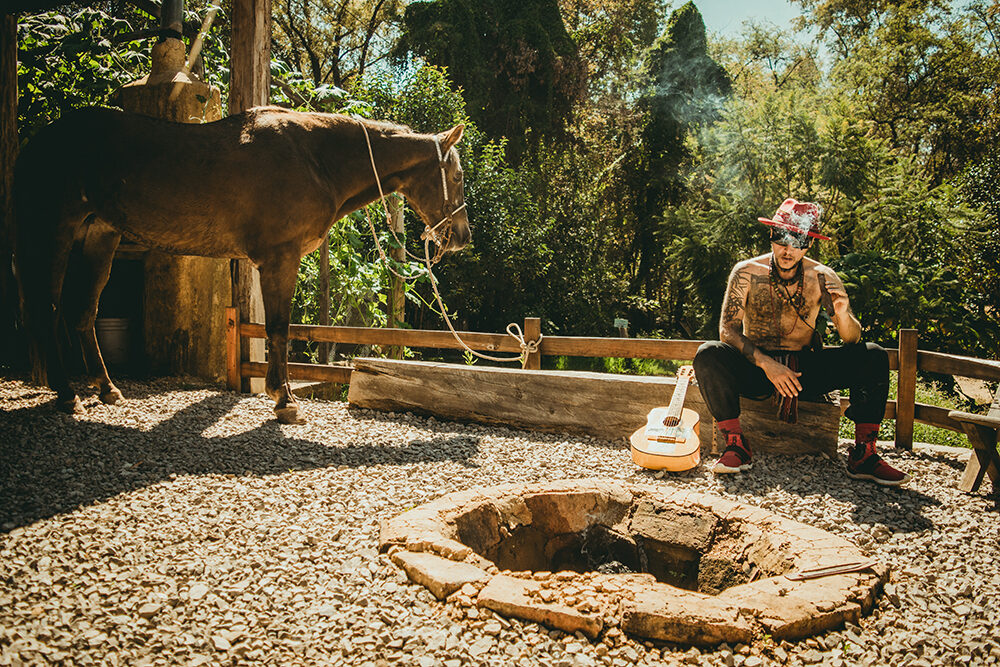 <p><strong>And there are these bits of spoken word, these “skits” in between songs. Talk about those. </strong></p>
<p>Those skits come from the rebel radio from Guatemala. This was a rebel radio, the only rebel radio in the years of the civil war. They had their studios in the mountains, with no walls. They just had the cables in there and they recorded all of these skits. This is an archive; it's like a cultural piece for humanity, what they did there. For many years, they recorded. Every two days they recorded a program. And all of this is in a museum in Guatemala City, in the capital. I discovered this a long, long time ago. Not many people know these recordings, you know, but I dug and dug. I like to investigate; I like to dig. And all of these are very revolutionary. So this album is a revolutionary album, and definitely “Menorias “is the most important song in the album. </p>
<p><strong>Why?</strong></p>
<p>First of all, because it represents what we are, the children of immigrants, and also we are immigrants now. It represents the struggle, the fight, everything that me and my sister had to pass through. If you hear the lyrics that she sings in her part, she's saying that her name is written in the news that is going to fly away and that her mother is never going to see her again smiling. </p>
<p><strong>What happened? </strong></p>
<p>I had to go to Tijuana because my mother couldn't travel and I had to help her pass away. She passed in my hands like this; I was with her until the last breath. So this album is definitely the most important work that we did as a brother and sister. And she passed away five days before the release of the album. She didn't wait, you know? She had to go. She had to go. And yeah, it was a tough thing. There's a lot of struggle behind Doctor Nativo, a lot of struggle. But at the same time, there's a lot of resilience. I was about to cancel everything, even this interview. I'm going to perform in the New Orleans Jazz Festival and Festival International of Lafayette and at Mackenzie University. Everything is coming in two weeks, and we're still mourning with the family. I don't even want to pick up the guitar. I'm not feeling in the mood to have interviews and talk this and that. But in the end it's like, I always hear my sister’s voice telling me, “We did this. It took us so long and it's been so hard.” This album has taken seven years to release. Seven years to release an album is an eternity for an artist. It's an eternity. An eternity that couldn't wait five days before my sister passed away. So this song, “Minorias,” is definitely emblematic for us. It's been reviewed by Billboard and many others, people that have really caught the message. </p>
<p>I hope it wins a Grammy next year, you know. But if it doesn't. What really matters is that it's telling our story. We actually filmed the video at the border. We did the “walk of death,” as they say. We walked, just me, my sister, a cameraman and a director. We did the walk beside the wall. We started going to the place where all the coyotes and all of the killing, where the wall finishes. There is a point where the wall finishes.</p>
<p><strong>You're talking about near Tijuana. </strong></p>
<p>There is Tecate, Tijuana, and there is San Diego. But there is the desert also. That's where the wall finishes because they know that if you enter there, there are going to be animals, there are going to be people, the <em>polleros</em> that kill you because you have to pay them in order to walk into those deserts. So we did that, me and my sister; we filmed this, the walk of death, they call it. And we filmed the video of “Minorias” doing that. So it's very powerful. And after that, we went to the refugees, all of the deportees, women and kids, and we sang the song to them and we did interviews with them. There's a whole documentary that we haven't put out of “Minorias,” because this is our life story, all the way from my dad leaving Cuba to us living where we are right now. </p>
<figure><iframe loading="lazy" width="500" height="281" src="//www.youtube.com/embed/Rc53y4JCf40" frameborder="0" allowfullscreen=""></iframe></figure>
<p><br><strong>That's a lot. Let me ask you about a couple of the other songs, from a lyric point of view. How about “Se La Cree”? </strong></p>
<p>“Ce La Cree” is a wake-up call. It's a wake-up call that climate change is real, that what we're eating is garbage, that people believe every single thing they see in news and on the social media and all of that. It's a circus. This is not real; it's an illusion. It's an illusion to control people. So “Ce La Cree” is like people believe that because you're drinking a juice that is green and it has a fruit on it, that you're drinking something super healthy. You're not. So “Ce La Cree” is telling everybody, “Don't believe everything you freaking see.”</p>
<p><strong>What about “Caminantes”? </strong></p>
<p>“Caminantes” is “the walkers,” people that are not just travelers. It’s people like us, migrants. We travel, we walk, we move forward with the wish of a better life. Everywhere we walk, we build consciousness, we wake up consciousness. And Roco Pachukote, the other singer with me, he's the legend from the Mexican rock band <a href="https://en.wikipedia.org/wiki/Maldita_Vecindad" rel="noopener" target="_blank">La Maldita Vecindad</a>. They are filling stadiums right now. They are a cult band, and me and Roco, we met in a fire circle; we met in the spiritual world; we didn't met in the in the rock star scenario; we met in the spiritual realm. And that's why…. Because he doesn't do features with many people. He's very selective; he's a person that takes care of his energy very much. And he doesn't want to be represented wrong. But in the end, he went full in on the song. It took a long time. but it finally happened. </p>
<p><strong>I've seen the video for “Chocolate Kakaw,” a great song. What's going on in this video?</strong></p>
<figure><iframe loading="lazy" width="500" height="281" src="//www.youtube.com/embed/UCSCH7is5b0" frameborder="0" allowfullscreen=""></iframe></figure>
<p><br>“Chocolate Kakaw” is this 21<sup>st</sup>-century version of the chocolate ceremony. They call it the Kakaw ceremony, but what they do is a chocolate ceremony. I wanted to show the people where your Snickers bar and all of this crap comes from, where the root actually is, and it's cacao. The Mayan people didn't drink cacao just for fun. The way they drink it is super potent, super concentrated. This thing can put you in a state of… They say this is the medicine of the heart, so it opens your heart. If you're scared of the night, you can do this ritual and you can overcome that. If you do this ritual, and you're afraid of swimming in the ocean, you can overcome that.<br></p>
<p>It all came from a ritual that we did in Panama. I went three years in a row to Panama to the tribal gathering, the reunion of the tribes. So tribes from all over the world gather in Panama every year, and I was invited for three years in a row. We did the ritual of the warrior, and in part of that ritual there was a shaman and I was kind of like helping the shaman. I was like the assistant of the shaman, and we did this ceremony called “the Mayan warrior.” It lasted from 12 in the night till six in the morning, six hours. But the beginning is to drink the cacao and we play the marimba. We call the 20 <a href="http://en.wikipedia.org/wiki/Nagual" rel="noopener" target="_blank">Nahuales</a>, and then we start with each person in the ceremony, asking what they want to overcome. Some of them are like, “I am gay, and my people, my family, nobody knows, and this is who I am.” So kiss this guy in front of all of us, and don't worry. We're not going to judge you. And then some person was super afraid of the ocean, so we all went in the ocean with this person, holding hands in the night, and go in singing the song for the ocean. It's a whole therapeutic thing. After you experience this, the next day you feel like something just worked inside of you. So the chocolate, the cacao, this is why we did this song, and we wanted to show just a glimpse. That's nothing what you see in that video, it's just a glimpse of a Mayan cacao ceremony. </p>
<p><strong>That’s amazing. I have to ask you about cumbia music and the song “Original Kumbiambero.” There's a lot of Cumbia on this album, and we think of cumbia as coming from Colombia. How does cumbia get such a</strong> <strong>big place in your sound? </strong></p>
<p>Well, you know, cumbia is actually a Latin American phenomenon. It started in Colombia with <a href="https://en.wikipedia.org/wiki/Andr%C3%A9s_Landero" rel="noopener" target="_blank">Andrés Landero</a>. Actually, I have two songs, “Original Kumbiambero” and “Tiempos de Cumbia,” that are honoring the memory of Andrés Landero. He's the person who started cumbia; he's the originator. He's an accordion player from Colombia and we pay tribute to him, but in that song I say how cumbia has jumped from Colombia to Peru, “cumbia psychedelica,” and then from Peru to Mexico. Cumbia is not Colombian anymore. Colombia is the root. I don't want to miss that. </p>
<p><strong>It's like reggae.</strong></p>
<p>It’s like reggae. Reggae is worldwide now. It’s not just from Jamaica. So cumbia is not just from Colombia. Cumbia is from all the people from this side. I actually started with reggae. My root is reggae. I started listening to Bob Marley. All of my first records were pure roots reggae, but then when I went to Barcerlona, I was like “I don't want to just play pure reggae. I like cumbia. I like all of these other Latin American rhythms.” So i started fusing them, and people were like, “What you do is reggae-cumbia. So that's my recipe, reggae-cumbia and now even mariachi too.</p>
<p><strong>That's beautiful. I've always thought of reggae and cumbia as being cousins. You know? We did a radio show on that called “</strong><a href="https://afropop.test.ejaedesign.com/audio-programs/the-cumbia-diaspora-from-colombia-to-the-world"><strong>The Cumbia Diaspora</strong></a><strong>,” which is all about what you're describing. We’re going to wrap up soon, but I want to ask one more thing, which is about the marimba. I've spent time in Africa and I've seen various balafon and marimba traditions in different places. And it's very interesting to me, the way that instrument has traveled through time. What do we know about how the marimba tradition in Central America came about? </strong></p>
<p>So the marimba came to Central America with African people. African people introduced this to us, all of the African slaves, the people that were brought here. There's a place in Guatemala called Livingstone, and all of the people there are Black. So they brought the marimba. And it became part of Guatemala, because they crafted it so good that it became the marimba orchestra, because the marimba was just one. The Mantecas made it like a piano. It has the black notes also. And it became the national instrument. Marimba is the national instrument of Guatemala. So I was raised with that instrument my whole life. My grandpa couldn't have lunch if the marimba was not playing on the radio. That was part of having lunch with my grandpa. And the guy that is playing the marimba on the album, he's actually the great, great grandson of one of the first marimba players ever. And he played a marimba that you had to hang around your neck with you standing up. He would go to perform this marimba for all the elders in the mountains. He would carry this marimba on his head like this. That’s the great grandfather. So this comes from a long, long ancestry. </p>
<p><strong>That’s so interesting. I’ll leave you with a little story. The other night we went to see 90-year-old </strong><a href="https://afropop.test.ejaedesign.com/articles/herb-alpert-and-the-tijuana-brass-on-the-road-60-years-later"><strong>Herb Alpert and the Tijuana Brass,</strong></a><strong> and there was a marimba on stage that they used on some of the songs. It got me thinking about this history and the Mexican music that inspired Herb Alpert. It’s part of the package. Also, this guy is 90 years old and still very powerful. It was beautiful. </strong></p>
<p>Some people have a long mission; some people have a shared mission; and all lives matter. We all have a grain in this. </p>
<p><strong>Well, it's wonderful to speak with you. I look forward to meeting you in person. I know you're going to have a great time in Louisiana with those festivals. </strong></p>
<p>Thank you so much for taking your time and for listening and for giving us the opportunity to get this out to the world. </p>
<p><strong>It's a great story, man. Good luck with everything. </strong></p>
<p>Thank you, my friend. Stay in touch. <em>Gracias</em>.</p>
<p><strong>And there are these bits of spoken word, these “skits” in between songs. Talk about those. </strong></p>
<p>Those skits come from the rebel radio from Guatemala. This was a rebel radio, the only rebel radio in the years of the civil war. They had their studios in the mountains, with no walls. They just had the cables in there and they recorded all of these skits. This is an archive; it's like a cultural piece for humanity, what they did there. For many years, they recorded. Every two days they recorded a program. And all of this is in a museum in Guatemala City, in the capital. I discovered this a long, long time ago. Not many people know these recordings, you know, but I dug and dug. I like to investigate; I like to dig. And all of these are very revolutionary. So this album is a revolutionary album, and definitely “Menorias “is the most important song in the album. </p>
<p><strong>Why?</strong></p>
<p>First of all, because it represents what we are, the children of immigrants, and also we are immigrants now. It represents the struggle, the fight, everything that me and my sister had to pass through. If you hear the lyrics that she sings in her part, she's saying that her name is written in the news that is going to fly away and that her mother is never going to see her again smiling. </p>
<p><strong>What happened? </strong></p>
<p>I had to go to Tijuana because my mother couldn't travel and I had to help her pass away. She passed in my hands like this; I was with her until the last breath. So this album is definitely the most important work that we did as a brother and sister. And she passed away five days before the release of the album. She didn't wait, you know? She had to go. She had to go. And yeah, it was a tough thing. There's a lot of struggle behind Doctor Nativo, a lot of struggle. But at the same time, there's a lot of resilience. I was about to cancel everything, even this interview. I'm going to perform in the New Orleans Jazz Festival and Festival International of Lafayette and at Mackenzie University. Everything is coming in two weeks, and we're still mourning with the family. I don't even want to pick up the guitar. I'm not feeling in the mood to have interviews and talk this and that. But in the end it's like, I always hear my sister’s voice telling me, “We did this. It took us so long and it's been so hard.” This album has taken seven years to release. Seven years to release an album is an eternity for an artist. It's an eternity. An eternity that couldn't wait five days before my sister passed away. So this song, “Minorias,” is definitely emblematic for us. It's been reviewed by Billboard and many others, people that have really caught the message. </p>
<p>I hope it wins a Grammy next year, you know. But if it doesn't. What really matters is that it's telling our story. We actually filmed the video at the border. We did the “walk of death,” as they say. We walked, just me, my sister, a cameraman and a director. We did the walk beside the wall. We started going to the place where all the coyotes and all of the killing, where the wall finishes. There is a point where the wall finishes.</p>
<p><strong>You're talking about near Tijuana. </strong></p>
<p>There is Tecate, Tijuana, and there is San Diego. But there is the desert also. That's where the wall finishes because they know that if you enter there, there are going to be animals, there are going to be people, the <em>polleros</em> that kill you because you have to pay them in order to walk into those deserts. So we did that, me and my sister; we filmed this, the walk of death, they call it. And we filmed the video of “Minorias” doing that. So it's very powerful. And after that, we went to the refugees, all of the deportees, women and kids, and we sang the song to them and we did interviews with them. There's a whole documentary that we haven't put out of “Minorias,” because this is our life story, all the way from my dad leaving Cuba to us living where we are right now. </p>
<figure><iframe loading="lazy" width="500" height="281" src="//www.youtube.com/embed/Rc53y4JCf40" frameborder="0" allowfullscreen=""></iframe></figure>
<p><br><strong>That's a lot. Let me ask you about a couple of the other songs, from a lyric point of view. How about “Se La Cree”? </strong></p>
<p>“Ce La Cree” is a wake-up call. It's a wake-up call that climate change is real, that what we're eating is garbage, that people believe every single thing they see in news and on the social media and all of that. It's a circus. This is not real; it's an illusion. It's an illusion to control people. So “Ce La Cree” is like people believe that because you're drinking a juice that is green and it has a fruit on it, that you're drinking something super healthy. You're not. So “Ce La Cree” is telling everybody, “Don't believe everything you freaking see.”</p>
<p><strong>What about “Caminantes”? </strong></p>
<p>“Caminantes” is “the walkers,” people that are not just travelers. It’s people like us, migrants. We travel, we walk, we move forward with the wish of a better life. Everywhere we walk, we build consciousness, we wake up consciousness. And Roco Pachukote, the other singer with me, he's the legend from the Mexican rock band <a href="https://en.wikipedia.org/wiki/Maldita_Vecindad" rel="noopener" target="_blank">La Maldita Vecindad</a>. They are filling stadiums right now. They are a cult band, and me and Roco, we met in a fire circle; we met in the spiritual world; we didn't met in the in the rock star scenario; we met in the spiritual realm. And that's why…. Because he doesn't do features with many people. He's very selective; he's a person that takes care of his energy very much. And he doesn't want to be represented wrong. But in the end, he went full in on the song. It took a long time. but it finally happened. </p>
<p><strong>I've seen the video for “Chocolate Kakaw,” a great song. What's going on in this video?</strong></p>
<figure><iframe loading="lazy" width="500" height="281" src="//www.youtube.com/embed/UCSCH7is5b0" frameborder="0" allowfullscreen=""></iframe></figure>
<p><br>“Chocolate Kakaw” is this 21<sup>st</sup>-century version of the chocolate ceremony. They call it the Kakaw ceremony, but what they do is a chocolate ceremony. I wanted to show the people where your Snickers bar and all of this crap comes from, where the root actually is, and it's cacao. The Mayan people didn't drink cacao just for fun. The way they drink it is super potent, super concentrated. This thing can put you in a state of… They say this is the medicine of the heart, so it opens your heart. If you're scared of the night, you can do this ritual and you can overcome that. If you do this ritual, and you're afraid of swimming in the ocean, you can overcome that.<br></p>
<p>It all came from a ritual that we did in Panama. I went three years in a row to Panama to the tribal gathering, the reunion of the tribes. So tribes from all over the world gather in Panama every year, and I was invited for three years in a row. We did the ritual of the warrior, and in part of that ritual there was a shaman and I was kind of like helping the shaman. I was like the assistant of the shaman, and we did this ceremony called “the Mayan warrior.” It lasted from 12 in the night till six in the morning, six hours. But the beginning is to drink the cacao and we play the marimba. We call the 20 <a href="http://en.wikipedia.org/wiki/Nagual" rel="noopener" target="_blank">Nahuales</a>, and then we start with each person in the ceremony, asking what they want to overcome. Some of them are like, “I am gay, and my people, my family, nobody knows, and this is who I am.” So kiss this guy in front of all of us, and don't worry. We're not going to judge you. And then some person was super afraid of the ocean, so we all went in the ocean with this person, holding hands in the night, and go in singing the song for the ocean. It's a whole therapeutic thing. After you experience this, the next day you feel like something just worked inside of you. So the chocolate, the cacao, this is why we did this song, and we wanted to show just a glimpse. That's nothing what you see in that video, it's just a glimpse of a Mayan cacao ceremony. </p>
<p><strong>That’s amazing. I have to ask you about cumbia music and the song “Original Kumbiambero.” There's a lot of Cumbia on this album, and we think of cumbia as coming from Colombia. How does cumbia get such a</strong> <strong>big place in your sound? </strong></p>
<p>Well, you know, cumbia is actually a Latin American phenomenon. It started in Colombia with <a href="https://en.wikipedia.org/wiki/Andr%C3%A9s_Landero" rel="noopener" target="_blank">Andrés Landero</a>. Actually, I have two songs, “Original Kumbiambero” and “Tiempos de Cumbia,” that are honoring the memory of Andrés Landero. He's the person who started cumbia; he's the originator. He's an accordion player from Colombia and we pay tribute to him, but in that song I say how cumbia has jumped from Colombia to Peru, “cumbia psychedelica,” and then from Peru to Mexico. Cumbia is not Colombian anymore. Colombia is the root. I don't want to miss that. </p>
<p><strong>It's like reggae.</strong></p>
<p>It’s like reggae. Reggae is worldwide now. It’s not just from Jamaica. So cumbia is not just from Colombia. Cumbia is from all the people from this side. I actually started with reggae. My root is reggae. I started listening to Bob Marley. All of my first records were pure roots reggae, but then when I went to Barcerlona, I was like “I don't want to just play pure reggae. I like cumbia. I like all of these other Latin American rhythms.” So i started fusing them, and people were like, “What you do is reggae-cumbia. So that's my recipe, reggae-cumbia and now even mariachi too.</p>
<p><strong>That's beautiful. I've always thought of reggae and cumbia as being cousins. You know? We did a radio show on that called “</strong><a href="https://afropop.test.ejaedesign.com/audio-programs/the-cumbia-diaspora-from-colombia-to-the-world"><strong>The Cumbia Diaspora</strong></a><strong>,” which is all about what you're describing. We’re going to wrap up soon, but I want to ask one more thing, which is about the marimba. I've spent time in Africa and I've seen various balafon and marimba traditions in different places. And it's very interesting to me, the way that instrument has traveled through time. What do we know about how the marimba tradition in Central America came about? </strong></p>
<p>So the marimba came to Central America with African people. African people introduced this to us, all of the African slaves, the people that were brought here. There's a place in Guatemala called Livingstone, and all of the people there are Black. So they brought the marimba. And it became part of Guatemala, because they crafted it so good that it became the marimba orchestra, because the marimba was just one. The Mantecas made it like a piano. It has the black notes also. And it became the national instrument. Marimba is the national instrument of Guatemala. So I was raised with that instrument my whole life. My grandpa couldn't have lunch if the marimba was not playing on the radio. That was part of having lunch with my grandpa. And the guy that is playing the marimba on the album, he's actually the great, great grandson of one of the first marimba players ever. And he played a marimba that you had to hang around your neck with you standing up. He would go to perform this marimba for all the elders in the mountains. He would carry this marimba on his head like this. That’s the great grandfather. So this comes from a long, long ancestry. </p>
<p><strong>That’s so interesting. I’ll leave you with a little story. The other night we went to see 90-year-old </strong><a href="https://afropop.test.ejaedesign.com/articles/herb-alpert-and-the-tijuana-brass-on-the-road-60-years-later"><strong>Herb Alpert and the Tijuana Brass,</strong></a><strong> and there was a marimba on stage that they used on some of the songs. It got me thinking about this history and the Mexican music that inspired Herb Alpert. It’s part of the package. Also, this guy is 90 years old and still very powerful. It was beautiful. </strong></p>
<p>Some people have a long mission; some people have a shared mission; and all lives matter. We all have a grain in this. </p>
<p><strong>Well, it's wonderful to speak with you. I look forward to meeting you in person. I know you're going to have a great time in Louisiana with those festivals. </strong></p>
<p>Thank you so much for taking your time and for listening and for giving us the opportunity to get this out to the world. </p>
<p><strong>It's a great story, man. Good luck with everything. </strong></p>
<p>Thank you, my friend. Stay in touch. <em>Gracias</em>.</p>

Related Audio Programs
Hip Deep July 4, 2024
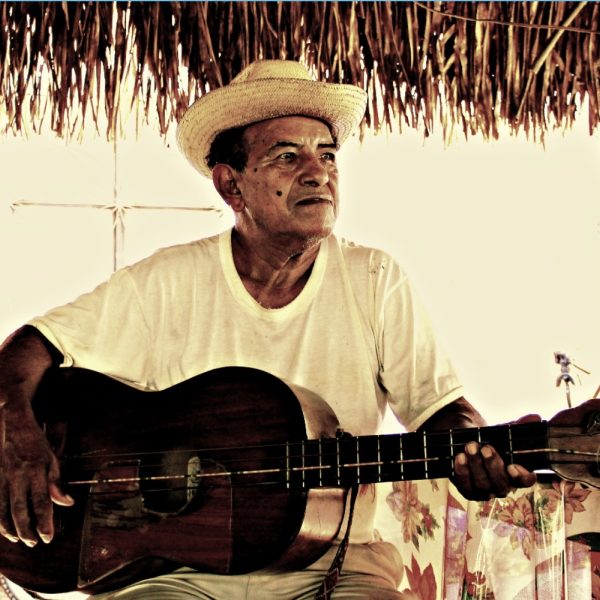
La Bamba: The Afro-Mexican Story
In this Hip Deep episode, we use music to explore that history as we take a road-trip across the country in search of sonic traces of Afro-Mexico.
April 20, 2023
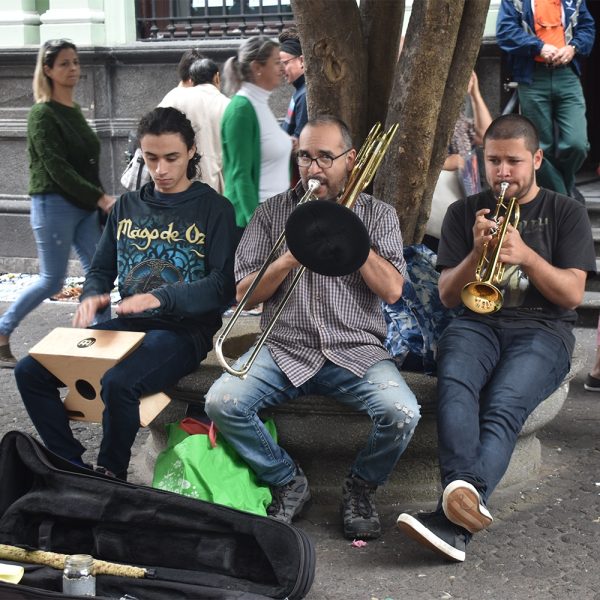
Pura Vida Costa Rica: Musical Hybrids in Central America
Related Articles
Blog September 28, 2018
Video: Doctor Nativo “Guatemaya”
Blog March 20, 2019