Interview May 11, 2026
Ladysmith Black Mambazo Forever!
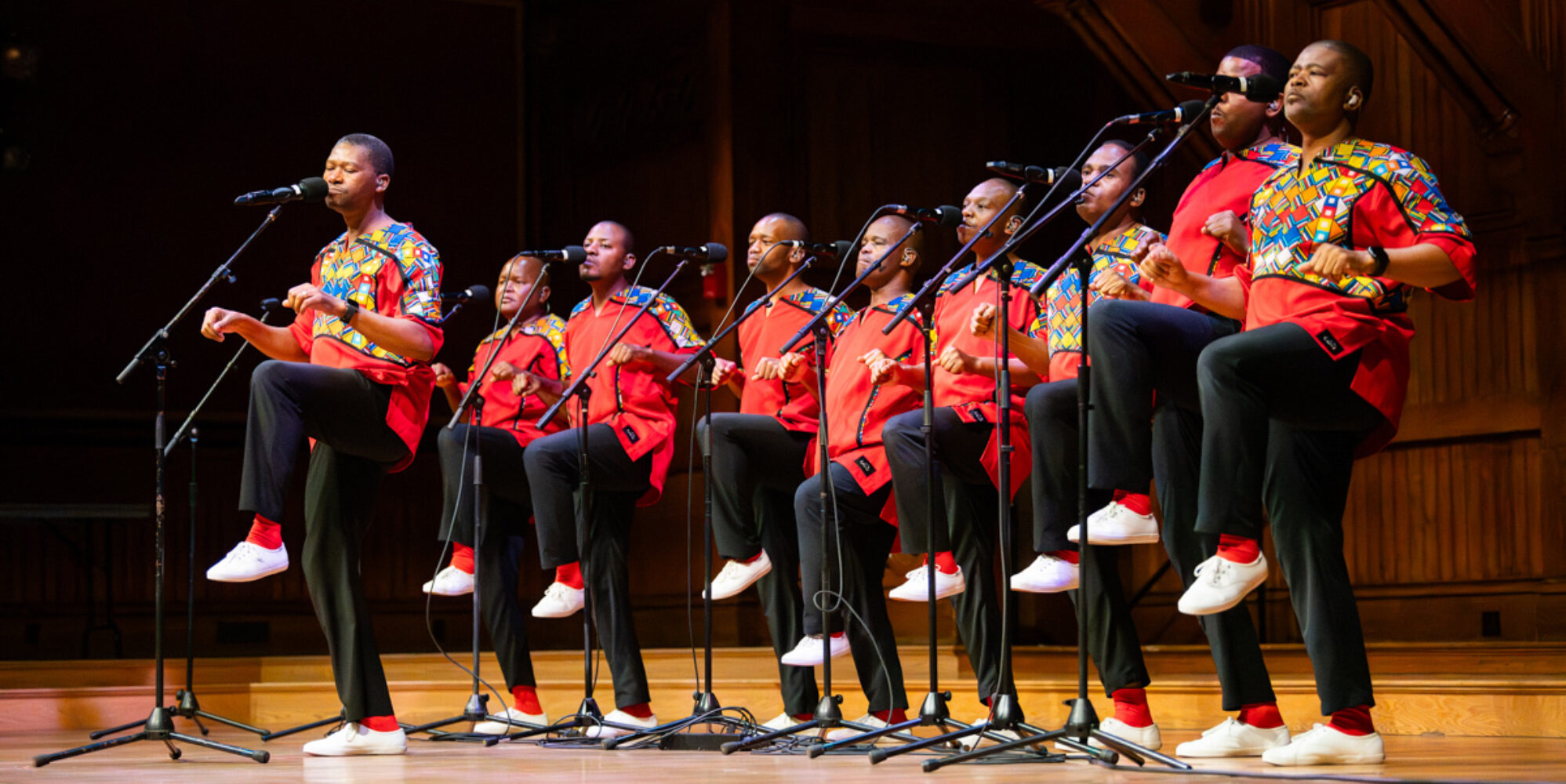
<p><em>The world came to know South African Zulu acapella group Ladysmith Black Mambazo in 1986 when Paul Simon’s </em>Graceland<em> landed like a revelation and songs like “Homeless” and “Diamonds on the Souls of Her Shoes” became instant classics. But the group, founded in 1960 by the late Joseph Shabalala, had quite a history before that, rising through the competitive singing competitions at miners’ hostels, promotion by Gramma Records pioneering A&R man West Nkosi, and sensational success on the apartheid-era, Zulu radio airwaves. </em></p>
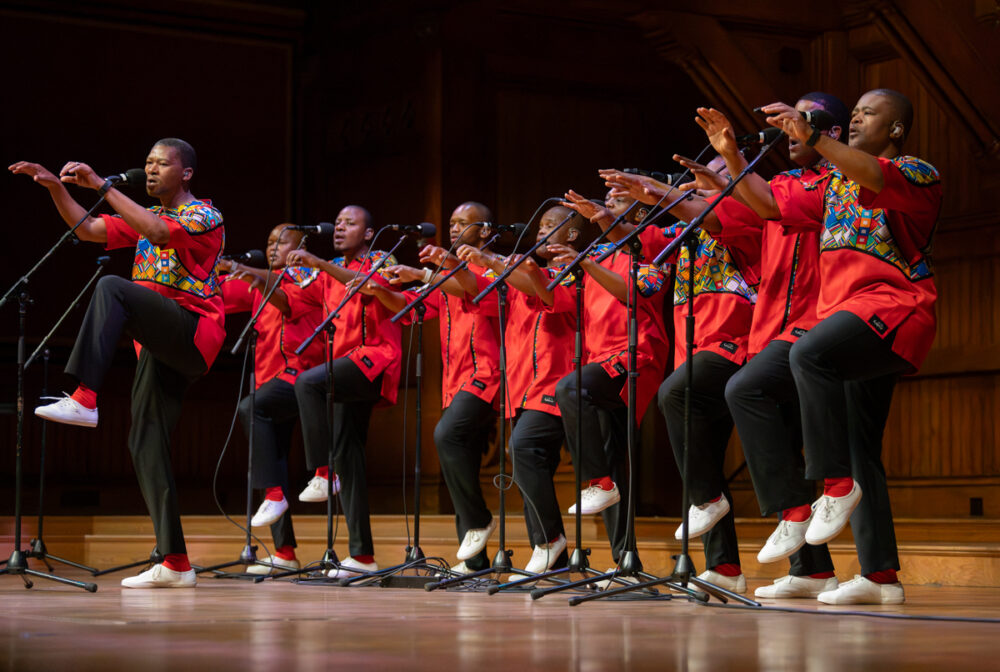
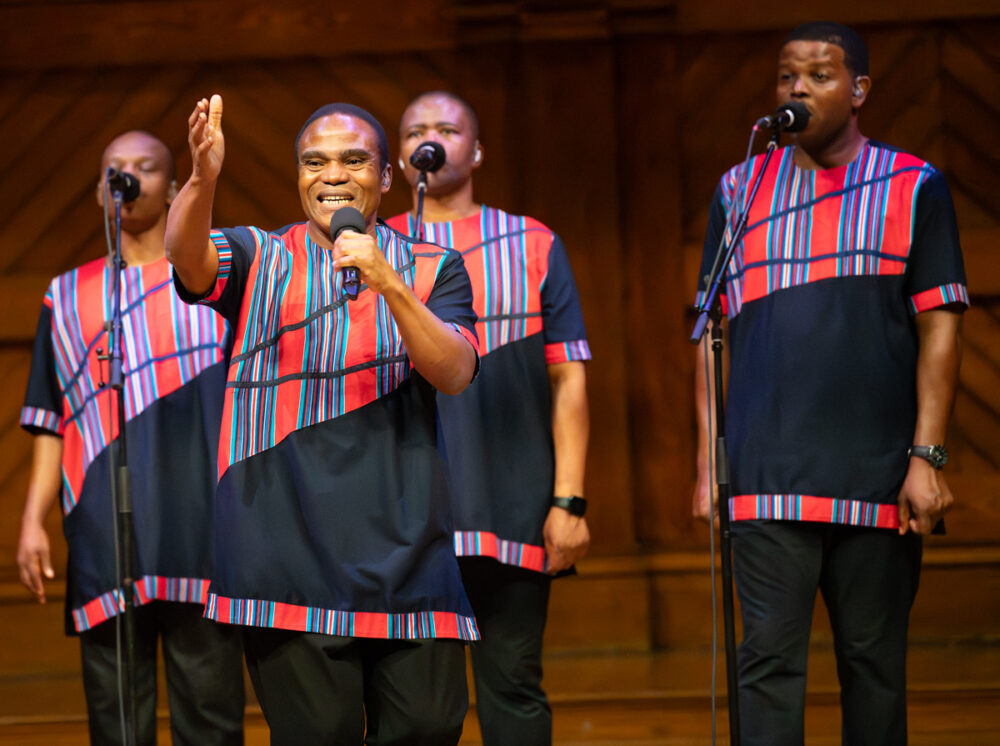
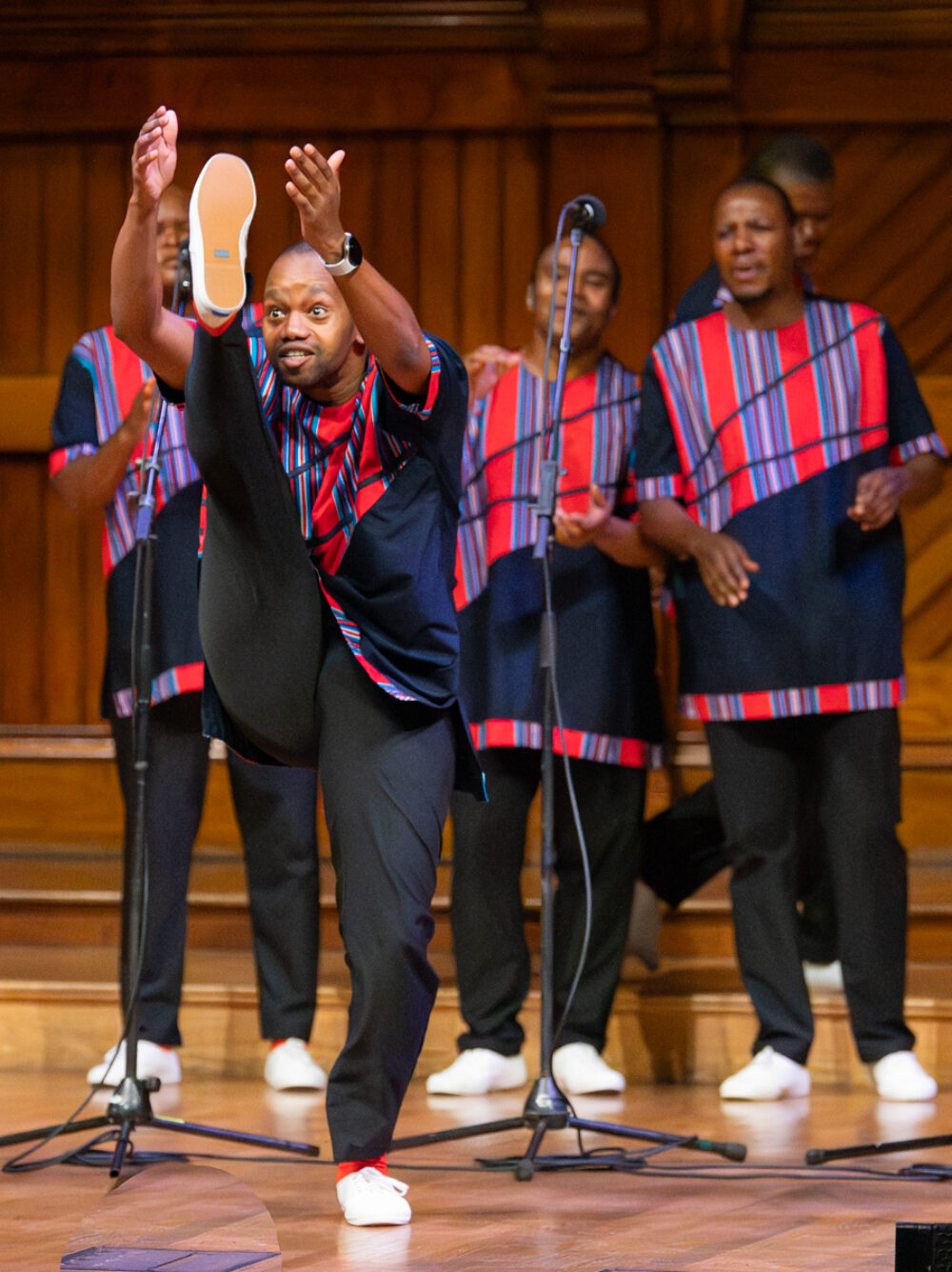
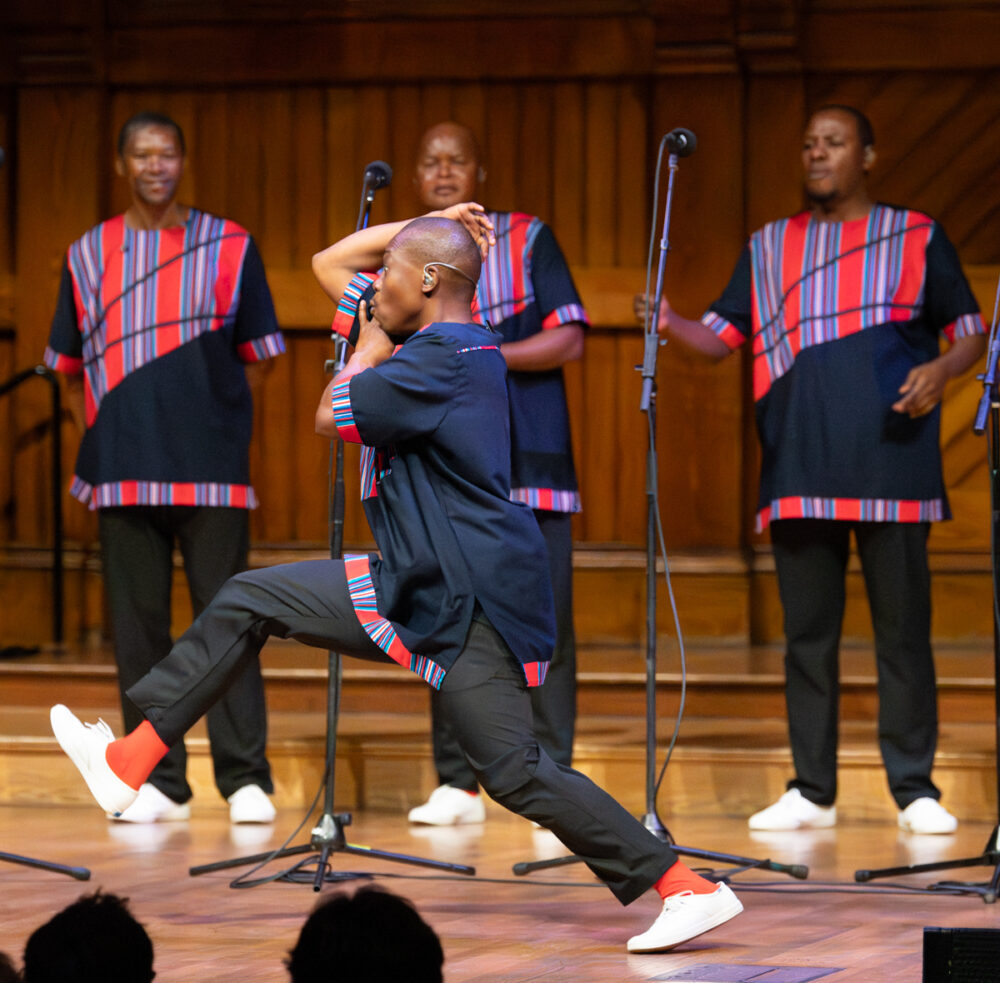
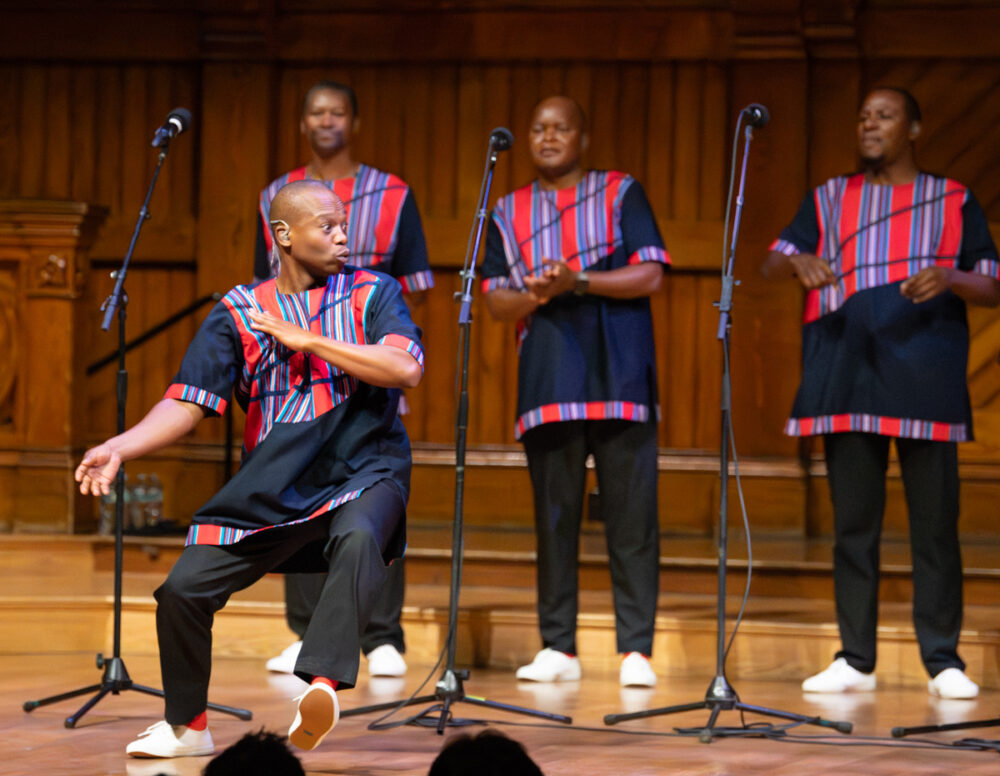
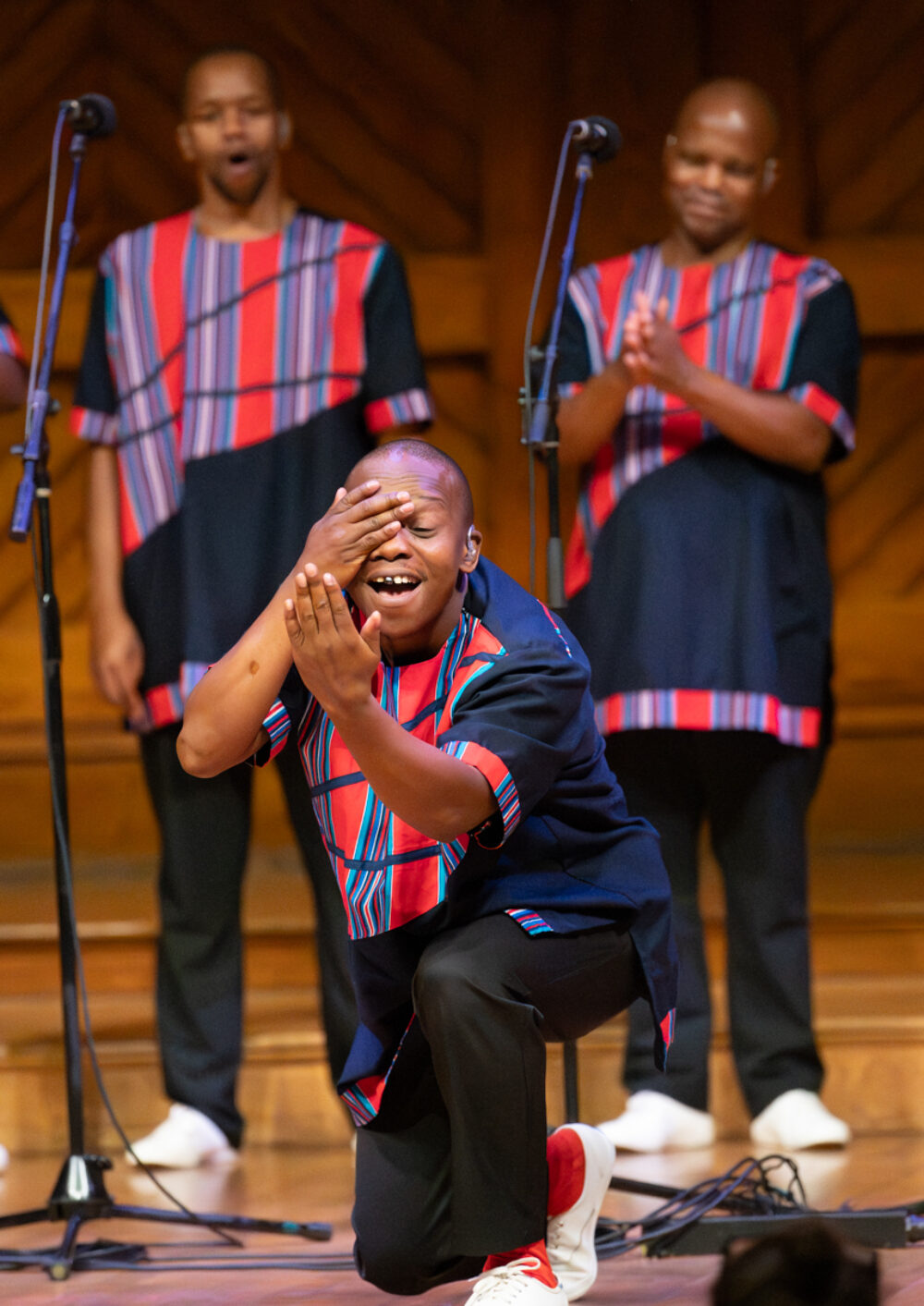
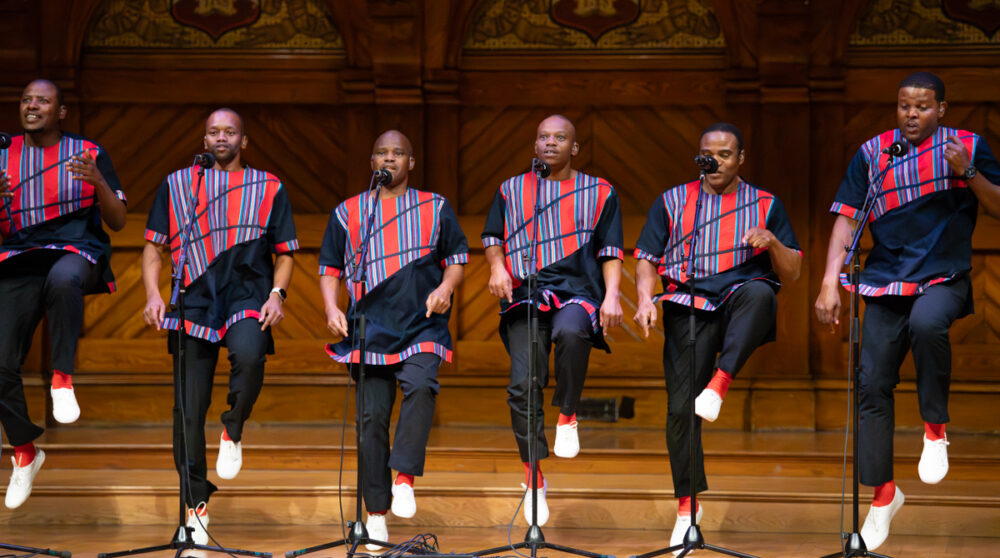
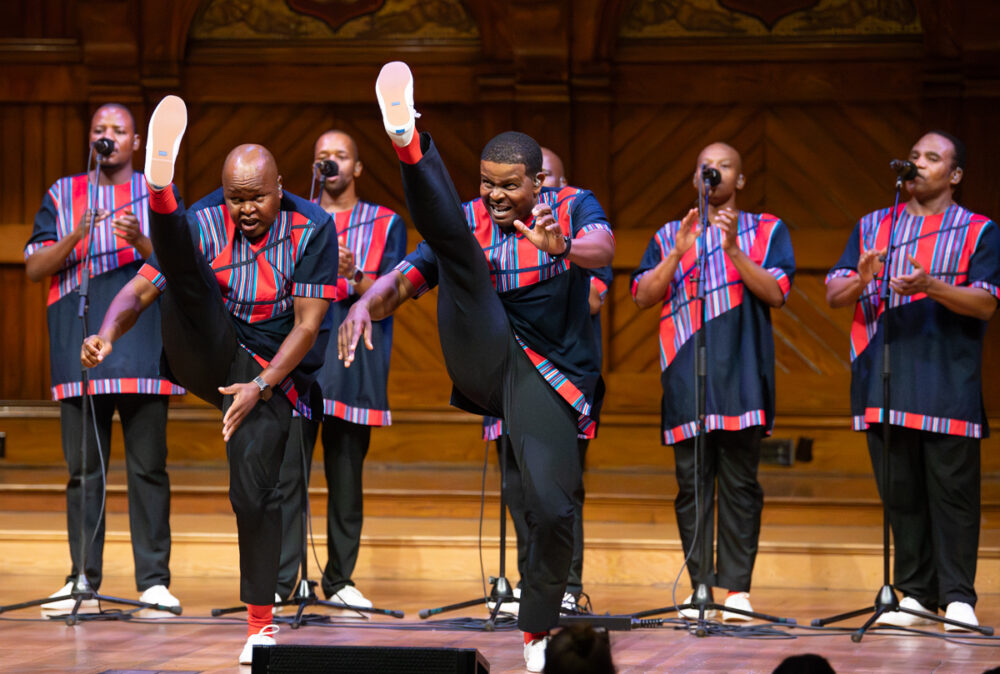
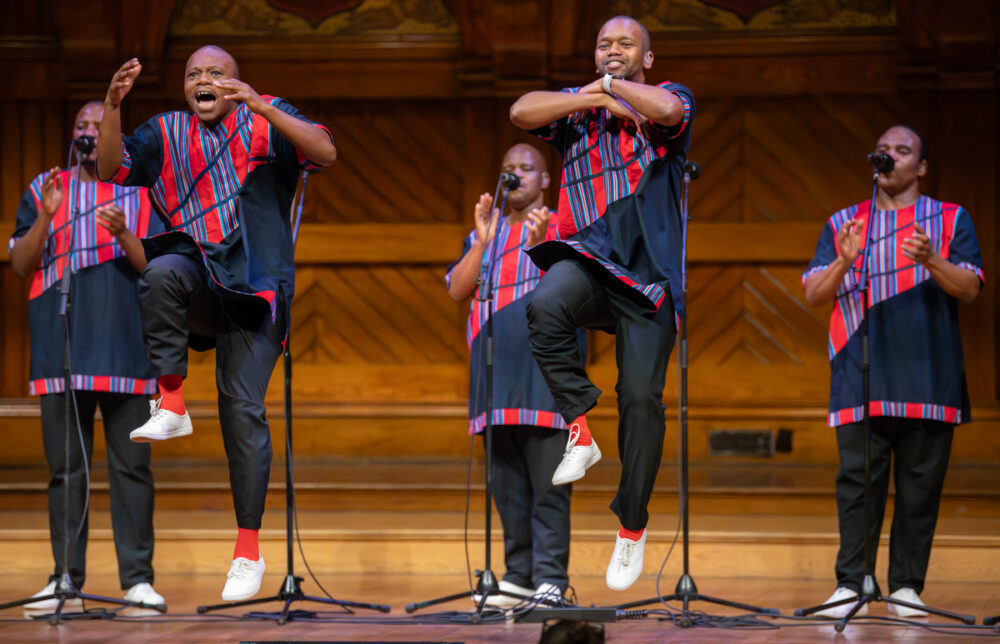
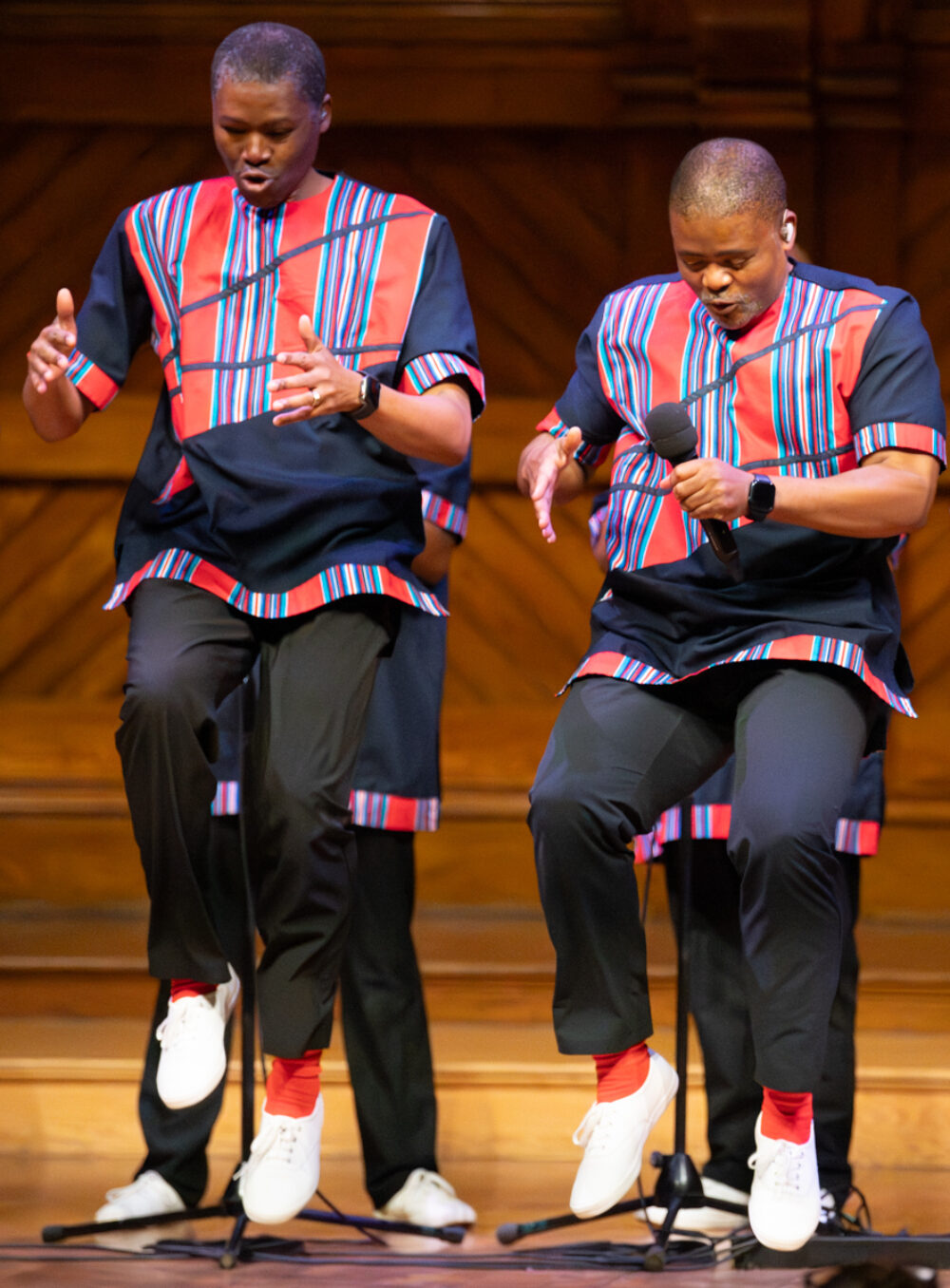
<p><em>Today, six years after founder Joseph’s passing, the group, still consisting largely of Shabalala family members, carries on, and based on their recent performance at Sanders Theater in Boston, they are as strong as ever. All the trademarks are there: graceful, synchronized choreography, high-stepping Zulu war dancing, playful stage banter and, most of all, spectacular choral vocal sound ranging from heavenly, smooth-as-silk melodiousness to primal grunts, growls, whistles and cries--all delivered with youthful vivaciousness that suggests that this group has many years ahead of it in this format, and likely, many future formats. Ladysmith Black Mambazo seems destined to be a group that will transcend time and last as long as humanity survives.</em></p>
<p><em>When Afropop met the current band in Boston on March 28, there were only two original member still alive, neither one still well enough to tour. One of those, Albert Mazibuko, died just days later on April 6 at age 77. The end of an era, but not of the group.</em></p>
<p><em>The Boston show was presented by <a href="https://www.globalartslive.org/" rel="noopener" target="_blank">Global Arts Live</a>, the organization (under a former name) that first presented Ladysmith in Boston back in the late 1980s. Just before the afternoon show at Sanders Theater, Banning Eyre and Sean Barlow sat down with Thulani Shabalala and Sibongiseni Shabalala for a brief conversation, starting with the group lineup.</em><br></p>
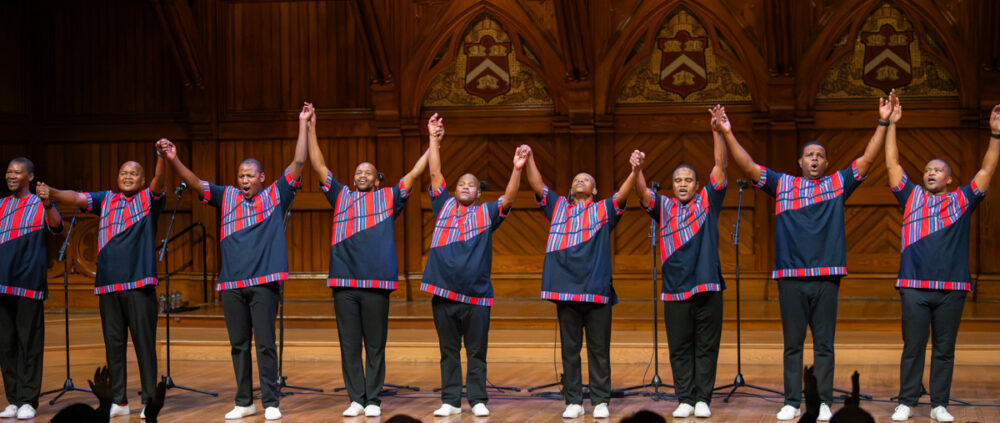 <p><strong>Thulani Shabala:</strong> There are no more original members on the stage. The two founding members, Albert Mazibuko and his brother, retired just last year. So now we only have the sons of Joseph Shabalala, the four sons, who joined the group in 1993. And we have other long time members. One of them has been with us for 19 years, another one for 12 and another one for 11 years. We've also been joined by two new members, the grandsons of Dr. Joseph Shabalala. This is their second year now. So that makes nine members in the group.<br></p>
<p><strong>Banning Eyre: So this is the second generation and third generation. How big is your family? </strong></p>
<p>The Shabalalas are a big family. Our father his four brothers. They were five, and they had sisters as well. In my family, in our house, Joseph Shabalala’s house, there are nine children. So including all the brothers, the aunts, and the sisters and grandchildren... </p>
<p><strong>Sibongiseni Shabalala</strong>: …there could be a thousand people!</p>
<p><strong>Impressive. So with this changing of generations, has your music and performance style changed at all?</strong></p>
<p><strong>TS:</strong> Over the years, the music is still the same. It's our traditional music, but we get a lot of requests for collaborations. Our father collaborated with Paul Simon in the ‘80s. And after that, we've done a lot of collaboration: Dolly Parton, Stevie Wonder, Michael Jackson... And we also have a collaboration from South Africa as well. Recently, we collaborated with a jazz artist. </p>
<p><strong>Which one? </strong></p>
<p>Jazz artist and doctor, Dr. Nduduzo Makhathini. </p>
<p><strong>Oh yes. He’s fantastic.</strong></p>
<p>Yes, yes. And he does a kind of Afro-soul music. Our music is still the same. Traditional music. We want to make sure that it's still the same. But we can do any collaboration. It can be rock and roll, jazz, anything. We accept it because music unifies people. <br></p>
<p><strong>Do you write new songs for the band? </strong></p>
<p><strong>TS:</strong> Yes, we have new songs written by myself and my brothers. After our father passed on, we keep on writing new songs. We will be performing some of them today. Not a lot. </p>
<figure><iframe loading="lazy" width="500" height="281" src="//www.youtube.com/embed/IPEWWCUeXjw" frameborder="0" allowfullscreen=""></iframe></figure>
<p><br><strong>Now that the group has survived across generations, do you think it will last forever? Will Ladysmith Black Mambazo outlive us all? </strong></p>
<p><strong>SS:</strong> Yes, that's the vision, the wish of our father. It’s not only for the Shabalala family, but it is now for the country, it is for the world. Hence, we have started what we call the <a href="https://www.youtube.com/channel/UCHMkXGOlP6-CHOo0W2f6IYg/videos" rel="noopener" target="_blank">Ladysmith Black Mambazo Mobile Academy</a>, because our father had the wish of building a school where all the indigenous music of South Africa will be taugh, and be preserved. </p>
<p>But that dream is a very big dream, and it takes a lot of money to do it. So to work towards that dream, we have started the mobile academy. We go around the country encouraging young people to do what they love, but also to stick to their traditions and their roots, as Ladysmith Black Mambazo members have done, because our father wanted to promote the music, the <em>cultural</em> music of South Africa, and also the people of South Africa, as a peace-loving people who are able to live together with one another. So Lady Smith Black Mambazo is going to continue. It's not gonna end with us. We already have the grandsons now. When we retire, there are more people that are going to come, so it's just gonna continue. </p>
<p><strong>Is there any new music on the scene that you guys are excited about?</strong></p>
<p>All of the new music in South Africa is exciting us. We have something called amapiano. </p>
<p><strong>We know it. Very modern, electronic music. But you like it?</strong></p>
<p>Yes. Music is music. It talks to your soul. So we embrace it and we love it. </p>
<p><strong>TS:</strong> And also through our mobile academy, we have discovered artists that we have recorded and promoted. And if we get chances here and there, we take them with us to open our shows. We've taken some of these artists that we discovered on our tours in England so that we can expose them. </p>
<p><strong>Can you name a couple? </strong></p>
<p>There is a women’s choir from Northern Cape called <a href="https://www.youtube.com/watch?v=ws7uh81qWYU&list=RDws7uh81qWYU&start_radio=1" rel="noopener" target="_blank">Meduduetsane Basadi</a>, and a group from the Northwest called the Goodfellas. </p>
<figure><iframe loading="lazy" width="500" height="281" src="//www.youtube.com/embed/uwAWW48h5_A" frameborder="0" allowfullscreen=""></iframe></figure>
<p><br>But also, when we are at home, we do the same thing. When we have a chance doing our own shows, we bring these young artists. We want to give them exposure and we want them to get the experience of how to work with an artist that is developed. Because success for us… It's also about the behavior, how you conduct yourself, how you keep time, how you are able to work with other people. It's not only about talent. Talent can take you somewhere, but respect and being able to work with other people will take you far. </p>
<p><strong>SS:</strong> And also we advise them, especially about substances like alcohol and drugs, because that has destroyed many of us artists. So we advise them to stay away from those kind of things, because they are very dangerous. And it's easy to get those things when you are an artist, you know? Everyone offers you. </p>
<p><strong>You mentioned amapiano. Have you done any amapiano collaborations?</strong></p>
<p>We've done something with one guy called <a href="https://www.youtube.com/watch?v=Ly-Q0z9N_Hs&list=RDLy-Q0z9N_Hs&start_radio=1" rel="noopener" target="_blank">Mobi Dixon</a>, from South Africa. We've had some requests, but the thing is sometimes time clashes. But Mambazo, right now, we are open, because what we want to do is to help young people to reach where they want to be, being able to sit together in one room and spend the time working on a song, talking. We feel that we are learning something from them, but that we can also help them. They are also learning something from us. They're also going to be able to help us. So we are very open to working with young people. </p>
<p><strong>What do you enjoy most about performing live?</strong></p>
<p><strong>TS:</strong> Me, personally, when I'm on stage, I always pray that whoever is at the show, if he or she is sick, that person would get healed at that time. If you have a problem or any kind of problem, a broken relationship, that relationship will be mended and people will continue. I always feel that peace, love and harmony are very important, so that's my thing. </p>
<p><strong>SS:</strong> Music makes people happy, music gives people life. So being on stage to perform, even if I was feeling tired when I got on stage, I get that energy and I wish to transform that energy to the audience so that they can feel inspired and feel that after they show, they can do everything. </p>
<p><strong>I know you have to go onstage, but one more. Are you guys recording? Will there be a new album? </strong></p>
<p>We just recorded. We just finished our album with Dr. Nduduzo Makhathini and Mbuso Khoza. The record is called <em><a href="https://music.youtube.com/playlist?list=OLAK5uy_l0-xGqkBOnfQEer3fNm4QDDYAwjOZ6QYc" rel="noopener" target="_blank">One Voice – One World</a></em>. So what we did, working on that album, we chose songs that my father wrote to revive those songs. So we just chose two songs that my father had written and then between us, we remade them. I write and our young brother writes, so we wrote songs and then Mbuso wrote a song and then Nduduzo wrote a song to make up the album. It’s now there's the streaming platforms. </p>
<figure><iframe loading="lazy" width="500" height="281" src="//www.youtube.com/embed/6b6rS5qC5Ik" frameborder="0" allowfullscreen=""></iframe></figure>
<p><br><strong>SS:</strong> You can choose whatever voice you want, whatever message. It's peace, it's love, whatever voice that you want people to relate to the people. I go for peace. </p>
<p><strong>Peace love are good. I'll take both. Thanks guys. </strong></p>
<p>You're very welcome. Thank you. </p>
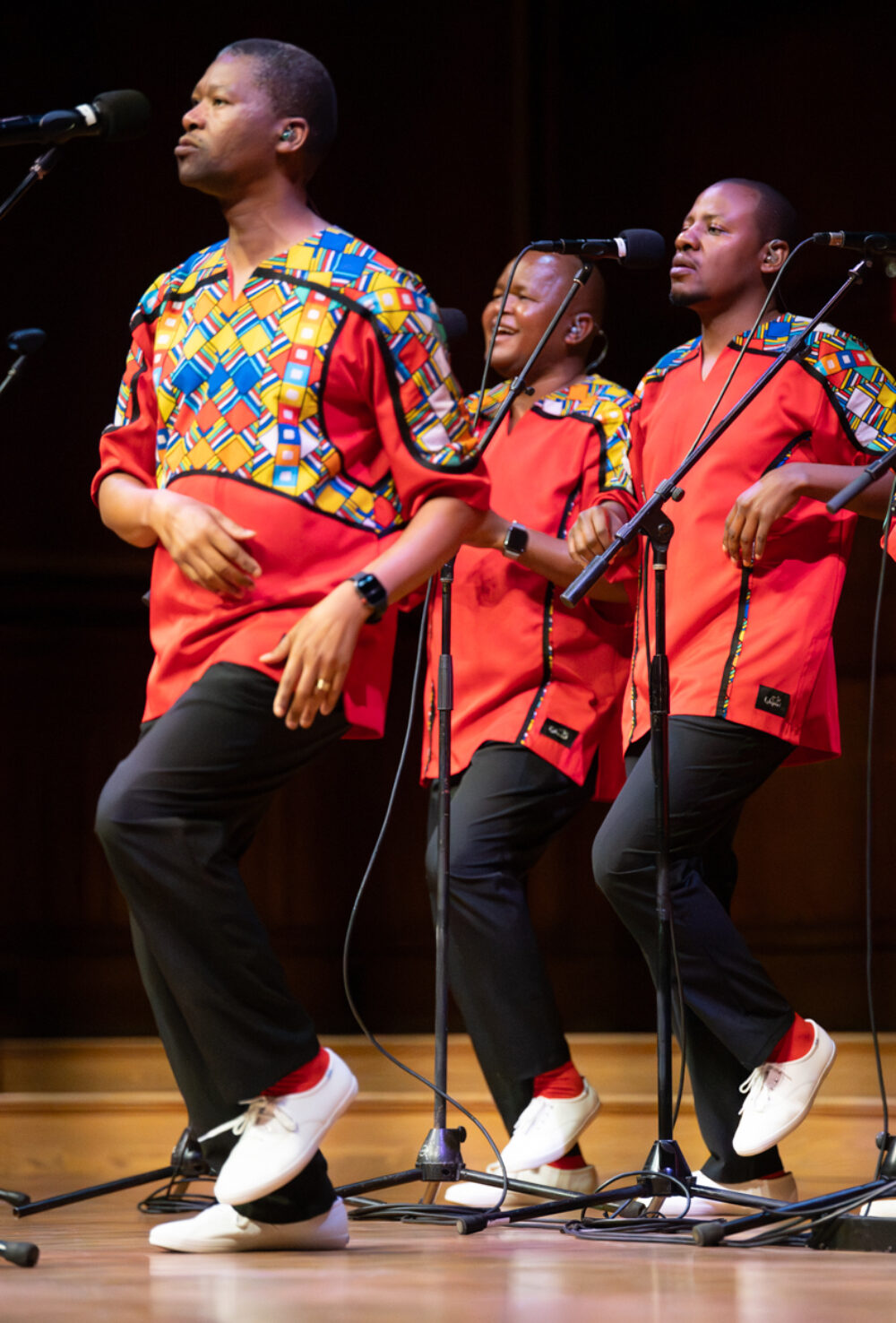
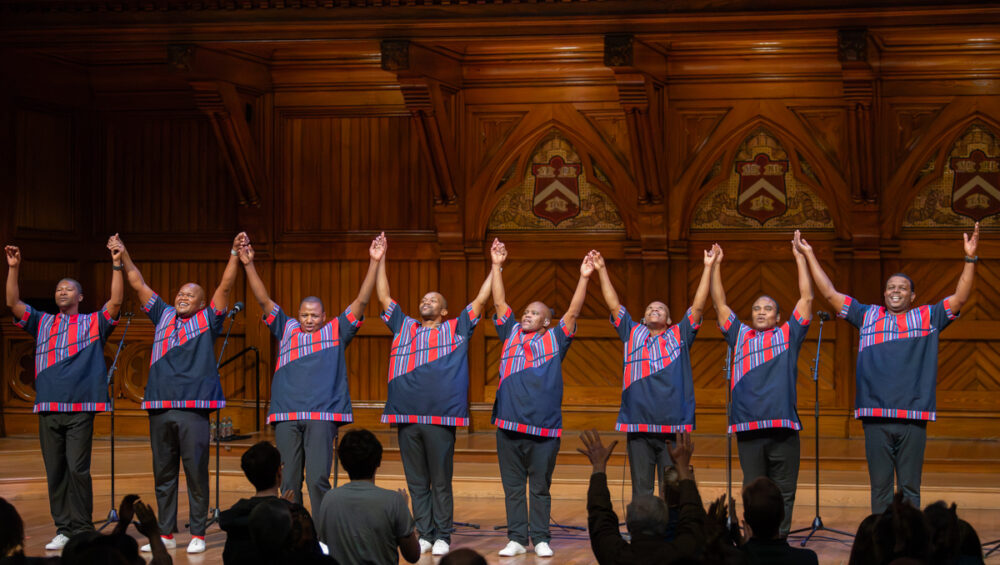
<p><em>Here are a few highlights from the Sanders Theater show. Photos by Banning Eyre.</em></p>
<p><strong>Thulani Shabala:</strong> There are no more original members on the stage. The two founding members, Albert Mazibuko and his brother, retired just last year. So now we only have the sons of Joseph Shabalala, the four sons, who joined the group in 1993. And we have other long time members. One of them has been with us for 19 years, another one for 12 and another one for 11 years. We've also been joined by two new members, the grandsons of Dr. Joseph Shabalala. This is their second year now. So that makes nine members in the group.<br></p>
<p><strong>Banning Eyre: So this is the second generation and third generation. How big is your family? </strong></p>
<p>The Shabalalas are a big family. Our father his four brothers. They were five, and they had sisters as well. In my family, in our house, Joseph Shabalala’s house, there are nine children. So including all the brothers, the aunts, and the sisters and grandchildren... </p>
<p><strong>Sibongiseni Shabalala</strong>: …there could be a thousand people!</p>
<p><strong>Impressive. So with this changing of generations, has your music and performance style changed at all?</strong></p>
<p><strong>TS:</strong> Over the years, the music is still the same. It's our traditional music, but we get a lot of requests for collaborations. Our father collaborated with Paul Simon in the ‘80s. And after that, we've done a lot of collaboration: Dolly Parton, Stevie Wonder, Michael Jackson... And we also have a collaboration from South Africa as well. Recently, we collaborated with a jazz artist. </p>
<p><strong>Which one? </strong></p>
<p>Jazz artist and doctor, Dr. Nduduzo Makhathini. </p>
<p><strong>Oh yes. He’s fantastic.</strong></p>
<p>Yes, yes. And he does a kind of Afro-soul music. Our music is still the same. Traditional music. We want to make sure that it's still the same. But we can do any collaboration. It can be rock and roll, jazz, anything. We accept it because music unifies people. <br></p>
<p><strong>Do you write new songs for the band? </strong></p>
<p><strong>TS:</strong> Yes, we have new songs written by myself and my brothers. After our father passed on, we keep on writing new songs. We will be performing some of them today. Not a lot. </p>
<figure><iframe loading="lazy" width="500" height="281" src="//www.youtube.com/embed/IPEWWCUeXjw" frameborder="0" allowfullscreen=""></iframe></figure>
<p><br><strong>Now that the group has survived across generations, do you think it will last forever? Will Ladysmith Black Mambazo outlive us all? </strong></p>
<p><strong>SS:</strong> Yes, that's the vision, the wish of our father. It’s not only for the Shabalala family, but it is now for the country, it is for the world. Hence, we have started what we call the <a href="https://www.youtube.com/channel/UCHMkXGOlP6-CHOo0W2f6IYg/videos" rel="noopener" target="_blank">Ladysmith Black Mambazo Mobile Academy</a>, because our father had the wish of building a school where all the indigenous music of South Africa will be taugh, and be preserved. </p>
<p>But that dream is a very big dream, and it takes a lot of money to do it. So to work towards that dream, we have started the mobile academy. We go around the country encouraging young people to do what they love, but also to stick to their traditions and their roots, as Ladysmith Black Mambazo members have done, because our father wanted to promote the music, the <em>cultural</em> music of South Africa, and also the people of South Africa, as a peace-loving people who are able to live together with one another. So Lady Smith Black Mambazo is going to continue. It's not gonna end with us. We already have the grandsons now. When we retire, there are more people that are going to come, so it's just gonna continue. </p>
<p><strong>Is there any new music on the scene that you guys are excited about?</strong></p>
<p>All of the new music in South Africa is exciting us. We have something called amapiano. </p>
<p><strong>We know it. Very modern, electronic music. But you like it?</strong></p>
<p>Yes. Music is music. It talks to your soul. So we embrace it and we love it. </p>
<p><strong>TS:</strong> And also through our mobile academy, we have discovered artists that we have recorded and promoted. And if we get chances here and there, we take them with us to open our shows. We've taken some of these artists that we discovered on our tours in England so that we can expose them. </p>
<p><strong>Can you name a couple? </strong></p>
<p>There is a women’s choir from Northern Cape called <a href="https://www.youtube.com/watch?v=ws7uh81qWYU&list=RDws7uh81qWYU&start_radio=1" rel="noopener" target="_blank">Meduduetsane Basadi</a>, and a group from the Northwest called the Goodfellas. </p>
<figure><iframe loading="lazy" width="500" height="281" src="//www.youtube.com/embed/uwAWW48h5_A" frameborder="0" allowfullscreen=""></iframe></figure>
<p><br>But also, when we are at home, we do the same thing. When we have a chance doing our own shows, we bring these young artists. We want to give them exposure and we want them to get the experience of how to work with an artist that is developed. Because success for us… It's also about the behavior, how you conduct yourself, how you keep time, how you are able to work with other people. It's not only about talent. Talent can take you somewhere, but respect and being able to work with other people will take you far. </p>
<p><strong>SS:</strong> And also we advise them, especially about substances like alcohol and drugs, because that has destroyed many of us artists. So we advise them to stay away from those kind of things, because they are very dangerous. And it's easy to get those things when you are an artist, you know? Everyone offers you. </p>
<p><strong>You mentioned amapiano. Have you done any amapiano collaborations?</strong></p>
<p>We've done something with one guy called <a href="https://www.youtube.com/watch?v=Ly-Q0z9N_Hs&list=RDLy-Q0z9N_Hs&start_radio=1" rel="noopener" target="_blank">Mobi Dixon</a>, from South Africa. We've had some requests, but the thing is sometimes time clashes. But Mambazo, right now, we are open, because what we want to do is to help young people to reach where they want to be, being able to sit together in one room and spend the time working on a song, talking. We feel that we are learning something from them, but that we can also help them. They are also learning something from us. They're also going to be able to help us. So we are very open to working with young people. </p>
<p><strong>What do you enjoy most about performing live?</strong></p>
<p><strong>TS:</strong> Me, personally, when I'm on stage, I always pray that whoever is at the show, if he or she is sick, that person would get healed at that time. If you have a problem or any kind of problem, a broken relationship, that relationship will be mended and people will continue. I always feel that peace, love and harmony are very important, so that's my thing. </p>
<p><strong>SS:</strong> Music makes people happy, music gives people life. So being on stage to perform, even if I was feeling tired when I got on stage, I get that energy and I wish to transform that energy to the audience so that they can feel inspired and feel that after they show, they can do everything. </p>
<p><strong>I know you have to go onstage, but one more. Are you guys recording? Will there be a new album? </strong></p>
<p>We just recorded. We just finished our album with Dr. Nduduzo Makhathini and Mbuso Khoza. The record is called <em><a href="https://music.youtube.com/playlist?list=OLAK5uy_l0-xGqkBOnfQEer3fNm4QDDYAwjOZ6QYc" rel="noopener" target="_blank">One Voice – One World</a></em>. So what we did, working on that album, we chose songs that my father wrote to revive those songs. So we just chose two songs that my father had written and then between us, we remade them. I write and our young brother writes, so we wrote songs and then Mbuso wrote a song and then Nduduzo wrote a song to make up the album. It’s now there's the streaming platforms. </p>
<figure><iframe loading="lazy" width="500" height="281" src="//www.youtube.com/embed/6b6rS5qC5Ik" frameborder="0" allowfullscreen=""></iframe></figure>
<p><br><strong>SS:</strong> You can choose whatever voice you want, whatever message. It's peace, it's love, whatever voice that you want people to relate to the people. I go for peace. </p>
<p><strong>Peace love are good. I'll take both. Thanks guys. </strong></p>
<p>You're very welcome. Thank you. </p>
<p><em>Here are a few highlights from the Sanders Theater show. Photos by Banning Eyre.</em></p>

Related Audio Programs
February 26, 2026
Black History Month 2026: Gospel Live from South Africa to Alabama
Related Articles
February 11, 2020
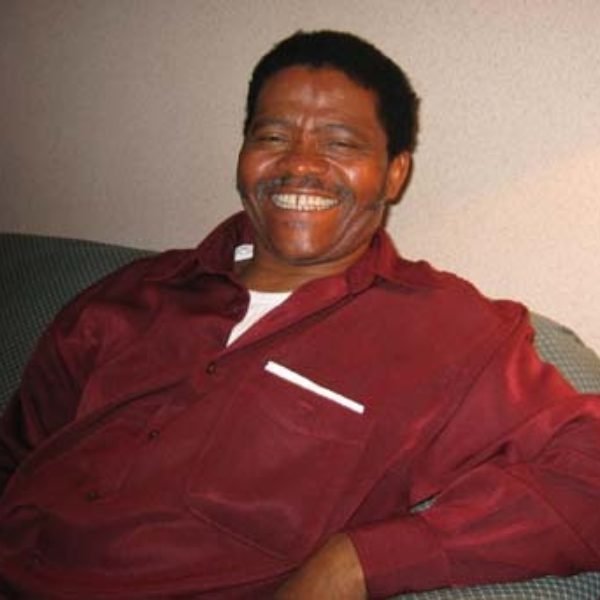
RIP: Ladysmith Black Mambazo Founder Joseph Shabalala
Review June 6, 2007