Interview April 15, 2026
Pape Diouf, Mbalax with Honor!
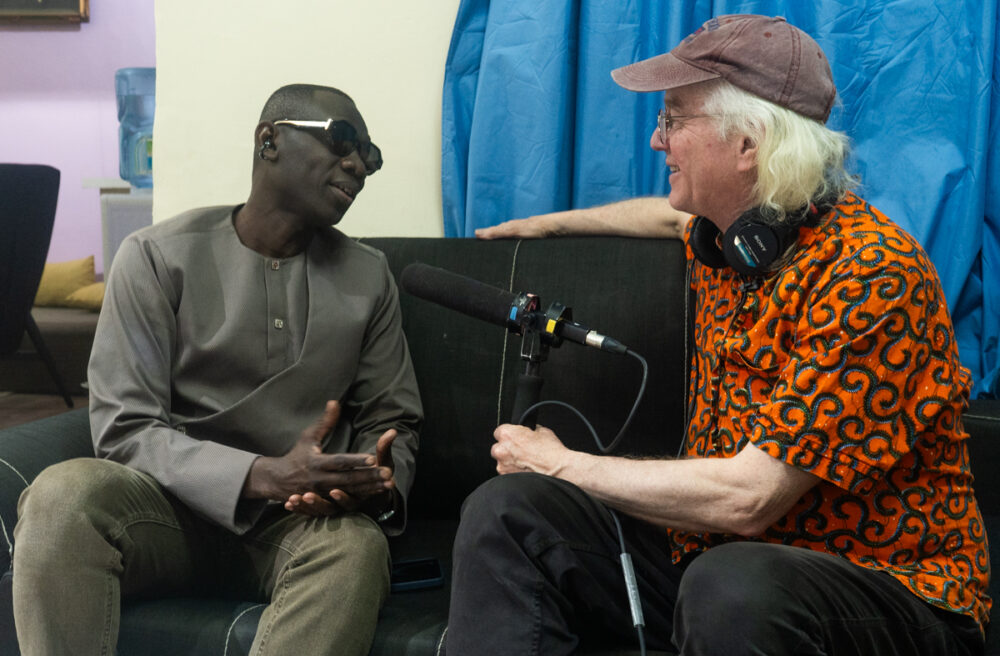
<p><em>Pape Diouf is a giant of Senegal’s mbalax music. Born in 1951, he comes from the generation after mbalax pioneer Youssou N’Dour, but he’s been a star for decades, so he’s now a veteran in his own right. During the 2026 Afropop visit to Senegal, we met Pape at the studio of Papis Konate for a chat. </em></p>
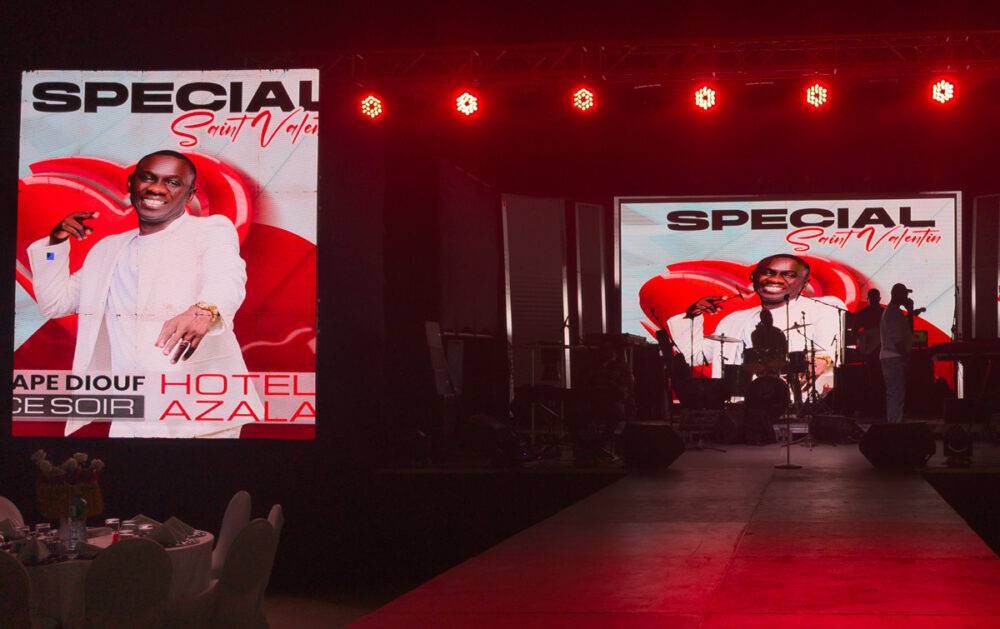
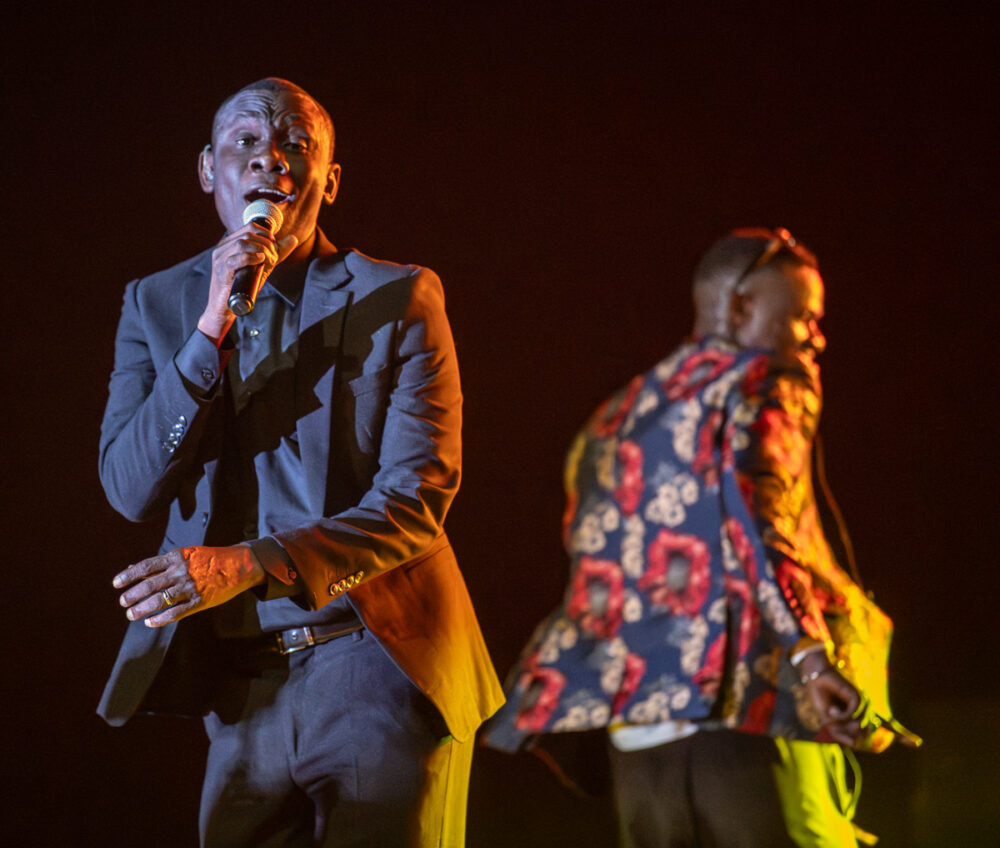
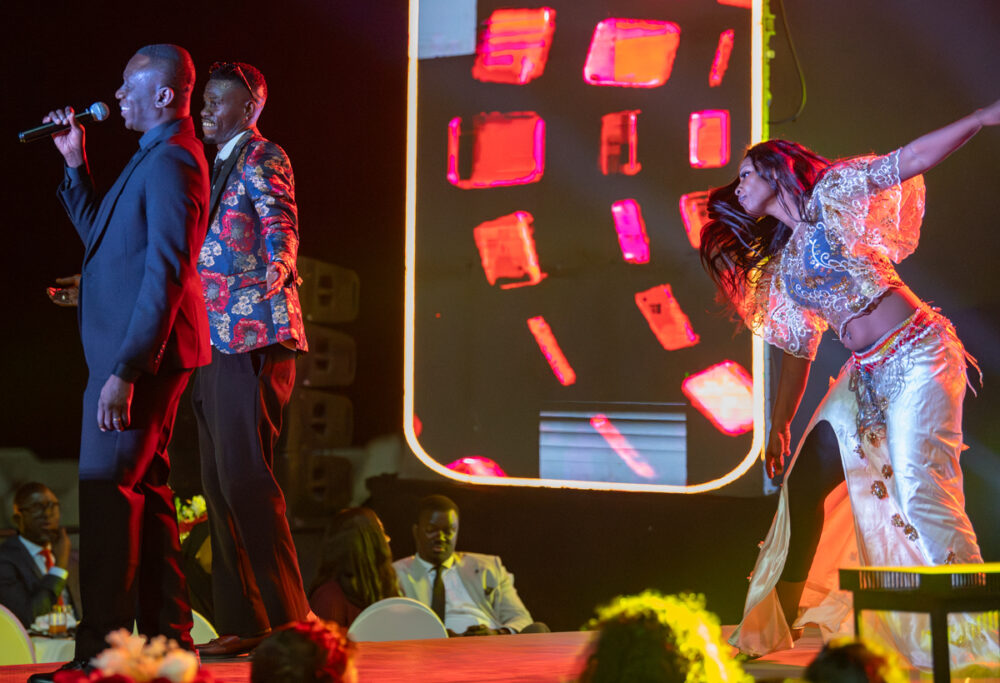
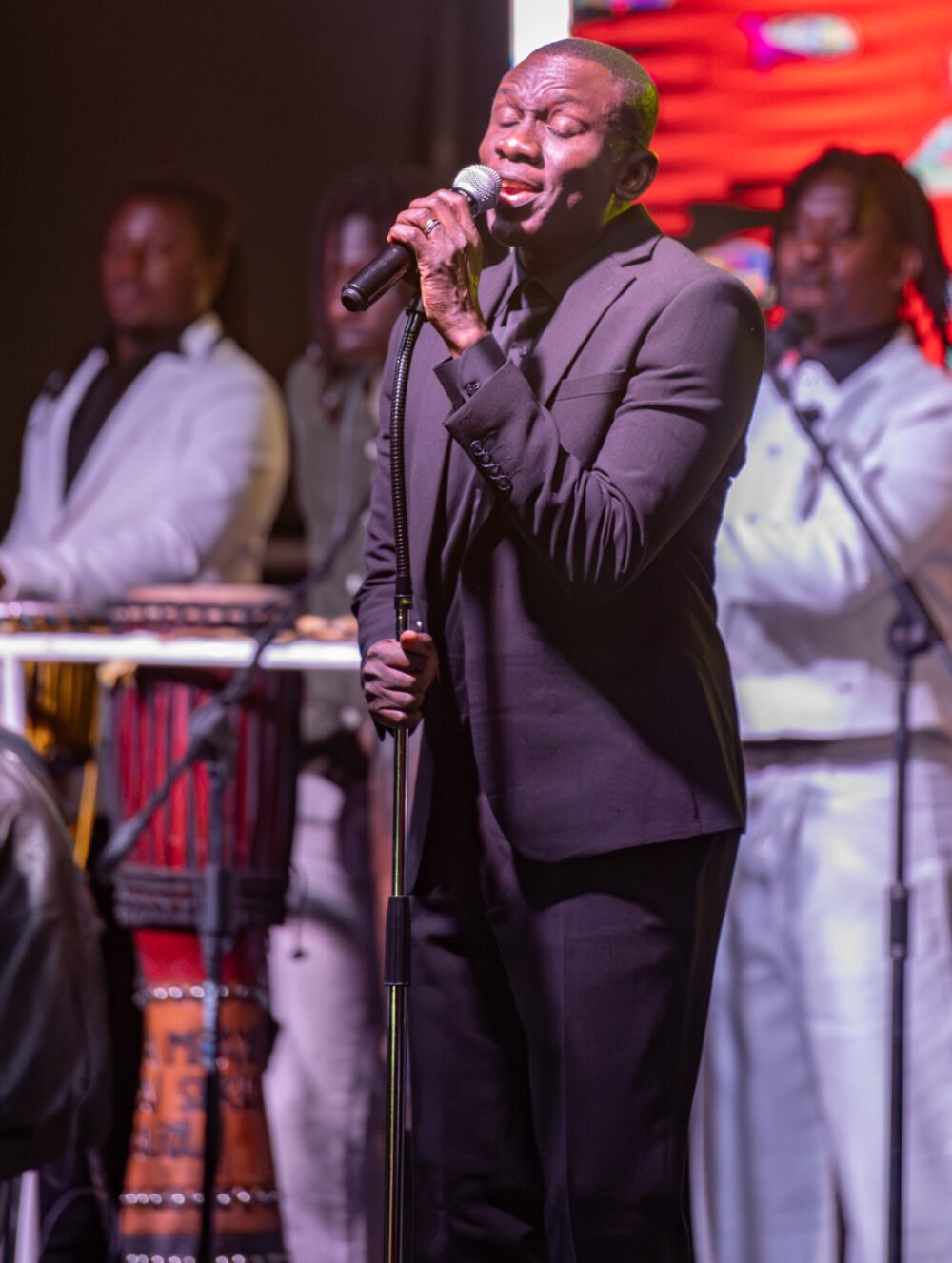
<p><em>Later, Banning Eyre attended Pape’s Valentine’s Day show at the seaside Azalai Hotel. This was a lavish affair, dinner served at 11PM, and music beginning at 11:30. The ticked wasn’t cheap, so Dakar’s finest turned out, fabulously dressed, some prepared to dash the star with cash. After all, he is a griot in addition to being a pop star. And the show was simply spectacular, red hot mbalax and a voice for the ages.</em></p>
<p><em>Here’s Banning’s conversation with Pape. Photos by Banning.<br></em></p>
<p><strong>Banning Eyre: Pape, Welcome to Afropop. What a pleasure to speak with you at last. Our friend Birane Sarr from New Africa Productions in New York has been wanting this to happen for a long time.</strong></p>
<p><strong>Pape Diouf:</strong> Hey, Banning. The pleasure is mine too, truly. It’s a shared pleasure. And I greet the whole Afropop team. Now that you are in Senegal, it’s a real opportunity to connect.</p>
<p><strong>You were in the U.S. once, but we did not meet.</strong></p>
<p>Yes, It was 2017. Before the pandemic.</p>
<p><strong>Well, I know Birane is working to bring you back.</strong></p>
<p>Yes. We have plans for the future. We just released a new album. It's called <em>À Votre Honneur</em>. I dedicated the album to all music lovers. It’s an album with nine tracks where I also remixed some older pieces to give the general public memories. You came at the right time because the album came out at the end of December. Then we were preparing to go on tour. We came back in January. So we were a bit tired, all that. But now, we're back to work. We've started promoting the album.</p>
<figure style="--tw-border-spacing-x: 0; --tw-border-spacing-y: 0; --tw-translate-x: 0; --tw-translate-y: 0; --tw-rotate: 0; --tw-skew-x: 0; --tw-skew-y: 0; --tw-scale-x: 1; --tw-scale-y: 1; --tw-pan-x: ; --tw-pan-y: ; --tw-pinch-zoom: ; --tw-scroll-snap-strictness: proximity; --tw-gradient-from-position: ; --tw-gradient-via-position: ; --tw-gradient-to-position: ; --tw-ordinal: ; --tw-slashed-zero: ; --tw-numeric-figure: ; --tw-numeric-spacing: ; --tw-numeric-fraction: ; --tw-ring-inset: ; --tw-ring-offset-width: 0px; --tw-ring-offset-color: #fff; --tw-ring-color: rgba(59,130,246,.5); --tw-ring-offset-shadow: 0 0 #0000; --tw-ring-shadow: 0 0 #0000; --tw-shadow: 0 0 #0000; --tw-shadow-colored: 0 0 #0000; --tw-blur: ; --tw-brightness: ; --tw-contrast: ; --tw-grayscale: ; --tw-hue-rotate: ; --tw-invert: ; --tw-saturate: ; --tw-sepia: ; --tw-drop-shadow: ; --tw-backdrop-blur: ; --tw-backdrop-brightness: ; --tw-backdrop-contrast: ; --tw-backdrop-grayscale: ; --tw-backdrop-hue-rotate: ; --tw-backdrop-invert: ; --tw-backdrop-opacity: ; --tw-backdrop-saturate: ; --tw-backdrop-sepia: ; --tw-contain-size: ; --tw-contain-layout: ; --tw-contain-paint: ; --tw-contain-style: ; border: 0px solid rgb(229, 231, 235); box-sizing: inherit; margin: 0px 0px 1em; outline: currentcolor !important; position: relative; padding: 0px; caret-color: rgb(63, 77, 90); color: rgb(63, 77, 90); font-family: system-ui, BlinkMacSystemFont, -apple-system, " segoe="" ui",="" roboto,="" oxygen,="" ubuntu,="" cantarell,="" "fira="" sans",="" "droid="" "helvetica="" neue",="" sans-serif;="" font-size:="" 16px;="" font-style:="" normal;="" font-variant-caps:="" font-weight:="" 400;="" letter-spacing:="" orphans:="" 2;="" text-align:="" start;="" text-indent:="" 0px;="" text-transform:="" none;="" white-space:="" widows:="" word-spacing:="" -webkit-text-stroke-width:="" text-decoration-line:="" text-decoration-thickness:="" auto;="" text-decoration-style:="" solid;"=""><iframe loading="lazy" width="500" height="281" src="//www.youtube.com/embed/vNrX9Aa4EPk" frameborder="0" allowfullscreen="" style="--tw-border-spacing-x: 0; --tw-border-spacing-y: 0; --tw-translate-x: 0; --tw-translate-y: 0; --tw-rotate: 0; --tw-skew-x: 0; --tw-skew-y: 0; --tw-scale-x: 1; --tw-scale-y: 1; --tw-pan-x: ; --tw-pan-y: ; --tw-pinch-zoom: ; --tw-scroll-snap-strictness: proximity; --tw-gradient-from-position: ; --tw-gradient-via-position: ; --tw-gradient-to-position: ; --tw-ordinal: ; --tw-slashed-zero: ; --tw-numeric-figure: ; --tw-numeric-spacing: ; --tw-numeric-fraction: ; --tw-ring-inset: ; --tw-ring-offset-width: 0px; --tw-ring-offset-color: #fff; --tw-ring-color: rgba(59,130,246,.5); --tw-ring-offset-shadow: 0 0 #0000; --tw-ring-shadow: 0 0 #0000; --tw-shadow: 0 0 #0000; --tw-shadow-colored: 0 0 #0000; --tw-blur: ; --tw-brightness: ; --tw-contrast: ; --tw-grayscale: ; --tw-hue-rotate: ; --tw-invert: ; --tw-saturate: ; --tw-sepia: ; --tw-drop-shadow: ; --tw-backdrop-blur: ; --tw-backdrop-brightness: ; --tw-backdrop-contrast: ; --tw-backdrop-grayscale: ; --tw-backdrop-hue-rotate: ; --tw-backdrop-invert: ; --tw-backdrop-opacity: ; --tw-backdrop-saturate: ; --tw-backdrop-sepia: ; --tw-contain-size: ; --tw-contain-layout: ; --tw-contain-paint: ; --tw-contain-style: ; border: 0px solid rgb(229, 231, 235); box-sizing: inherit; display: block; vertical-align: middle; outline: currentcolor !important;"></iframe></figure>
<p><br></p>
<p><strong>Excellent.</strong> <strong>So to start, introduce yourself and tell us a little bit about your story. I understand you were in the band Lemzo Diamono at some point. We were here in the ‘90s when that band was a big deal. Fantastic musicians. But let’s go back to your beginnings.</strong></p>
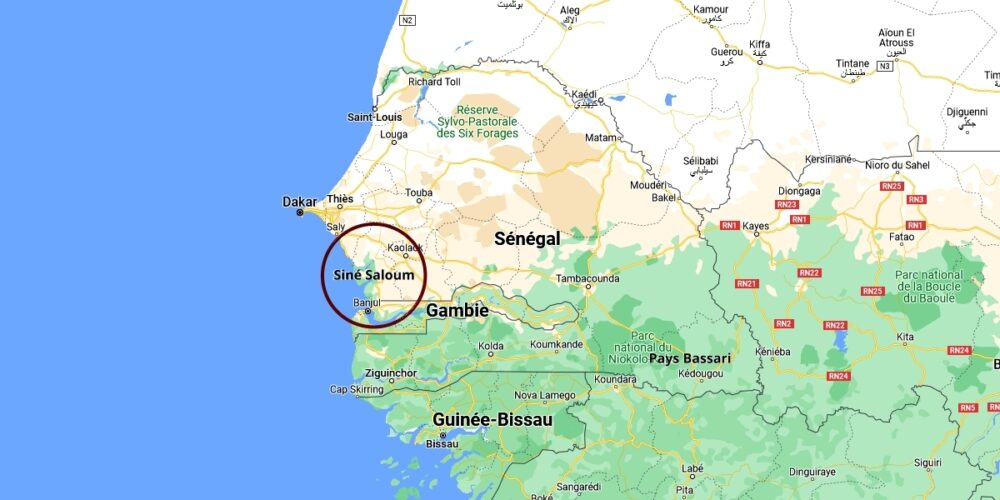
<p>You know, Banning, I was born into a griot family. So, I inherited my singing from my ancestors. I come from a Serer family from the Sine-Saloum region, very far from Dakar. That’s where my ancestors, my great-grandfathers, came from. So I inherited music; it's in my blood. Later on, I was lucky enough to join Lemzo Diamono. Lemzo Diamono, was a school where many singers, great singers, passed through. Today, when you listen to mbalax, there is a style called <em>marimbalax</em>.</p>
<p><strong>Marimbalax. Marimba and mbalax.</strong></p>
<p>Yes. You know the sound of the marimba? So, you take marimba and mbalax, and you add them together, and that's marimbalax. </p>
<p><strong>But it’s the keyboards playing in the manner of marimbas, right?</strong></p>
<p>Exactly. I learned a lot with Lemzo Diamono. I traveled, I visited many countries with Lemzo Diamono. I joined the group in '95. From '95 until '99. Then I left Lemzo Diamono to fly solo. And then I went to Jololi, Youssou Ndour's production company. I was there from 2000 until 2019. Then I left to set up my own label called PDG Group, Pape Diouf Group.</p>
<p><strong>You say Lemzo Diamono was a school. Tell me a little more about that. That group really changed the course of mbalax, right?</strong></p>
<p>Yes, because in the beginning, there was no marimbax. I think the first time the marimbax was used was with the late Habib Faye, Lamine Faye's brother. So Habib Faye started using mbalax with Super Étoile [Youssou N’Dour’s band]. But I think it was Lamine Faye who developed it later with Lemzo Diamono. It's true that Lemzo Diamono's roots were in Super Diamono. So when Lamine decided to form his orchestra and train musicians like me, they started to introduce a concept called the marimbax. So when I joined Lemzo Diamono, I learned a lot. Because I learned so much there, every time I release an album, that album is a hit.</p>
<p>For example, how do you create a concept for a song? First, when you start the song, what's the theme, the intro, the groove, the chorus. What can make this song sell? All of that stuff, I learned at Lemzo Diamono, and Lamine Faye also trained many young talents like me. I can say that he's also one of the great musicians who inspired the new generation to really take the marimbax concept and explore it. To this day, it's a concept that's in tune with the times.</p>
 <p><strong>The sound of the marimba is created with multiple keyboards, so it’s really about the sound. Is it ever drawing on a particular marimba tradition?</strong></p>
<p>Well, it's a modern sound, but we in Senegal have exploited it, just like the <em>coupé-décalé</em> concept with the Ivorians. But with the Serer style, that's my style, because I was born into a Serer family. So every time, in my songs, you find the Serer style. You can feel the Serer melodies in my voice, the melodies, even the lyrics.</p>
<p><strong>The language? Do you sing in Serer?</strong></p>
<p>Well, not the language, but the melodies. The musical form too, sometimes you can feel that in my songs.</p>
<p><strong>But, but you’re singing in Wolof, the language that most people understand.</strong></p>
<p>Yes. Of course. I sing in Wolof. I also sing in French. </p>
<p><strong>Let's talk about songs. What was the first track that really resonated with the audience of Pape Diouf?</strong></p>
<p>My song with Lemzo Diamono was “Cocorico.”</p>
<figure><iframe loading="lazy" width="500" height="281" src="//www.youtube.com/embed/UDL8Yv9JjEQ" frameborder="0" allowfullscreen=""></iframe></figure>
<p><strong><br>Ah. The sound of the rooster. Cock-a-doodle-doo!</strong><br></p>
<p>Yes. “Cocorico,” with Lemzo Diamono. When I left Lemzo Diamono to fly solo, I remixed the song “Cocorico.” So that propelled me. And when I joined the Jololi label in 2002, we released an album called <em>Partir</em>. And that song really launched my career, launched me worldwide. It was that song that allowed me to tour in the United States, Europe and the sub-region. Because at that time, all the young people really wanted to leave, travel abroad to work, earn money and return to their native country to get married and really manage things.</p>
<figure><iframe loading="lazy" width="500" height="281" src="//www.youtube.com/embed/ahYtSkS_i8w" frameborder="0" allowfullscreen=""></iframe></figure>
<p><br>It's called “Partir” because there was a song by Andrea Bocelli called “Con te partirò,” which I covered. But I changed the lyrics to tell about the story of a young man who doesn't have any means and who really wants to succeed in life. His dream is to travel, work, have money, return to his native country, get married, and really build a house and start a family.<br></p>
<p><strong>Interesting, The part about returning and making a home and all that… That's important because there are many who leave and do not return.</strong></p>
<p>Yes, yes, that's it. Well, actually, I can even say that I used myself as an example. Why did I sing that? On my first trip in my career, I applied for a visa to France, and it was refused, it was rejected. And it hurt because there was a lot of publicity. There are a lot of Pape Diouf fans who were listening to Pape Diouf's album, and they hadn't yet had the chance to see the artist live in person, and it was my first contract in France, in Paris. When you're an artist, your first dream is to release an album, to go to Paris or New York, to really reconnect with your fans, to sing in front of them. So I was rejected, and that hurt me a lot. That's why I wrote this song, to say that my dream was to go and work, have money, return to my country, get married, build a house, start a family and develop my career.</p>
<p><strong>So that song became a hit. I can see why people would relate to that story. </strong></p>
<p>It was a hit. Everyone really loved that song.</p>
<p><strong>And what year was that?</strong></p>
<p>That was in 2004.</p>
<p><strong>So it's been more than twenty years. How many albums have you made? </strong></p>
<p>There are a lot of them. A lot. I can't even count them.</p>
<p><strong>Okay. Well, are there other big moments, songs or concerts that really made a difference? Highlights of your career.</strong></p>
<p>Yes. Of course. I made an album with Universal Music where I sang about Paris-Dakar. [<a href="https://en.wikipedia.org/wiki/Dakar_Rally" rel="noopener" target="_blank">The Paris-Dakar Rally</a>]. </p>
<figure><iframe loading="lazy" width="500" height="281" src="//www.youtube.com/embed/7ld19sbjCBY" frameborder="0" allowfullscreen=""></iframe></figure>
<p><br></p>
<p>I also did quite a few collaborations. For example, I sang with the late Jacob Desvarieux the guitairst from Kassav'. I also did a feature with <a href="https://www.youtube.com/watch?v=KTlhTDiN3pI&list=RDKTlhTDiN3pI&start_radio=1" rel="noopener" target="_blank">Manu Dibango</a>, the late Manu Dibango. I also sang with a Malian woman named <a href="https://www.youtube.com/watch?v=3f7T5X-aSpg&list=RD3f7T5X-aSpg&start_radio=1" rel="noopener" target="_blank">Inna Modja</a>. So, really, I did a lot of things with that album. There are also great moments where I marked my career at Bercy. We were at Bercy in 2010 and 2018. In 2013, we were at the Zénith in Paris. </p>
<p><strong>These are big venues. </strong></p>
<p>Yes, yes. I also did of festivals with Birane in the United States. We played Old Town in Chicago, we did the Wisconsin Festival and Symphony Space in New York. </p>
<p><strong>Okay. That’s a great, quick tour of your career. Now, let's talk about the new album, <em>In Your Honor</em>.</strong></p>
<p>Yes, great. Well, there's a song called "Respect Above All." That means you have to respect everyone. And respect is work. You have to work to respect your wife, your children, your neighbor, people. So, respect is reciprocal. What you give, that's what you receive in return. </p>
<p>There are also love songs. For example, there's a song called "King and Queen." There's the husband who writes this song to sing the praises of his wife. There’s also a song called “Ndaga.” Ndaga has a long story. It's a traditional song about a very great musician—may he rest in peace—his name was Saloum Dieng, who came from Sine-Saloum. He sang this song, so I took it and remixed it. </p>
<p><strong>I look forward to hearing the album.</strong></p>
<p>It’s on all the platforms, including <a href="https://www.youtube.com/watch?v=vNrX9Aa4EPk&list=OLAK5uy_kaSULygsBGnT839HmxtVKapBzr_ACaBog" rel="noopener" target="_blank">YouTube</a>.</p>
<p><strong>Let's talk a little about it, the development Senegalese music. We've traveled to many countries. Sometimes, you arrive, you turn on the radio and you listen to a lot of music from foreigners.</strong></p>
<p>Yeah, yeah.</p>
<p><strong>But here, there is real loyalty to mbalax. We hear local music, especially Youssou N’Dour, in almost every taxi. It’s clear that people in Dakar love Senegalese music, but for that to happen, the music has to speak to every generation, right?</strong></p>
<p>Of course.</p>
<p><strong>So, what is the magic, the secret of reaching young listeners, so that they listen to mbalax, more than reggae or reggaeton or American hip-hop. What is the magic there?</strong></p>
<p>Well, first, the legends, the icons who came before us, they did a remarkable job because they inspired us. For example, Youssou N’dour, Baaba Maal, Thione Seck, Omar Pene, Ismael Lô. They established something truly enduring, which is mbalax music. And after that, there are other generations, generation to generation. So all these generations are obliged to follow the older generations. But instead of promoting anyone in particular, first and foremost, we listen to all kinds of music. Because music is universal; it's international. But above all, there's our beloved mbalax. That's why so many foreigners come to learn percussion, to learn our secrets, for example, the marimbalax or other styles of playing the drums, like the talking drums. This is a legacy that our elders, our legends, have left us. We really must preserve this heritage.</p>
<p><strong>That's impressive. There needs to be loyalty, as you said. But also, and this is important, perhaps some changes with generations. We've heard of artists who have done a fusion with mbalax and urban music, a bit of hip-hop like that. Is it necessary to do things like that to keep the youth listening amidst all the changes?</strong></p>
<p>But of course, of course. As you just said, Banning, we have to merge with the new generation, especially on the hip-hop side. Today, I just finished a feature with a rap group called Akhklou Brick. They come from the Petit Côte. The song is called “Paella,” after the Spanish dish.</p>
<figure><iframe loading="lazy" width="500" height="281" src="//www.youtube.com/embed/mdsPgR_aeNY" frameborder="0" allowfullscreen=""></iframe></figure>
<p><br></p>
<p><strong>Is it common for major artists to collaborate with rising, young artists?</strong></p>
<p>Of course, of course. There are many collaborations with established artists and artists who are just starting their careers to give them credit, you know. It's very important, because music is peace. Music is meant to bring people together, not divide them. That's why sometimes you see generations merging to create collaborations.</p>
<p><strong>That's good to hear. You know, Pape, we’re going to bring a group of listeners here next year to experience Dakar and Casamance for themselves. Care to give them a shoutout? Maybe in English?</strong></p>
<p>Banning, you're going to cause me problems. [<em>switching from French to English</em>] Anyway, uh, I want to give a big shout-out to all the Afropop listeners. So it's been a real pleasure to have you here in Senegal. So, I say: Welcome to Senegal. I'm even working on a song, maybe for my upcoming album. There will be a song called "Welcome to Senegal." </p>
<p><strong>Thank you. So great to finally meet.</strong></p>
<p>Thank you Banning. Thank you very much. It's been a pleasure.</p>
<p><em>Watch this space for word of Pape Diouf performances in the U.S.. Meanwhile, here are shots from Pape's Valentine's Day show at the Azalai Hotel in Dakar.</em></p>
<p><strong>The sound of the marimba is created with multiple keyboards, so it’s really about the sound. Is it ever drawing on a particular marimba tradition?</strong></p>
<p>Well, it's a modern sound, but we in Senegal have exploited it, just like the <em>coupé-décalé</em> concept with the Ivorians. But with the Serer style, that's my style, because I was born into a Serer family. So every time, in my songs, you find the Serer style. You can feel the Serer melodies in my voice, the melodies, even the lyrics.</p>
<p><strong>The language? Do you sing in Serer?</strong></p>
<p>Well, not the language, but the melodies. The musical form too, sometimes you can feel that in my songs.</p>
<p><strong>But, but you’re singing in Wolof, the language that most people understand.</strong></p>
<p>Yes. Of course. I sing in Wolof. I also sing in French. </p>
<p><strong>Let's talk about songs. What was the first track that really resonated with the audience of Pape Diouf?</strong></p>
<p>My song with Lemzo Diamono was “Cocorico.”</p>
<figure><iframe loading="lazy" width="500" height="281" src="//www.youtube.com/embed/UDL8Yv9JjEQ" frameborder="0" allowfullscreen=""></iframe></figure>
<p><strong><br>Ah. The sound of the rooster. Cock-a-doodle-doo!</strong><br></p>
<p>Yes. “Cocorico,” with Lemzo Diamono. When I left Lemzo Diamono to fly solo, I remixed the song “Cocorico.” So that propelled me. And when I joined the Jololi label in 2002, we released an album called <em>Partir</em>. And that song really launched my career, launched me worldwide. It was that song that allowed me to tour in the United States, Europe and the sub-region. Because at that time, all the young people really wanted to leave, travel abroad to work, earn money and return to their native country to get married and really manage things.</p>
<figure><iframe loading="lazy" width="500" height="281" src="//www.youtube.com/embed/ahYtSkS_i8w" frameborder="0" allowfullscreen=""></iframe></figure>
<p><br>It's called “Partir” because there was a song by Andrea Bocelli called “Con te partirò,” which I covered. But I changed the lyrics to tell about the story of a young man who doesn't have any means and who really wants to succeed in life. His dream is to travel, work, have money, return to his native country, get married, and really build a house and start a family.<br></p>
<p><strong>Interesting, The part about returning and making a home and all that… That's important because there are many who leave and do not return.</strong></p>
<p>Yes, yes, that's it. Well, actually, I can even say that I used myself as an example. Why did I sing that? On my first trip in my career, I applied for a visa to France, and it was refused, it was rejected. And it hurt because there was a lot of publicity. There are a lot of Pape Diouf fans who were listening to Pape Diouf's album, and they hadn't yet had the chance to see the artist live in person, and it was my first contract in France, in Paris. When you're an artist, your first dream is to release an album, to go to Paris or New York, to really reconnect with your fans, to sing in front of them. So I was rejected, and that hurt me a lot. That's why I wrote this song, to say that my dream was to go and work, have money, return to my country, get married, build a house, start a family and develop my career.</p>
<p><strong>So that song became a hit. I can see why people would relate to that story. </strong></p>
<p>It was a hit. Everyone really loved that song.</p>
<p><strong>And what year was that?</strong></p>
<p>That was in 2004.</p>
<p><strong>So it's been more than twenty years. How many albums have you made? </strong></p>
<p>There are a lot of them. A lot. I can't even count them.</p>
<p><strong>Okay. Well, are there other big moments, songs or concerts that really made a difference? Highlights of your career.</strong></p>
<p>Yes. Of course. I made an album with Universal Music where I sang about Paris-Dakar. [<a href="https://en.wikipedia.org/wiki/Dakar_Rally" rel="noopener" target="_blank">The Paris-Dakar Rally</a>]. </p>
<figure><iframe loading="lazy" width="500" height="281" src="//www.youtube.com/embed/7ld19sbjCBY" frameborder="0" allowfullscreen=""></iframe></figure>
<p><br></p>
<p>I also did quite a few collaborations. For example, I sang with the late Jacob Desvarieux the guitairst from Kassav'. I also did a feature with <a href="https://www.youtube.com/watch?v=KTlhTDiN3pI&list=RDKTlhTDiN3pI&start_radio=1" rel="noopener" target="_blank">Manu Dibango</a>, the late Manu Dibango. I also sang with a Malian woman named <a href="https://www.youtube.com/watch?v=3f7T5X-aSpg&list=RD3f7T5X-aSpg&start_radio=1" rel="noopener" target="_blank">Inna Modja</a>. So, really, I did a lot of things with that album. There are also great moments where I marked my career at Bercy. We were at Bercy in 2010 and 2018. In 2013, we were at the Zénith in Paris. </p>
<p><strong>These are big venues. </strong></p>
<p>Yes, yes. I also did of festivals with Birane in the United States. We played Old Town in Chicago, we did the Wisconsin Festival and Symphony Space in New York. </p>
<p><strong>Okay. That’s a great, quick tour of your career. Now, let's talk about the new album, <em>In Your Honor</em>.</strong></p>
<p>Yes, great. Well, there's a song called "Respect Above All." That means you have to respect everyone. And respect is work. You have to work to respect your wife, your children, your neighbor, people. So, respect is reciprocal. What you give, that's what you receive in return. </p>
<p>There are also love songs. For example, there's a song called "King and Queen." There's the husband who writes this song to sing the praises of his wife. There’s also a song called “Ndaga.” Ndaga has a long story. It's a traditional song about a very great musician—may he rest in peace—his name was Saloum Dieng, who came from Sine-Saloum. He sang this song, so I took it and remixed it. </p>
<p><strong>I look forward to hearing the album.</strong></p>
<p>It’s on all the platforms, including <a href="https://www.youtube.com/watch?v=vNrX9Aa4EPk&list=OLAK5uy_kaSULygsBGnT839HmxtVKapBzr_ACaBog" rel="noopener" target="_blank">YouTube</a>.</p>
<p><strong>Let's talk a little about it, the development Senegalese music. We've traveled to many countries. Sometimes, you arrive, you turn on the radio and you listen to a lot of music from foreigners.</strong></p>
<p>Yeah, yeah.</p>
<p><strong>But here, there is real loyalty to mbalax. We hear local music, especially Youssou N’Dour, in almost every taxi. It’s clear that people in Dakar love Senegalese music, but for that to happen, the music has to speak to every generation, right?</strong></p>
<p>Of course.</p>
<p><strong>So, what is the magic, the secret of reaching young listeners, so that they listen to mbalax, more than reggae or reggaeton or American hip-hop. What is the magic there?</strong></p>
<p>Well, first, the legends, the icons who came before us, they did a remarkable job because they inspired us. For example, Youssou N’dour, Baaba Maal, Thione Seck, Omar Pene, Ismael Lô. They established something truly enduring, which is mbalax music. And after that, there are other generations, generation to generation. So all these generations are obliged to follow the older generations. But instead of promoting anyone in particular, first and foremost, we listen to all kinds of music. Because music is universal; it's international. But above all, there's our beloved mbalax. That's why so many foreigners come to learn percussion, to learn our secrets, for example, the marimbalax or other styles of playing the drums, like the talking drums. This is a legacy that our elders, our legends, have left us. We really must preserve this heritage.</p>
<p><strong>That's impressive. There needs to be loyalty, as you said. But also, and this is important, perhaps some changes with generations. We've heard of artists who have done a fusion with mbalax and urban music, a bit of hip-hop like that. Is it necessary to do things like that to keep the youth listening amidst all the changes?</strong></p>
<p>But of course, of course. As you just said, Banning, we have to merge with the new generation, especially on the hip-hop side. Today, I just finished a feature with a rap group called Akhklou Brick. They come from the Petit Côte. The song is called “Paella,” after the Spanish dish.</p>
<figure><iframe loading="lazy" width="500" height="281" src="//www.youtube.com/embed/mdsPgR_aeNY" frameborder="0" allowfullscreen=""></iframe></figure>
<p><br></p>
<p><strong>Is it common for major artists to collaborate with rising, young artists?</strong></p>
<p>Of course, of course. There are many collaborations with established artists and artists who are just starting their careers to give them credit, you know. It's very important, because music is peace. Music is meant to bring people together, not divide them. That's why sometimes you see generations merging to create collaborations.</p>
<p><strong>That's good to hear. You know, Pape, we’re going to bring a group of listeners here next year to experience Dakar and Casamance for themselves. Care to give them a shoutout? Maybe in English?</strong></p>
<p>Banning, you're going to cause me problems. [<em>switching from French to English</em>] Anyway, uh, I want to give a big shout-out to all the Afropop listeners. So it's been a real pleasure to have you here in Senegal. So, I say: Welcome to Senegal. I'm even working on a song, maybe for my upcoming album. There will be a song called "Welcome to Senegal." </p>
<p><strong>Thank you. So great to finally meet.</strong></p>
<p>Thank you Banning. Thank you very much. It's been a pleasure.</p>
<p><em>Watch this space for word of Pape Diouf performances in the U.S.. Meanwhile, here are shots from Pape's Valentine's Day show at the Azalai Hotel in Dakar.</em></p>
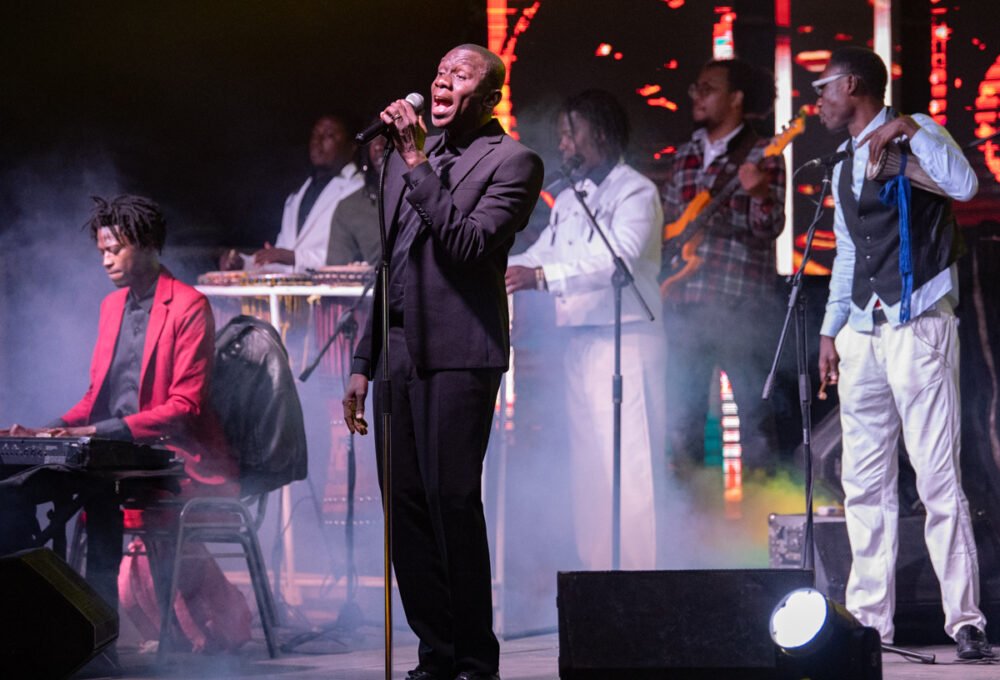
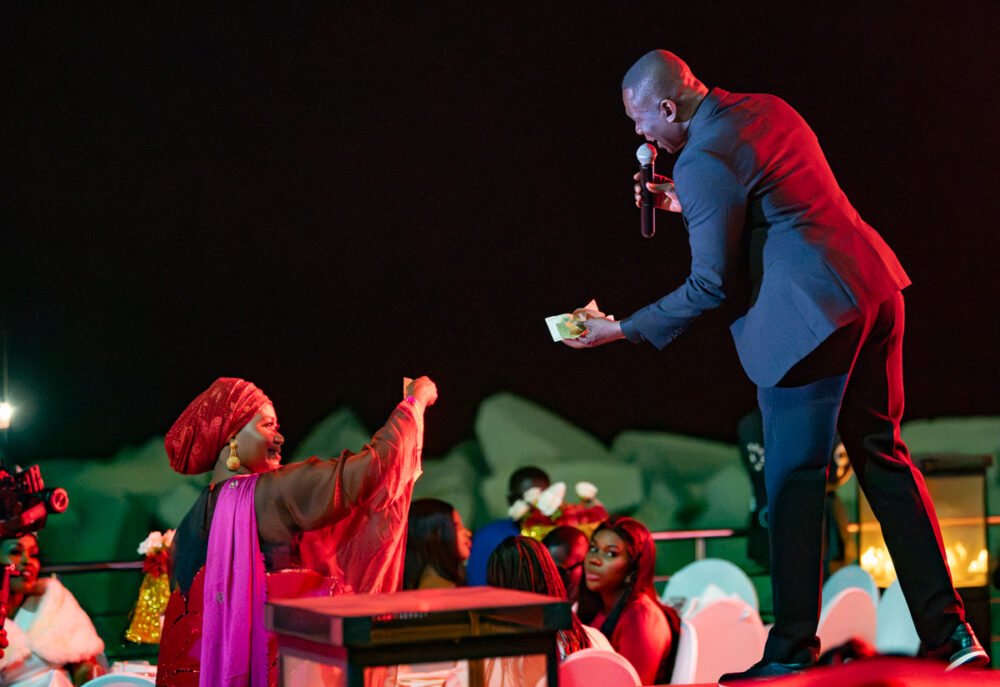
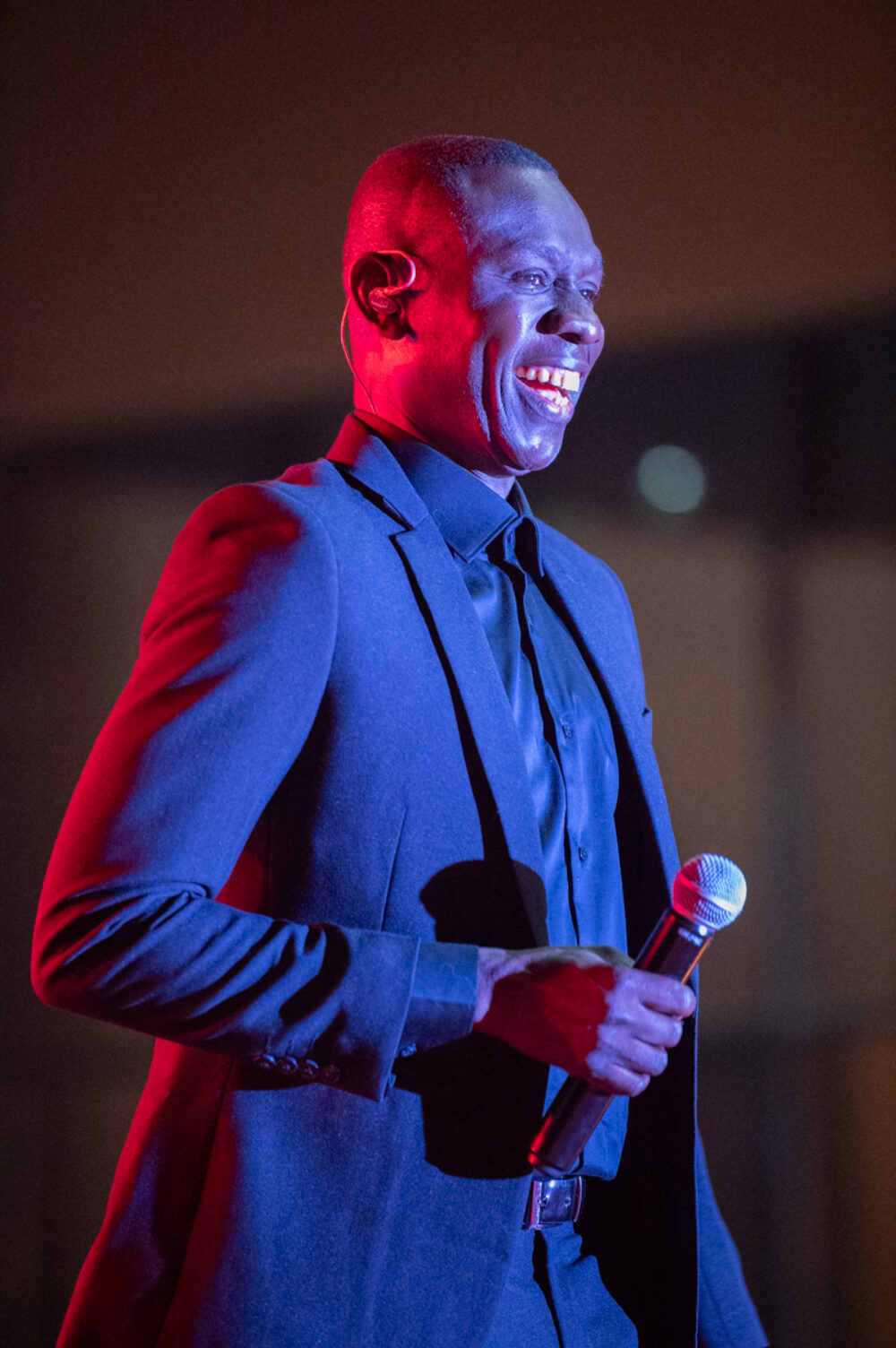
Pape in griot mode
Pape Diouf and Banning Eyre at Papis Konate Studio in Dakar. Photo by Sean Barlow.

Related Audio Programs

June 30, 2022
Dakar Muse
Dakar Muse" takes us to one of the most exciting musical cities in Africa. We'll meet young stars on the Mbalax scene, Senegal's national music
Related Articles
Feature March 3, 2026
Two Weekends in Dakar, Senegal

Feature February 6, 2026