Interview April 14, 2026
In Conversation with Afel Bocoum: New Album, Touring, and Life Philosophy
<p><em>Earlier this year, I had the good fortune to speak with Afel Bocoum before he came on stage in Manchester. I am a huge fan and it was a great honor to be able to interview him. After greeting each other, I was able to watch the band rehearse, before sitting down to speak to them. Just before the concert started, I acted as tour guide and showed them classic British cuisine - Chicken Tikka Masala. </em></p>
<p><em>Afel and his band, consisting of <strong>Ali “Bounaly” Traoré</strong> on guitar, <strong>Mahalmadane “Bountel” Traoré</strong> on Calabash, and manager <strong>Paul Chandler</strong>, spoke to me about Afel’s upcoming album </em>Harber<em>, life on the road, and the state of the world as they see it. Many thanks to Paul for organizing the logistics of the interview, and for his brilliant work with instruments4africa. </em></p>
<p><strong>Ishaan Dasgupta: First of all, it’s great to be able to speak to you today, I am a big fan! How are you? How is the tour going so far?</strong></p>
<p><strong>Afel Bocoum: </strong>It’s going really well. We’re discovering some magnificent places, and some extraordinarily kind people. </p>
<p><strong>And the weather isn’t too bad? </strong></p>
<p>We have to get used to it - if we ask a European to go to Africa and brave the heat, we must do the reverse.</p>
<p><strong>Bounaly, it’s your first time in the UK - how are you finding it?</strong></p>
<p><strong>Ali “Bounaly” Traoré: </strong>It’s been really great so far. </p>
 <p><strong>I wanted to ask you about your upcoming album, <em>Harber</em>. What can you tell the readers?</strong></p>
<p><strong>Afel: </strong>Harber Maiga was my mentor — it was he who taught me to play the guitar, to sing, and to compose music. He was the secretary to the Commandant de Cercle de Niafunké [today known as the Préfet de Cercle]. Sadly, he is no longer with us. Truly, it is he who shaped me into who I am today.</p>
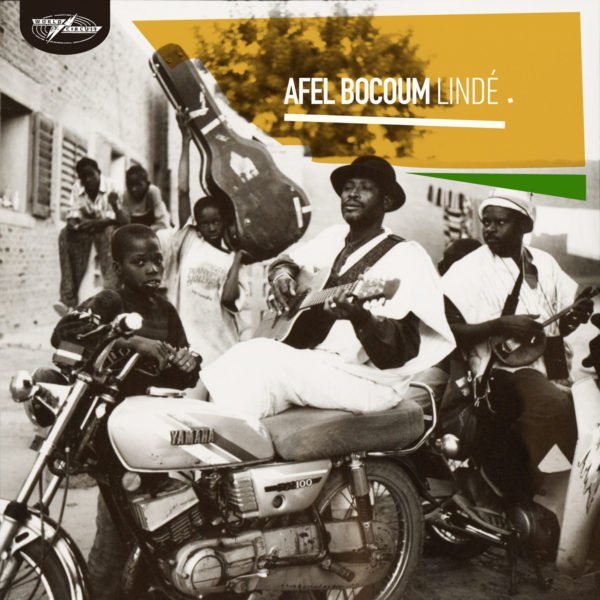
<p><strong>Can you tell me a bit about what this album is like sonically? With your last release, <em>Lindé</em>, you started incorporating more global sounds from the U.S. and other parts of Africa, most notably Tony Allen’s drums. Will this album be a continuation of this fusion, and are you exploring any new sonic avenues? </strong></p>
<p><strong>Afel: </strong><em>Lindé </em>was a really ambitious project, taking inspiration from many different styles and with lots of different artists. It was also a very demanding project, both logistically and financially. This time, I am continuing in the same spirit, but focusing more on my style, my category. </p>
<p><strong>And thematically? What issues do you address with this record? What do you wish to communicate to the listener?</strong></p>
<p>We talk about the same subjects as we always have. We are a people who often cannot read or write, so we talk about universal messages. We sing about love, peace, and we sing for the animals — the most beautiful camel, cow and goat, the donkey, the horse that runs the fastest and never tires. We give great importance to the animals. We sing about the sound of our culture. All that cannot be written in books — that is the purpose that music serves where I am from.</p>
<p><strong>Your songs bring together powerful messages of people power, democracy, and peace. For example, in the song <em>Diadie</em>, you say <em>“Lorsque un peuple veut changer…”</em></strong></p>
<p><em>Il peut, il n’a pas besoin d’ordre pour ça, et c’est ça la politesse</em>. We must respect others. </p>
<p><strong>Currently, however, it seems that the world is getting darker every day. What is your mission, musical or otherwise, in this period of darkness?</strong></p>
<p>We must continue to sing. It seems like the world is burning, because everyone puts their own needs first, no one tries to resolve conflicts, or calm things down. The least fortunate are at risk of disappearing. We must sing about this, and sound the alarm as soon as possible. Because it's already happening, and we're seeing an imbalance in nature.</p>
<p><strong>I wanted to ask you about your upcoming album, <em>Harber</em>. What can you tell the readers?</strong></p>
<p><strong>Afel: </strong>Harber Maiga was my mentor — it was he who taught me to play the guitar, to sing, and to compose music. He was the secretary to the Commandant de Cercle de Niafunké [today known as the Préfet de Cercle]. Sadly, he is no longer with us. Truly, it is he who shaped me into who I am today.</p>
<p><strong>Can you tell me a bit about what this album is like sonically? With your last release, <em>Lindé</em>, you started incorporating more global sounds from the U.S. and other parts of Africa, most notably Tony Allen’s drums. Will this album be a continuation of this fusion, and are you exploring any new sonic avenues? </strong></p>
<p><strong>Afel: </strong><em>Lindé </em>was a really ambitious project, taking inspiration from many different styles and with lots of different artists. It was also a very demanding project, both logistically and financially. This time, I am continuing in the same spirit, but focusing more on my style, my category. </p>
<p><strong>And thematically? What issues do you address with this record? What do you wish to communicate to the listener?</strong></p>
<p>We talk about the same subjects as we always have. We are a people who often cannot read or write, so we talk about universal messages. We sing about love, peace, and we sing for the animals — the most beautiful camel, cow and goat, the donkey, the horse that runs the fastest and never tires. We give great importance to the animals. We sing about the sound of our culture. All that cannot be written in books — that is the purpose that music serves where I am from.</p>
<p><strong>Your songs bring together powerful messages of people power, democracy, and peace. For example, in the song <em>Diadie</em>, you say <em>“Lorsque un peuple veut changer…”</em></strong></p>
<p><em>Il peut, il n’a pas besoin d’ordre pour ça, et c’est ça la politesse</em>. We must respect others. </p>
<p><strong>Currently, however, it seems that the world is getting darker every day. What is your mission, musical or otherwise, in this period of darkness?</strong></p>
<p>We must continue to sing. It seems like the world is burning, because everyone puts their own needs first, no one tries to resolve conflicts, or calm things down. The least fortunate are at risk of disappearing. We must sing about this, and sound the alarm as soon as possible. Because it's already happening, and we're seeing an imbalance in nature.</p>
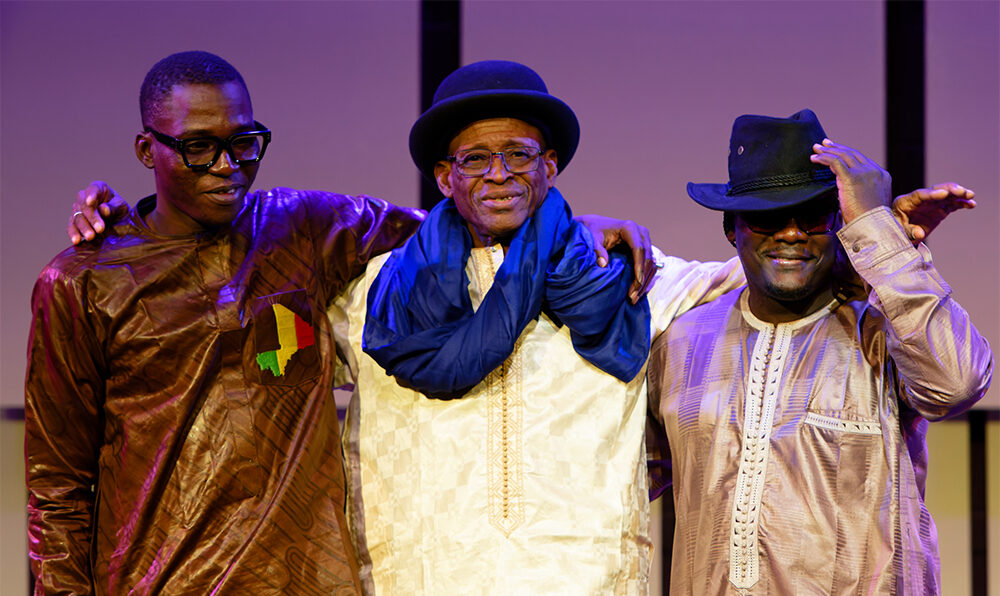 <p><strong>Ali “Bounaly” Traoré and Mahalmadane “Bountel” Traoré are accompanying you on this tour. Bounaly, and Bountel, how is it playing with Afel?</strong></p>
<p><strong>Mahalmadane “Bountel” Traoré:</strong></p>
<p>Playing with Afel is a great pleasure for us.</p>
<p><strong>Afel: </strong>Aside from Bounaly and Bountel, I must mention Paul. I was going to completely stop making music. I had a lot of problems, it was him who found me, told me I had a calling for music. He pushed me to return. I had lost my desire to make music — successively, I had broken my leg, I lost my wife, and I lost two musicians who were very important to me. But I met Paul, who had come to Mali to work with musicians here. He has worked with many artists for over 20 years, and I am lucky to have met him.</p>
<p><strong>So we have Paul to thank!</strong></p>
<p><strong>Afel:</strong> I must thank him, from my heart, for helping me return to music. </p>
<p><strong>I have been following Bounaly on Instagram and Facebook for a while now, and it's great to see the next generation of guitarists from Northern Mali and the Sahel in general gain popularity online. We are also seeing more and more guitarists from the West incorporating yours and Ali Farka Touré’s influence in their compositions. What do you view as the future of your sound and style, in a world where many traditions are being replaced by more globalized influences?</strong></p>
<p><strong>Bountel: </strong>The new generation finds its foundations in the old. Nowadays, the music of our forefathers isn’t as popular. So, we must fuse them, take inspiration from the older music and use it to release new sounds. </p>
<p><strong>So it’s the past in dialogue with the present to create the future?</strong></p>
<p><strong>Bountel:</strong> <em>Voilá!</em></p>
<p><strong>Paul Chandler: </strong>When we recorded this new album, we worked with so many different musicians, which is a whole other story. Bountal was the bedrock. Previously, the late Hama Sankaré was Ali and Afel’s calabash player for over 30 years, and his style of playing the calabash with sticks was really unique to the North of Mali. </p>
<p>Bountel is carrying that tradition forward, and he is just such a precise player. If you look at his resumé, he’s played with all the Northern musicians on drumset and calabash. He’s not a flashy guy, but a really solid, well-rounded musician. <br></p>
<p><strong>Ali “Bounaly” Traoré and Mahalmadane “Bountel” Traoré are accompanying you on this tour. Bounaly, and Bountel, how is it playing with Afel?</strong></p>
<p><strong>Mahalmadane “Bountel” Traoré:</strong></p>
<p>Playing with Afel is a great pleasure for us.</p>
<p><strong>Afel: </strong>Aside from Bounaly and Bountel, I must mention Paul. I was going to completely stop making music. I had a lot of problems, it was him who found me, told me I had a calling for music. He pushed me to return. I had lost my desire to make music — successively, I had broken my leg, I lost my wife, and I lost two musicians who were very important to me. But I met Paul, who had come to Mali to work with musicians here. He has worked with many artists for over 20 years, and I am lucky to have met him.</p>
<p><strong>So we have Paul to thank!</strong></p>
<p><strong>Afel:</strong> I must thank him, from my heart, for helping me return to music. </p>
<p><strong>I have been following Bounaly on Instagram and Facebook for a while now, and it's great to see the next generation of guitarists from Northern Mali and the Sahel in general gain popularity online. We are also seeing more and more guitarists from the West incorporating yours and Ali Farka Touré’s influence in their compositions. What do you view as the future of your sound and style, in a world where many traditions are being replaced by more globalized influences?</strong></p>
<p><strong>Bountel: </strong>The new generation finds its foundations in the old. Nowadays, the music of our forefathers isn’t as popular. So, we must fuse them, take inspiration from the older music and use it to release new sounds. </p>
<p><strong>So it’s the past in dialogue with the present to create the future?</strong></p>
<p><strong>Bountel:</strong> <em>Voilá!</em></p>
<p><strong>Paul Chandler: </strong>When we recorded this new album, we worked with so many different musicians, which is a whole other story. Bountal was the bedrock. Previously, the late Hama Sankaré was Ali and Afel’s calabash player for over 30 years, and his style of playing the calabash with sticks was really unique to the North of Mali. </p>
<p>Bountel is carrying that tradition forward, and he is just such a precise player. If you look at his resumé, he’s played with all the Northern musicians on drumset and calabash. He’s not a flashy guy, but a really solid, well-rounded musician. <br></p>
 <p><strong>And for you, Bounaly?</strong><br></p>
<p><strong>Bounaly: </strong>We have to try to modernize the sound. For example, I play this music with an electric guitar. The new generation loves noise! </p>
<p><strong>Paul: </strong>Noise?</p>
<p><strong>Bounaly: </strong>Well, not noise, you know what I mean - distortion, volume.</p>
<p><strong>I remember seeing you play some <em>Takamba </em>on Facebook, and it was really loud, in-your-face, pure rock.</strong></p>
<p><strong>Bounaly:</strong> Exactly - that is what the youth like, and so we must play it to be loved by them. </p>
<p><strong>Paul: </strong>I think Ali really represents the new generation. You see what he's doing to evolve the music. With this tour, however, we’re returning to our roots. We’re keeping the speed and energy, but more acoustic, without the machinery.</p>
<p><strong>So Paul, how is it keeping these traditions and styles alive in this day and age? Is it getting more difficult?</strong></p>
<p><strong>Paul</strong>: More difficult, because of the security situation. So, we have less and less access to places and people. I still have a group of people, a group of Malians, who are willing to take risks. I’ve been working there with local people for 23 years now, who are really passionate about making music and taking risks, and the risks are even greater now, so our work is becoming even more important.</p>
<p><strong>What are your plans for the rest of the year? </strong></p>
<p><strong>Paul: </strong>We are looking to release the album end of August, beginning of September.</p>
<p><strong>That sounds very interesting indeed. Is there anything else you’d like to add?</strong></p>
<p><strong>Paul: </strong>We came from Glasgow, playing at Celtic Connections, which was an important event and allowed us to do the tour in the first place. The Liverpool Philharmonic's support was crucial, as was our co-producer, Theatr Mwldan. The tour was produced by Mwldan and Instruments4Africa. We're grateful to the US and British Embassies for their support for this tour. But more generally, the visa situation for African musicians has to change. Afel should not have to jump through hoops to perform abroad.</p>
<p><strong>I'm so happy that you've been able to perform here. I'm eagerly awaiting the next album, in the meantime, best of luck for the rest of the tour! </strong></p>
<p><strong>And for you, Bounaly?</strong><br></p>
<p><strong>Bounaly: </strong>We have to try to modernize the sound. For example, I play this music with an electric guitar. The new generation loves noise! </p>
<p><strong>Paul: </strong>Noise?</p>
<p><strong>Bounaly: </strong>Well, not noise, you know what I mean - distortion, volume.</p>
<p><strong>I remember seeing you play some <em>Takamba </em>on Facebook, and it was really loud, in-your-face, pure rock.</strong></p>
<p><strong>Bounaly:</strong> Exactly - that is what the youth like, and so we must play it to be loved by them. </p>
<p><strong>Paul: </strong>I think Ali really represents the new generation. You see what he's doing to evolve the music. With this tour, however, we’re returning to our roots. We’re keeping the speed and energy, but more acoustic, without the machinery.</p>
<p><strong>So Paul, how is it keeping these traditions and styles alive in this day and age? Is it getting more difficult?</strong></p>
<p><strong>Paul</strong>: More difficult, because of the security situation. So, we have less and less access to places and people. I still have a group of people, a group of Malians, who are willing to take risks. I’ve been working there with local people for 23 years now, who are really passionate about making music and taking risks, and the risks are even greater now, so our work is becoming even more important.</p>
<p><strong>What are your plans for the rest of the year? </strong></p>
<p><strong>Paul: </strong>We are looking to release the album end of August, beginning of September.</p>
<p><strong>That sounds very interesting indeed. Is there anything else you’d like to add?</strong></p>
<p><strong>Paul: </strong>We came from Glasgow, playing at Celtic Connections, which was an important event and allowed us to do the tour in the first place. The Liverpool Philharmonic's support was crucial, as was our co-producer, Theatr Mwldan. The tour was produced by Mwldan and Instruments4Africa. We're grateful to the US and British Embassies for their support for this tour. But more generally, the visa situation for African musicians has to change. Afel should not have to jump through hoops to perform abroad.</p>
<p><strong>I'm so happy that you've been able to perform here. I'm eagerly awaiting the next album, in the meantime, best of luck for the rest of the tour! </strong></p>
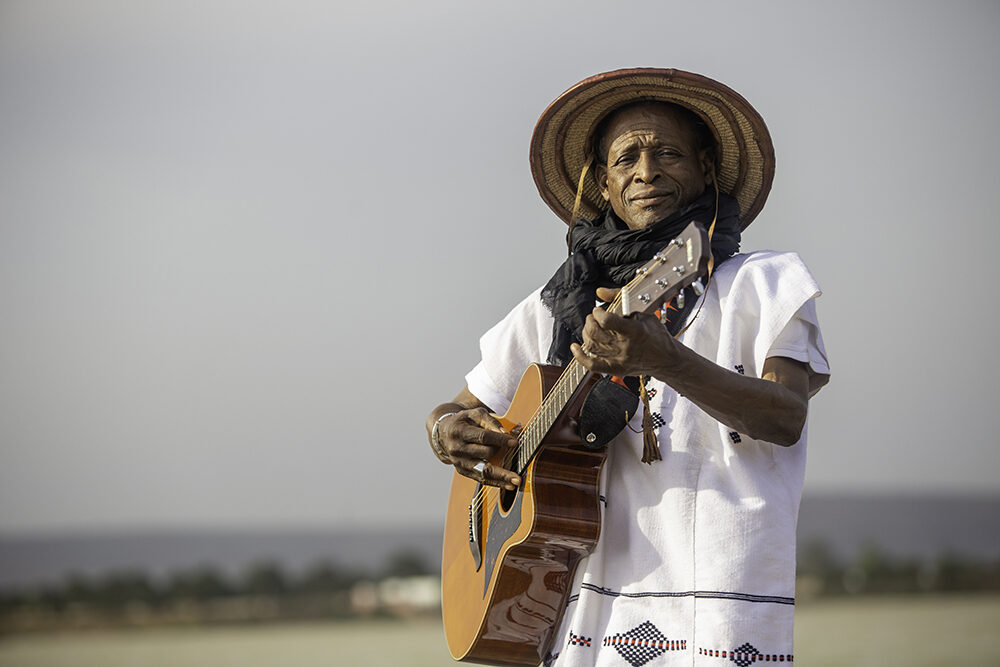
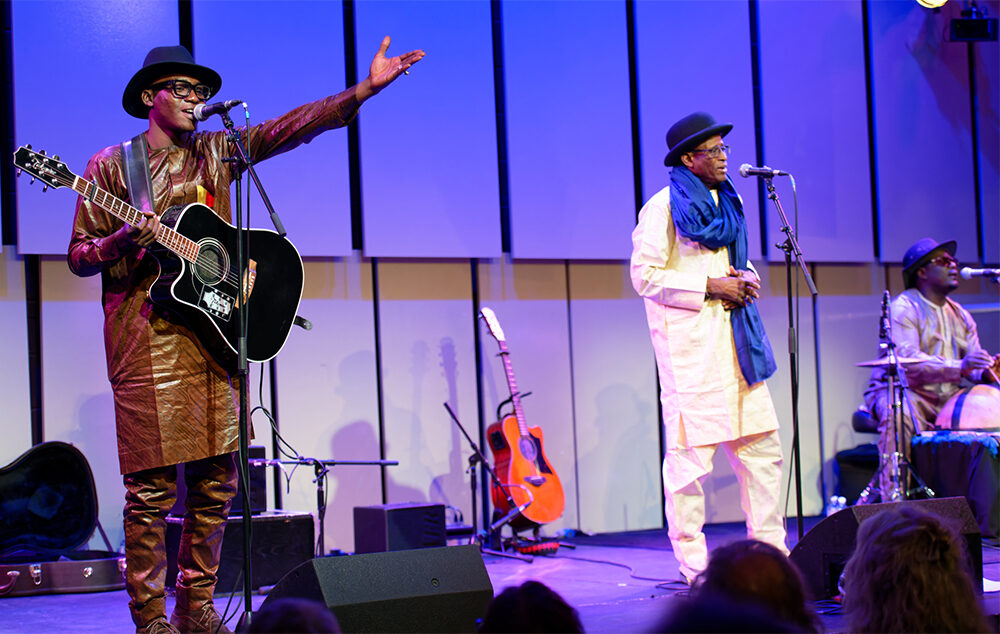
Afel Bocoum trio. Photo by Aboubacar Traoré
Ali “Bounaly” Traoré and Mahalmadane “Bountel” Traoré with Afel in center. Photo by Abdoulaye Traoré.
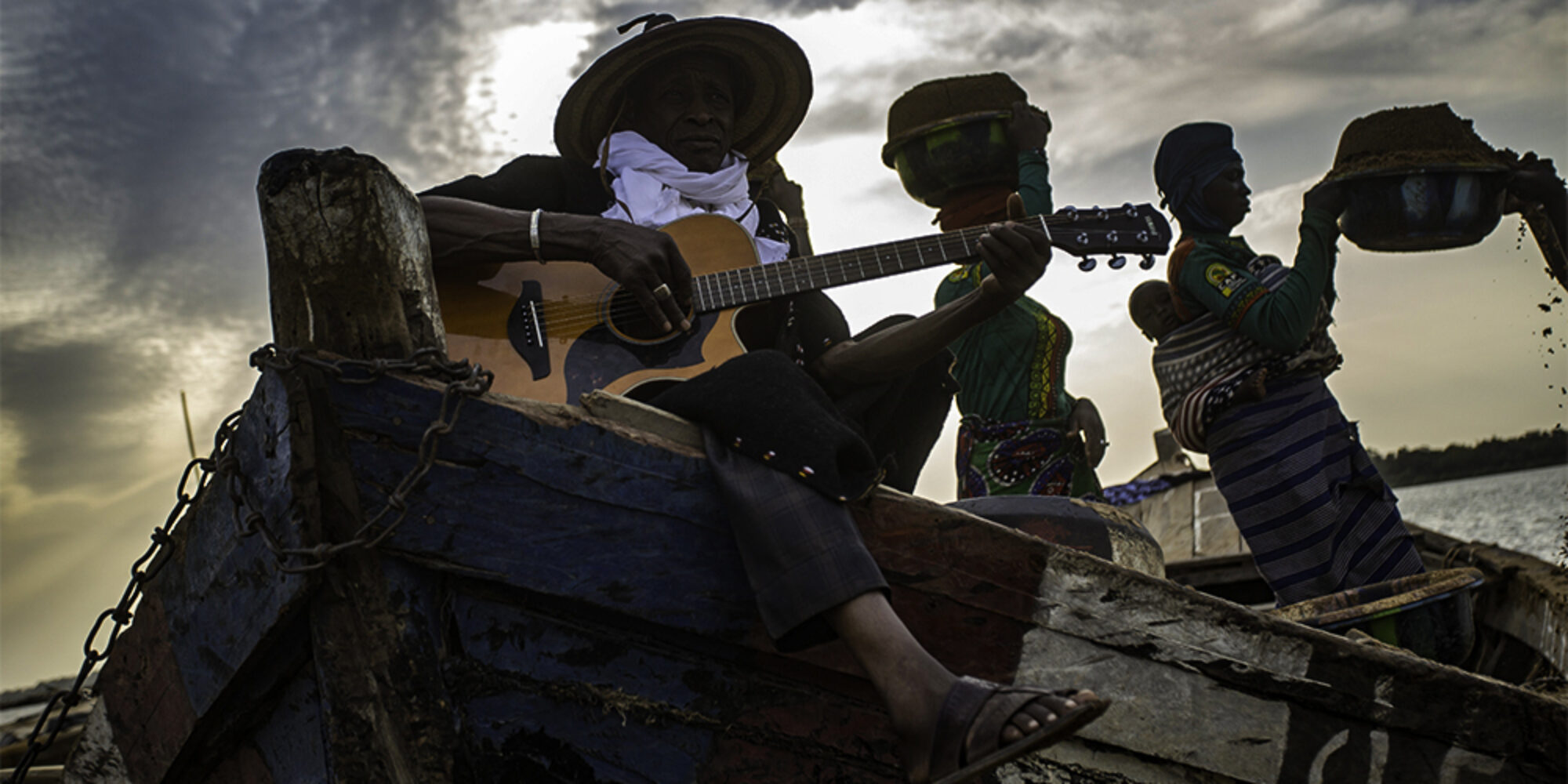
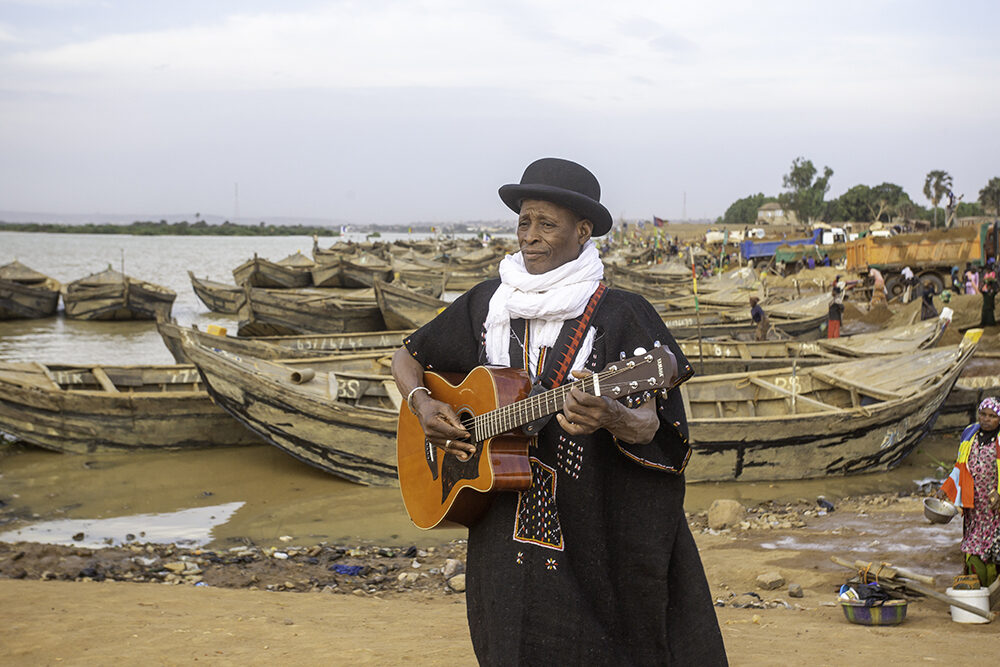
Afel by the Niger River. Photo by Paul Chandler.
Photo by Paul Chandler

Related Audio Programs
September 20, 2012
Festival in the Desert
Hip Deep October 12, 2023
Hip Deep in Mali: The Tuareg Predicament
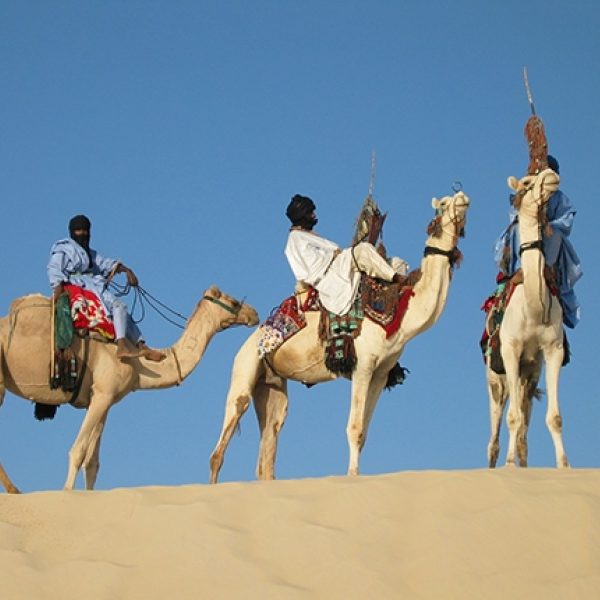
The program samples a rich variety of Malian Tuareg music and includes conversations with Tuareg musicians and cultural authorities in the wake of Mali’s crisis, along with University of Houston anthropologist Susan Rasmussen.
Related Articles
Blog September 16, 2015